Get all your news in one place.
100's of premium titles.
One app.
Start reading
The Economic Times
The Economic Times

Putin sees ‘very big potential’ in India ties, backs joint use of global trade corridors

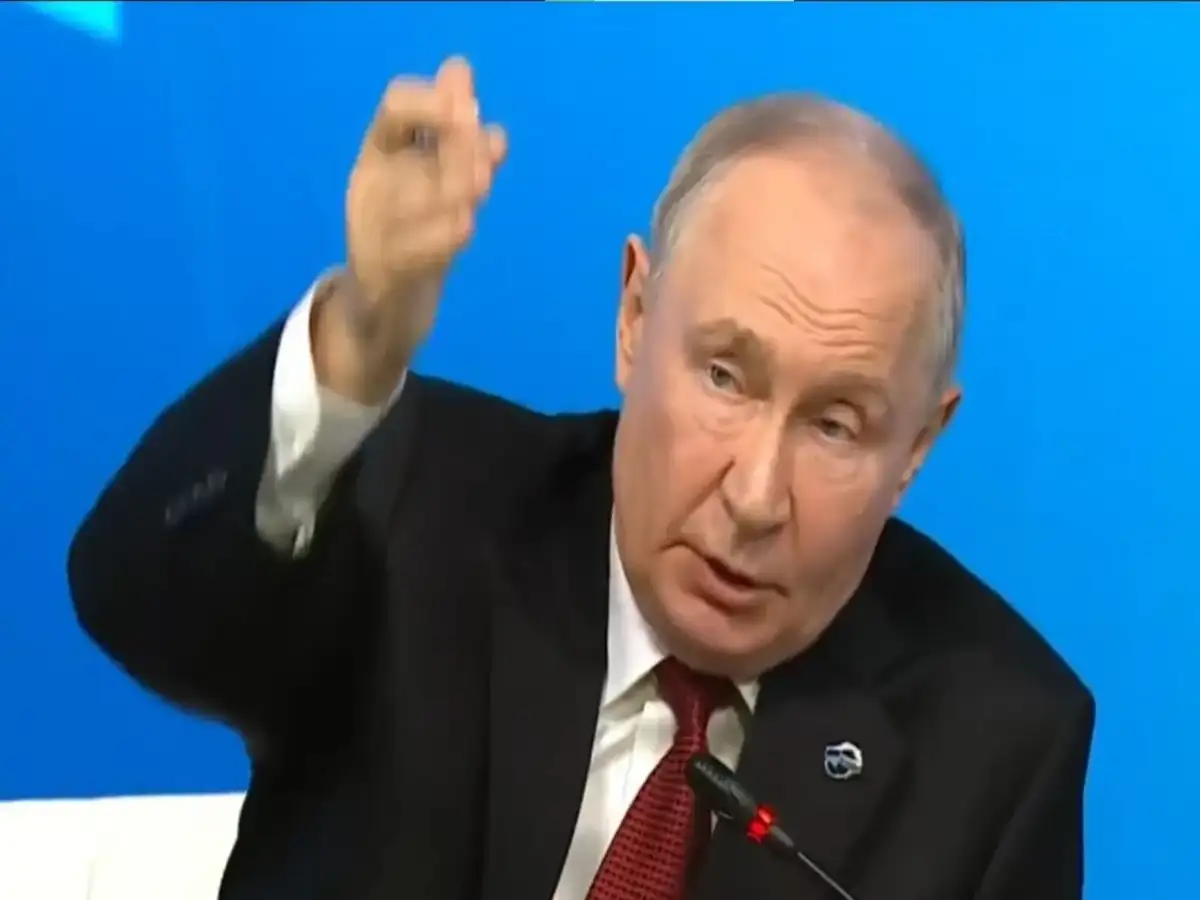
Moscow: Russian President Vladimir Putin has underscored that there is "very big potential" for economic collaboration with India that extends well beyond logistics, while expressing Moscow's strong intent to partner with New Delhi on major international transit and shipping corridors.

Speaking on the development of global transport routes, Putin on Thursday (local time) asserted Russia's commitment to deepening multifaceted ties with New Delhi.
Also Read: Putin praises Modi’s ‘good ideas’ for peaceful resolution of Ukraine conflict

"There is a very big potential for economic cooperation with India, not just in logistics," Putin said.

He further revealed that after piloting commercial vessels from China and South Korea, Russia is actively in talks with India to jointly utilise these promising maritime and connectivity routes.

Highlighting the progress of the strategically crucial International North-South Transport Corridor (INSTC), Putin said, "We have piloted a Chinese container ship and South Korean ship, and we are talking to our Indian friends as well. So we stand in favor of jointly using these promising international corridors. Now, as far as the North-South transport corridor is concerned, it does not depend solely on us. We stand ready to provide the credit resources. But right now, our Iranian friends have to complete their part of the work."

Putin further clarified that transit arrangements through Azerbaijan remain on track following direct engagements with AzerbaijPresident Ilham Aliyev.

Putin further added, "Part of the corridor must go through Azerbaijan, President Aliyev, and we are in contact. There are no problems there. Azerbaijan agrees," he added.

Alongside, Putin also praised Prime Minister Narendra Modi's efforts to end the Ukraine conflict, saying he has "good ideas" for a peaceful resolution.

"Prime Minister Narendra Modi is one of those world leaders who, despite our very good and even friendly relations, personal good relations, constantly raises the question and asks the question about putting an end to the conflict in Ukraine," Putin said, addressing the crowd.

He said PM Modi has been actively pushing for mutually acceptable solutions.

Also Read: From Sochi to a parked car: How Modi-Putin built a private channel

"He has an avid interest and very good ideas aimed at finding mutually acceptable solutions. In that sense, naturally, the Prime Minister takes a neutral position but with an interest in the end of the conflict. I think it's my duty to say that directly. And we are thankful to the Prime Minister for his ideas," Putin said.

Putin expressed gratitude to Modi for his efforts and continued support for resolving the conflict through dialogue.

"We are thankful for his desire to put an end to this conflict through peaceful means and as soon as possible," he added.

Earlier in the month of August, Russian Deputy Prime Minister Marat Khusnullin stated in an interview with news agency TASS that Russia must examine the feasibility of constructing a direct rail link to the Indian Ocean to mitigate transit hazards linked to the Bosphorus and the Strait of Hormuz.

"A rail link to the Indian Ocean should also be explored. Risks related to the Bosphorus and the Strait of Hormuz might require alternative routes: through Turkmenistan, Iran, Afghanistan, and Pakistan. Any options providing access to India are acceptable," Khusnullin was quoted as saying by TASS.

The proposal for alternative trade routes emerges against the backdrop of escalating maritime disruptions in the Strait of Hormuz following armed hostilities involving the US, Israel, and Iran.

On February 28, joint military strikes were launched against Iran, targeting key urban centres, including Tehran. In response, Iran's Islamic Revolutionary Guard Corps (IRGC) initiated retaliatory missile and drone operations against Israeli positions and US military bases across Bahrain, Jordan, Iraq, Qatar, Kuwait, the UAE, and Saudi Arabia.

Consequently, Tehran announced a maritime blockade of the Strait of Hormuz against vessels affiliated with the US, Israel, and allied nations involved in the operations against Iran. The strategic chokepoint accounts for approximately 25 per cent of global oil trade and nearly 20 per cent of worldwide liquefied natural gas (LNG) shipments.

Sign up to read this article
Read news from 100's of titles, curated specifically for you.
Already a member? Sign in here
Related Stories
Top stories on inkl right now
One subscription that gives you access to news from hundreds of sites
Already a member? Sign in here
Our Picks
Fourteen days free
Download the app
One app. One membership.
100+ trusted global sources.