
When you flip a light switch or charge your phone, you're tapping into an intricate energy web that's quietly transforming across Southeast Asia. With electricity demand projected to more than triple by 2050, the Mekong region is standing at a crossroads: continue relying on carbon-heavy sources or leap towards a greener, more flexible future.
As the world increasingly shifts towards renewable energy sources like solar and wind, however, the need for energy storage solutions becomes paramount because of their intermittent nature. This is where pumped storage hydropower, with its ability to store excess energy and release it when needed, could play an important complementary role. This technology, often described as a "giant water battery" or a form of long-duration energy storage, could become the cornerstone of the region's transition to reliable, renewable and resilient energy systems.

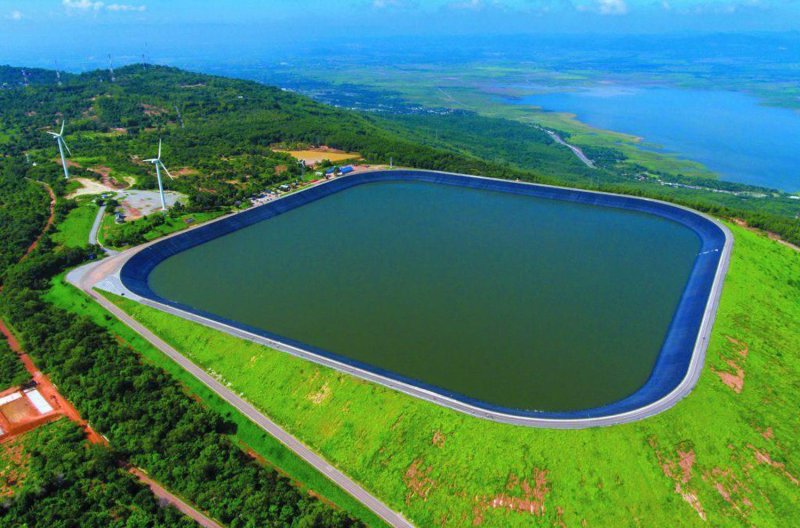
Pumped storage hydropower works on a simple yet powerful principle. When excess solar or wind energy is available, water is pumped from a lower reservoir to a higher one. When demand surges, such as at night or during cloudy periods, the stored water is released downhill to generate electricity. This approach doesn't just store energy; it balances the grid and ensures a consistent power supply, day and night, rain or shine.
Addressing this challenge requires looking beyond individual energy projects and considering how water and energy systems can be planned together across the basin. Regional assessments can help identify opportunities to expand renewable energy while balancing environmental, social and economic considerations.
One recent basin-wide analysis conducted by the Mekong River Commission (MRC) and the Australian National University identified more than 18,000 potential pumped storage hydropower sites across the Lower Mekong Basin. The findings suggest that these sites -- which are off-river, closed-loop pairs rather than new dams on the river itself -- could provide far more storage than the region would ever need to support a fully renewable grid. Only a small fraction would ever be built; the real task is to identify the best sites.
What makes the Mekong especially promising is its natural alignment between solar and hydropower resources. Solar power is plentiful during the dry season, compensating for reduced hydropower output. When integrated with pumped storage hydropower to provide stability, this combination could create a strong, climate-resilient power grid across Cambodia, Laos, Thailand and Vietnam.
The numbers help illustrate the scale of the opportunity. Conventional hydropower, for example, requires huge dams that inundate about 3,316 square kilometres of land for flood and drought management while generating about 44 TWh of electricity a year.
By contrast, with solar energy available across the Mekong region, pumped storage hydropower facilities require as little as 3–20 square kilometres of land and about 230 square kilometres of solar panels, compared with the thousands of square kilometres needed for conventional dams.
A system that primarily combines wind, solar and pumped storage hydropower is also cheaper in the long run, given the rapid decline in the cost of renewable energy technologies in recent years. In addition, pumped storage hydropower projects can place less pressure on water resources when integrated with conventional hydropower.
Greater regional cooperation, such as through the Greater Mekong Subregion power trading framework, the Asean Power Grid and the MRC, could unlock additional benefits for the Mekong countries. Power trading could become more efficient, renewable energy projects could expand at scale, and pumped storage facilities could help stabilise interconnected electricity systems. Existing reservoirs could also support multiple objectives, including energy generation, irrigation and flood management, while complementing and maximising the benefits of existing hydropower assets.
Across the Mekong region, Cambodia, Laos, Thailand and Vietnam are all exploring wind power, with Vietnam currently leading in installed capacity and project development, while the others continue to address infrastructure, financing and regulatory hurdles.
So, how do we ensure that new infrastructure, especially at greenfield sites, doesn't disrupt ecosystems or displace communities?
The MRC's proactive regional planning study, which shifts from reactive to proactive planning by identifying and assessing supplementary investment projects and enabling activities, will be essential to ensuring that new energy infrastructure contributes to development pathways that meet growing energy demand while taking environmental sustainability, social well-being and transboundary considerations into account.
Pumped storage hydropower could become an important component of the Mekong region's energy transition. It will succeed only if it is rooted in careful planning, informed by science and grounded in the realities of those who live along the river.
As Mekong countries pursue their clean energy and climate goals with growing ambition and innovation, this is the opportunity to power the Mekong's future with pumped storage hydropower -- but let's do it right.
Busadee Santipitaks is the CEO of the MRC Secretariat. She was a former Deputy Permanent Secretary of the Thai Ministry of Foreign Affairs.







