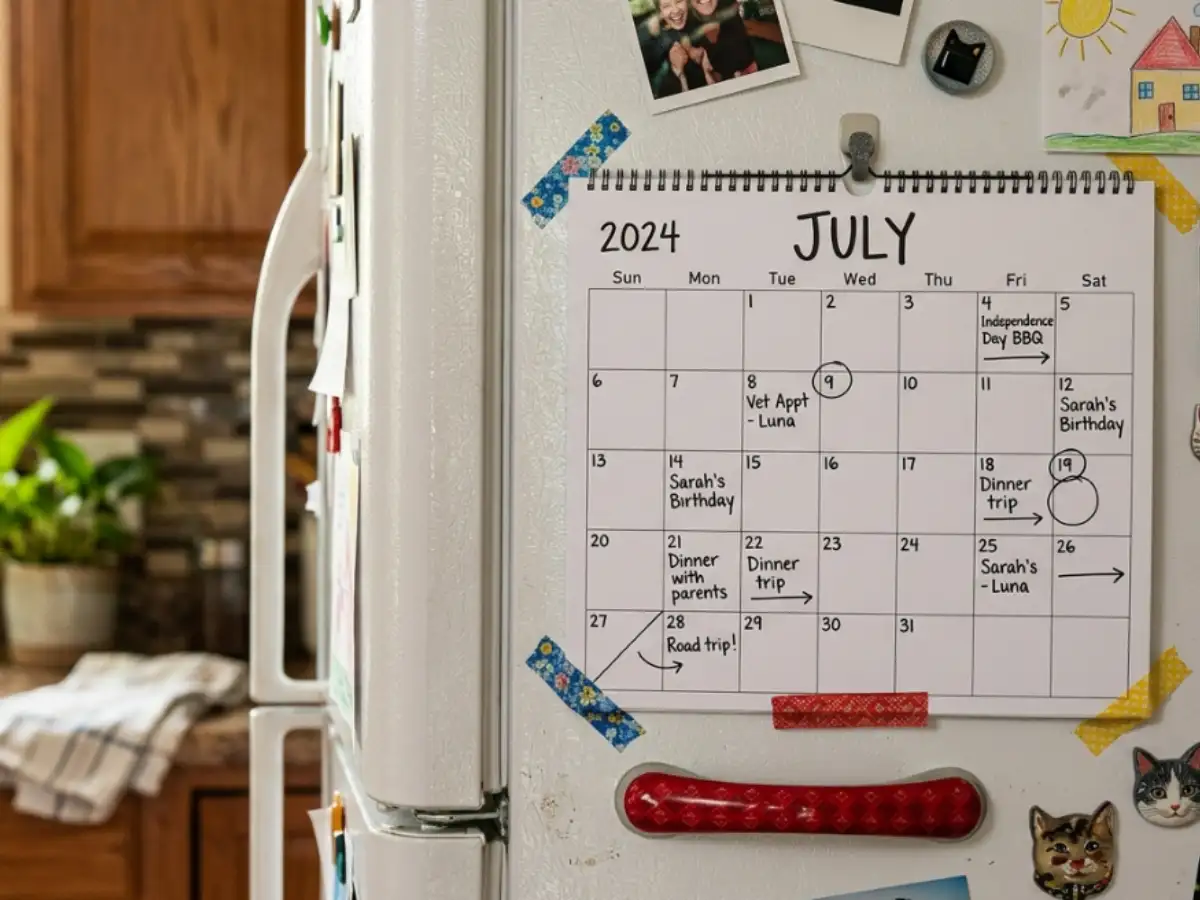
A paper calendar stuck to the refrigerator door is reminiscent of an outdated practice from bygone days, since in an age of smartphones, common applications, smart speakers, and digital notifications, it might be redundant to write down dates and appointments on paper. However, psychologists see this phenomenon from an altogether different angle.
What appears to be a routine family activity is nothing more than one of the ways cognitive psychologists have been working for many years: the use of environmental cues to compensate for memory deficits. Instead of relying on their memory, people prefer to leave information outside themselves by transforming their homes into memory helpers.