
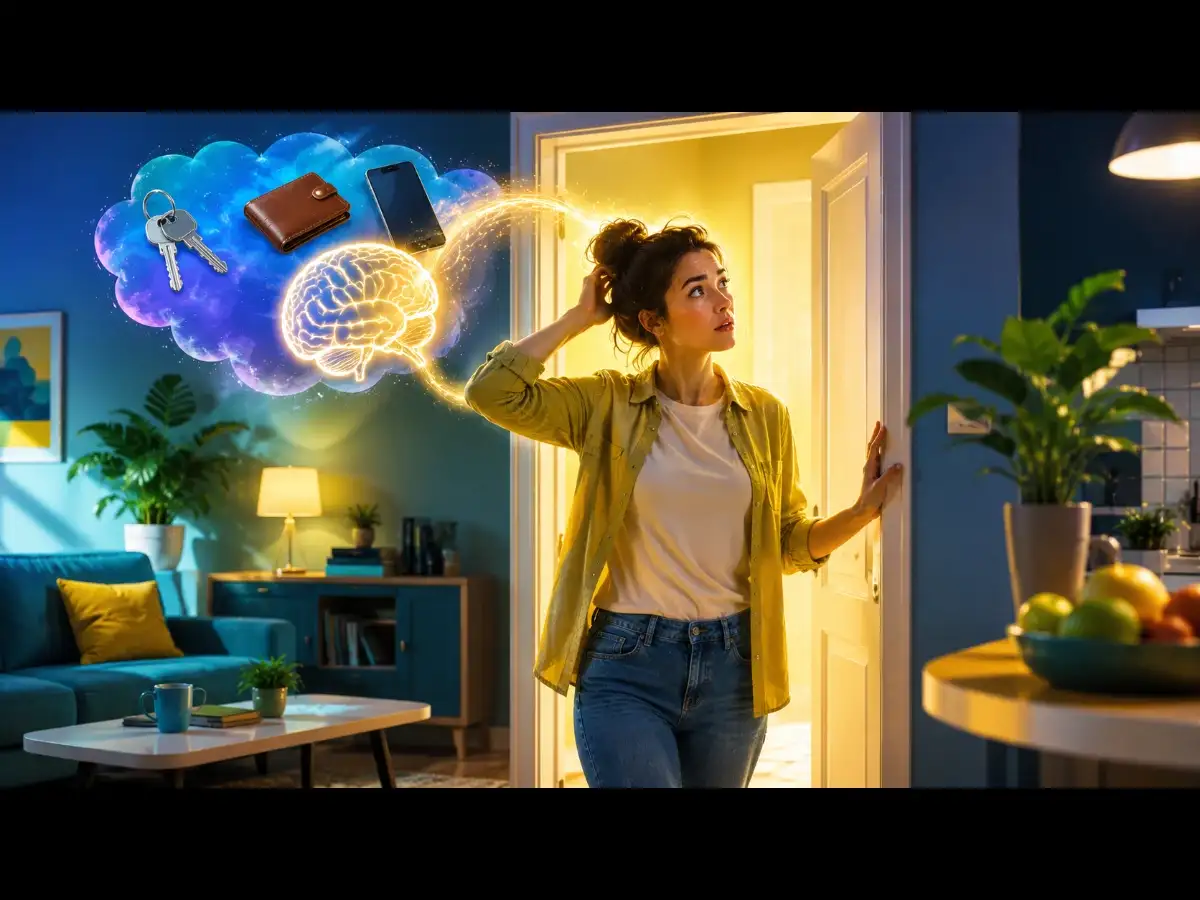
You walk into the kitchen to grab something, reach the doorway and suddenly have no idea why you are there. For a few seconds, you stand still, retracing your steps until the original thought finally comes back. It is such a common experience that psychologists have studied it as the doorway effect . Research by psychologists Gabriel Radvansky and David Copeland found that moving between spaces can affect how easily information is retrieved from memory. More recent research suggests the effect is connected to the way the brain organizes experiences into separate events and updates the mental context when we move through a physical boundary. The experience does not necessarily mean you have a poor memory. Instead, it can reveal something interesting about how attention, working memory and environmental context interact.













