Get all your news in one place.
100's of premium titles.
One app.
Start reading
The Economic Times
The Economic Times
Aastha Raj

Psychology says people who save shopping bags inside shopping bags aren't cheap, they may simply see value that others overlook

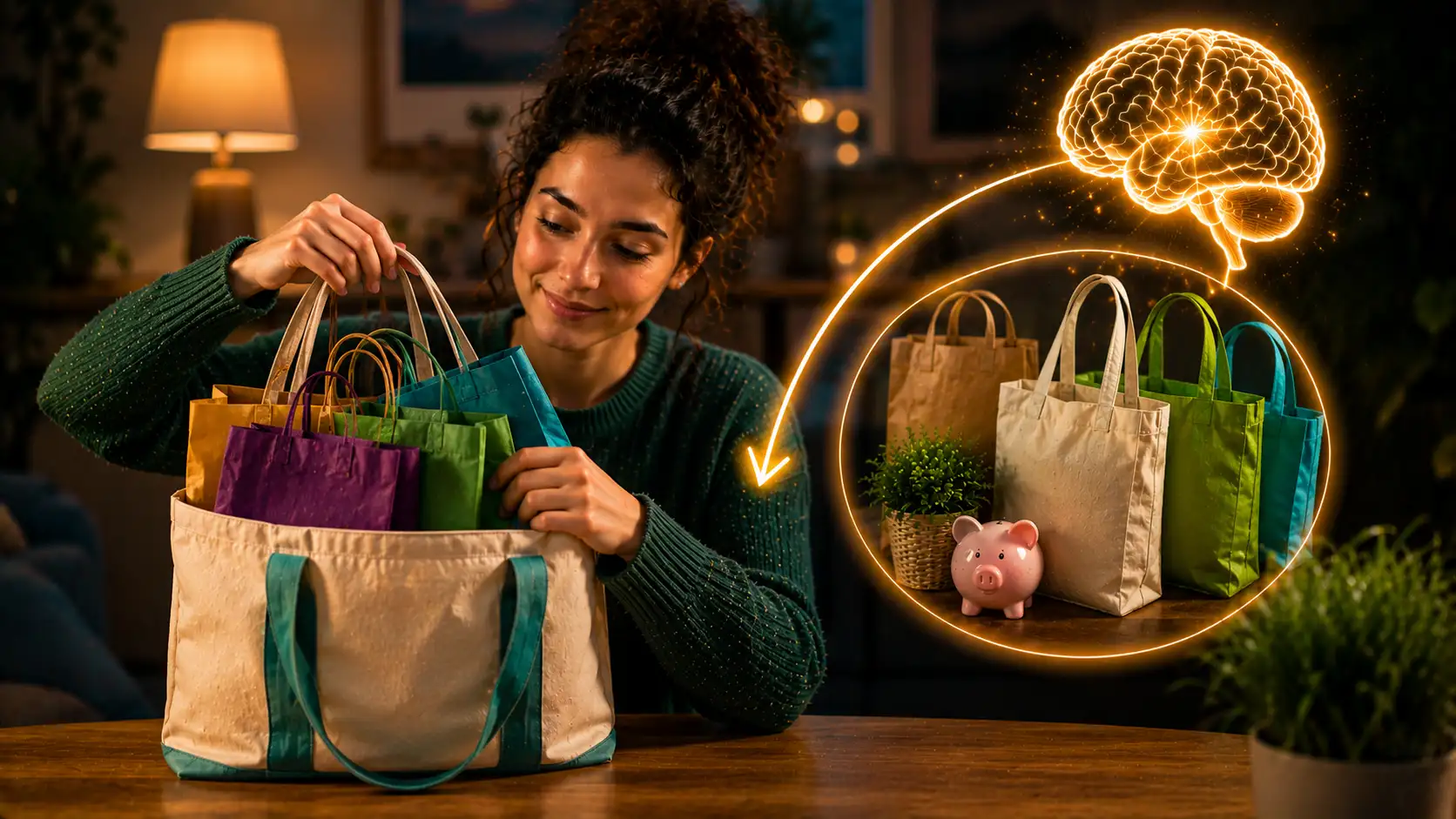
Many households have one. Open a kitchen cabinet or utility drawer, and you'll often find a large shopping bag filled with dozens of smaller bags waiting to be reused. Some people laugh at the habit. Others assume it reflects extreme frugality. Psychology, however, suggests that regularly saving shopping bags says very little about whether someone is "cheap." Instead, the behavior is often linked to planning, habit, environmental awareness, and a tendency to avoid unnecessary waste.

Of course, there are practical reasons too. Reused bags can help carry groceries, line small trash bins, pack lunches, store items, or transport wet clothes after a workout. Rather than revealing one personality trait, the habit often reflects how people think about resources and future needs.

Future-oriented thinking encourages people to keep useful items

One of the strongest explanations comes from research on Consideration of Future Consequences. This psychological concept describes how some people naturally think about how today's choices may benefit them later.

Instead of seeing a shopping bag as something to discard immediately, they recognize that it could solve a future problem. For example, someone may save a sturdy paper bag knowing it will be useful the next time they need to wrap a gift, carry books, or transport groceries. The decision reflects planning rather than reluctance to spend money.

READ ALSO: Psychology says people who decorate their desk may be creating more than just a beautiful workspace, they may be boosting everyone’s mood

Habit formation makes saving bags automatic

Another explanation comes from Habit Formation Theory. Psychologists have found that repeated behaviors eventually become automatic through a cue-routine-reward cycle. The cue is unpacking groceries.

The routine is folding and storing the bags. The reward is having them ready when needed. After years of repetition, many people save bags without consciously debating whether to keep them. The behavior becomes part of the normal household routine.

Resourcefulness is different from being cheap

Psychologists often distinguish between resourcefulness and unwillingness to spend money. Resourcefulness involves making practical use of available materials rather than wasting them. For example, someone may happily spend money on travel, hobbies, or experiences while still reusing shopping bags because they dislike unnecessary waste.

Saving bags doesn't necessarily indicate financial concern. It often reflects efficiency. The same mindset may lead someone to refill reusable water bottles, repair furniture, or repurpose glass jars for storage.

READ ALSO: Psychology says people who keep eating the same cereal every day for breakfast aren’t boring, they may be making a smarter decision than the rest

Small routines can create a greater sense of control

Psychologists describe Perceived Control as the belief that people can manage aspects of their environment. Keeping useful household supplies readily available often contributes to that feeling.

Imagine discovering at the last minute that you need to pack shoes for the gym or carry leftovers to a friend's house. Having saved shopping bags eliminates the need to search for a new one. These small preparations reduce inconvenience and create a sense of readiness.

Family habits often shape the behavior

According to Social Learning Theory, developed by psychologist Albert Bandura, many everyday behaviors are learned by observing others. Someone raised in a household where parents reused bags, containers, or wrapping paper may naturally continue the same practice as an adult.

In another family, disposable items may have been the norm. Neither habit automatically reflects personality. Instead, it often reflects what people learned growing up.

Environmental values also influence everyday choices

Many people now reuse shopping bags because they want to reduce waste. Research in Environmental Psychology suggests that individuals often adjust everyday habits to better align with their personal values.

Someone who recycles regularly, carries a reusable coffee cup, and avoids single-use plastics may also save shopping bags because it supports their environmental goals. In this case, the motivation has little to do with saving money. It reflects consistency between beliefs and behavior.

Saving bags isn't evidence of stinginess

A common misconception is that keeping a collection of shopping bags automatically means someone is cheap. Psychology doesn't support that conclusion. People save bags for many reasons, including convenience, organization, sustainability, preparedness, and habit.

The same person may generously donate to charity, buy thoughtful gifts, or spend freely on meaningful experiences while still preferring not to waste perfectly usable bags. The behavior, by itself, reveals very little about generosity.

Psychology suggests that people who save shopping bags inside shopping bags aren't necessarily cheap. In general, the habit can be explained by future-oriented thinking, habit formation, resourcefulness, perceived control, social learning, and environmental values.

Rather than holding onto bags out of fear of spending money, many people simply recognize that useful items can often serve a second purpose. Like many everyday routines, this habit reflects practical thinking more than personality.

FAQs

Does saving shopping bags mean someone is cheap?

No. Psychology suggests the habit is often linked to planning, convenience, sustainability, and resourcefulness rather than unwillingness to spend money.

Why do so many people keep bags inside other bags?

Many people save them for future uses, such as carrying groceries, lining small bins, organizing household items, or transporting belongings.

Sign up to read this article
Read news from 100's of titles, curated specifically for you.
Already a member? Sign in here
Related Stories
Top stories on inkl right now
One subscription that gives you access to news from hundreds of sites
Already a member? Sign in here
Our Picks
Fourteen days free
Download the app
One app. One membership.
100+ trusted global sources.