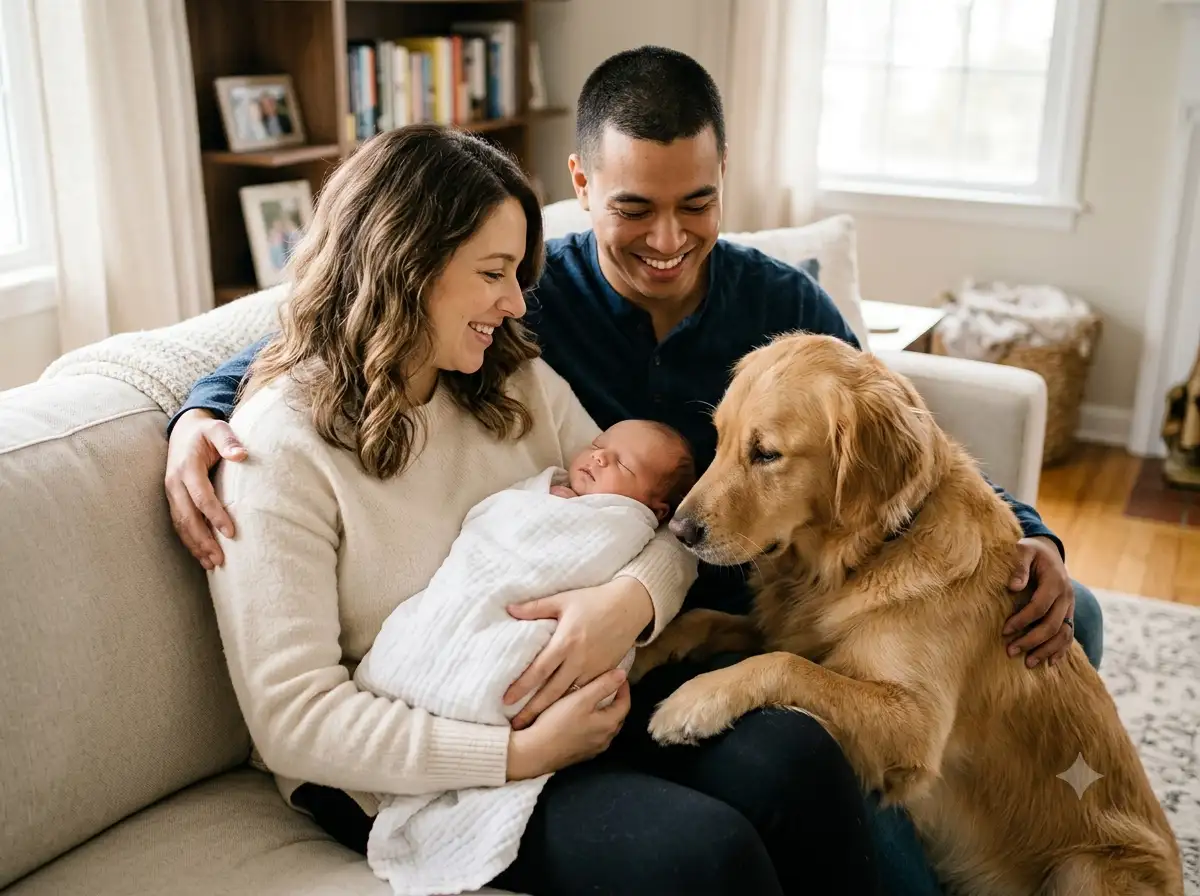
Many people believe that bringing a dog into a home with a new-born baby creates more work for parents. Psychology presents a broader picture. Several studies suggest that when families manage pet care safely and responsibly, dogs can become an important part of a child's early environment. They may help parents build daily routines, increase outdoor activity, and create opportunities for positive family interaction. Researchers also say children who grow up with dogs often experience regular social contact, shared play, and emotional support. These experiences may influence emotional development and social learning. At the same time, experts remind families that supervision, hygiene, and proper pet training remain essential whenever babies and animals live together. Psychology does not suggest that every family should own a dog, but it explains how healthy human-animal relationships can contribute to family well-being.
Psychology says people who raise a dog along with their new-born child aren't always taking on an extra emotional burden
Research suggests that families who raise a dog alongside their new-born child are not necessarily creating more stress in their lives. Psychology indicates that a healthy bond between children and family dogs may support emotional well-being, encourage physical activity, and help children develop empathy and social skills as they grow. Studies also suggest that parents may benefit from companionship and daily routines that include caring for both the baby and the pet. However, experts stress that these benefits depend on responsible pet ownership, proper training, good hygiene, and constant adult supervision whenever babies and dogs interact.
What Psychology says?
Psychology says people who raise a dog along with their new-born child aren't necessarily increasing family stress. Instead, research shows that many families develop routines that include both child care and pet care.
Psychologists explain that dogs often become part of everyday family life. Walking the dog, feeding it, and spending time together can encourage regular schedules. Predictable routines are linked with lower stress and better emotional balance for many families.
Dogs also provide companionship. Parents sometimes report feeling less isolated during the demanding months after childbirth. Simply interacting with a familiar pet may offer emotional comfort during periods of adjustment. However, psychologists also note that these benefits depend on responsible pet ownership, proper supervision, and a dog that is comfortable around children.
What does this mean?
This finding means that raising a baby alongside a family dog can provide more than companionship. Children begin observing social behaviour from an early age. Watching parents care for a dog teaches daily responsibility, kindness, patience, and gentle behaviour.
As children grow older, they often learn to communicate with the pet using calm behaviour and simple commands. These experiences may improve emotional understanding and social interaction. Parents may also find that caring for a pet encourages family members to spend more time together through walks, outdoor activities, and play.
Why is it done?
Many families already own dogs before welcoming a baby. Others choose to continue raising both together because they believe pets become part of the family. Psychology suggests that positive relationships with pets may help children develop emotional security.
Dogs often respond consistently to familiar family members. Children may see this as a source of comfort during daily life. Parents also report that pets encourage children to become active instead of spending all their time indoors.
At the same time, experts advise families to introduce babies and dogs carefully. Dogs should receive proper training, and adults should always supervise every interaction.
Which psychology theory explains this behaviour?
Several psychological theories help explain these findings.
Attachment Theory
Attachment Theory suggests that secure emotional relationships help children feel safe while exploring the world. Although parents remain the child's primary attachment figures, psychologists say pets can become supportive companions that offer comfort and familiarity.
Biophilia Hypothesis
The Biophilia Hypothesis proposes that humans naturally connect with living things. This connection may help reduce stress and improve emotional well-being. Spending time with animals has been linked in several studies to lower stress responses in many people.
Social Learning Theory
According to Social Learning Theory, children learn by observing others. When children watch parents treating animals with care and respect, they often imitate those behaviours in their own relationships with people and animals.
This Psychology study says
Many psychology and child development studies have explored the relationship between children and family dogs. Research suggests children living with dogs may experience benefits in several areas. Some studies report that children with family dogs participate in more physical activity through walks and outdoor play.
Other studies suggest that interacting with dogs may help children practice empathy, emotional regulation, and communication. Research has also found that spending time with pets can reduce feelings of loneliness for some children and adults.
Scientists continue studying these relationships because many factors influence child development, including parenting, home environment, education, and social support. Researchers therefore describe dogs as one possible supportive factor rather than the only reason for positive development.
Research explains why the bond matters
Research suggests that the benefits of growing up with a family dog depend on the relationship a child develops with the pet rather than simply having a dog at home. Children who form a strong bond with their dogs may experience better emotional well-being, lower stress, increased physical activity, and improved social skills.
Researchers also found that caring for a dog can help children learn empathy, responsibility, and cooperation. The review notes that these positive outcomes are linked to regular interaction and attachment between the child and the dog, supported by responsible parenting and proper pet care.
The review was conducted by researchers Jenna L. Kidd and Geoffrey A. Hall (and colleagues) who examined existing scientific evidence on child–dog relationships and their impact on child health and development. The study was published in the peer-reviewed journal Animals (MDPI).
The principle behind it
The main psychological principle is that supportive relationships improve emotional well-being. Dogs provide predictable responses through daily interaction. Feeding, walking, grooming, and playing with a dog encourage repeated positive experiences. These routines help create structure within family life.
Physical contact with pets may also support relaxation for many people. Researchers say positive interactions with animals may influence hormones associated with stress and social bonding, although results differ between individuals. The overall benefit comes from consistent care, healthy routines, and positive family relationships rather than simply owning a pet.
What to learn from it?
The findings offer several practical lessons for families.
- Parents should remember that dogs require training, exercise, healthcare, and attention.
- Babies should never be left alone with any animal, regardless of the dog's behaviour.
- Families should introduce children to pets slowly while teaching gentle interaction.
- Good hygiene practices, including washing hands after handling pets and keeping vaccinations current, remain important.
- Children also learn responsibility by helping with age-appropriate pet care as they grow older.
These experiences can become valuable learning opportunities throughout childhood.
Life lessons from the behavior
Psychology suggests several lessons from families who successfully raise children alongside dogs.
- Children learn that caring for another living being requires patience and consistency.
- Families often discover the value of teamwork because everyone contributes to pet care.
- Daily routines become easier to maintain when responsibilities are shared.
- Children may develop empathy by recognizing another living creature's needs.
- Parents also demonstrate compassion through their own behaviour, giving children practical examples rather than only verbal instruction.
These lessons often continue beyond childhood and influence later relationships with people and animals.