Get all your news in one place.
100's of premium titles.
One app.
Start reading
The Economic Times
The Economic Times
Aastha Raj

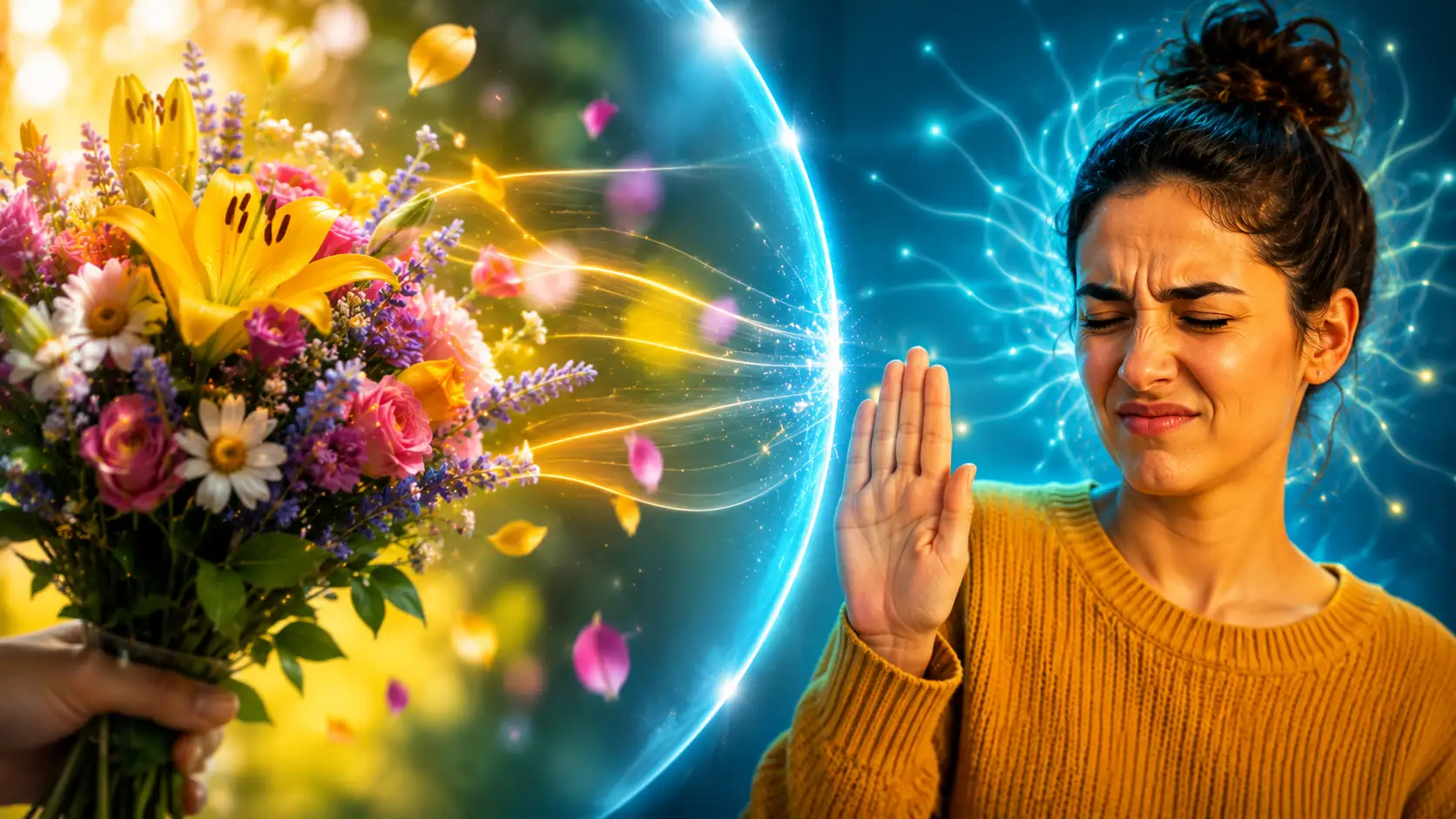
Psychology says people who don't like the smell of flowers aren't necessarily negative, they may have more sensitive senses than you think

Flowers are widely associated with beauty, romance, and happiness. Roses appear in celebrations, jasmine is used in perfumes, and fresh bouquets are often seen as thoughtful gifts. Because floral scents are generally considered pleasant, many people assume everyone enjoys them. But that's not always true.

Some people find the smell of certain flowers overwhelming, irritating, or even unpleasant. They may avoid floral perfumes, decline strongly scented bouquets, or prefer fragrance-free spaces. Others may wonder if this reaction says something negative about their personality.

Psychology suggests it usually doesn't. Our sense of smell is highly personal. The same fragrance that feels calming to one person may feel overpowering to another. Preferences are influenced by biology, learning, memory, culture, and individual sensory processing. There is no scientific evidence that disliking floral scents reflects a particular personality type. Instead, several well-established psychological theories help explain why some people naturally avoid the smell of flowers.

READ ALSO: Psychology says people who don't use pillows while sleeping aren't strange, they may be listening to their body more than trends

The brain processes sensory information differently

One explanation comes from Sensory Processing. Psychologists have found that people differ in how intensely they experience sounds, lights, textures, and smells. Individuals with greater sensory sensitivity may notice fragrances more quickly and experience them as stronger than other people do.

For example, walking into a room filled with lilies may feel refreshing to one person but overwhelming to another because their brains process sensory input differently.

Smells are strongly connected to memories

Another explanation comes from Classical Conditioning, first described by psychologist Ivan Pavlov. Although Pavlov studied learned associations, psychologists now know that smells can become linked to emotional experiences.

Imagine someone who associates a strong floral fragrance with a hospital visit, a funeral, or an unpleasant event. Years later, the same scent may trigger discomfort without the person consciously remembering why. The emotional response develops through learned association rather than deliberate choice.

The brain connects smells with emotions

Another useful concept is the Proust Phenomenon, also known as odor-evoked autobiographical memory. Research shows that smell has a particularly powerful connection with memory because the brain's olfactory system is closely linked to areas involved in emotion, including the amygdala and hippocampus.

A floral scent may remind one person of a happy childhood garden. For someone else, it may bring back stressful or emotional memories. This explains why people can react so differently to the very same fragrance.

Personal preferences are shaped by experience

Mere Exposure Theory, developed by psychologist Robert Zajonc, suggests that repeated positive exposure often increases liking. People raised around fragrant gardens or homes where fresh flowers were common may gradually develop positive feelings toward floral scents.

Others who had little exposure, or mostly negative experiences, may never develop that same preference. Our environment quietly shapes what feels pleasant.

Personality influences preferences—but doesn't determine them

Research on the Big Five Personality Traits suggests that personality can influence openness to new experiences and sensory preferences. However, personality alone does not determine whether someone likes floral smells.

Someone high in openness may enjoy experimenting with unusual fragrances, while another equally open person may prefer earthy, citrus, or woody scents instead. Fragrance preference is far more complex than personality alone.

Culture also shapes our sense of smell

Psychologists who study Cultural Psychology note that scent preferences vary widely around the world. In some cultures, heavily scented flowers are associated with weddings and celebrations. In others, the same flowers may be connected with religious ceremonies or funerals.

Because smells carry different cultural meanings, people's reactions are influenced not only by biology but also by the traditions they grow up with.

Disliking flowers doesn't mean someone dislikes nature

A common misconception is that people who dislike floral fragrances dislike flowers themselves or have a negative personality. Psychology doesn't support that conclusion. Many people admire the beauty of flowers while preferring fragrance-free varieties or simply finding certain scents too intense.

The reaction reflects sensory preference rather than emotional outlook.

FAQs:

Why do some people dislike the smell of flowers?

Psychologists say sensory sensitivity, personal memories, learning experiences, and cultural influences can all shape fragrance preferences.

Is disliking floral scents a personality trait?

No. There is no scientific evidence linking dislike of floral smells to a specific personality type.

Sign up to read this article
Read news from 100's of titles, curated specifically for you.
Already a member? Sign in here
Related Stories
Top stories on inkl right now
One subscription that gives you access to news from hundreds of sites
Already a member? Sign in here
Our Picks
Fourteen days free
Download the app
One app. One membership.
100+ trusted global sources.