
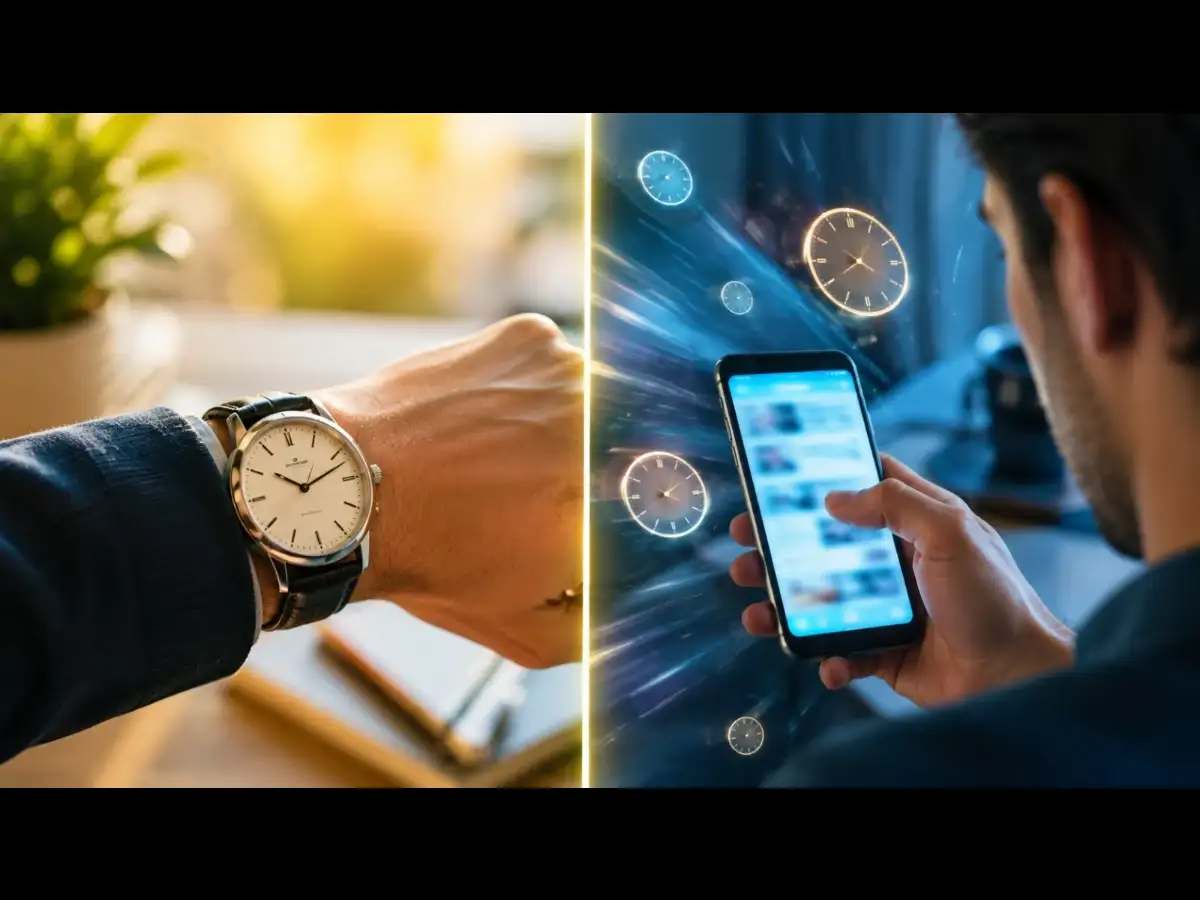
For some people, knowing the time means glancing at their wrist. For others, it means reaching for a smartphone, waking the screen and checking the digital display. The difference may seem insignificant, but psychology suggests that time is not experienced simply by reading a number from a clock. Our perception of time involves attention, memory, sensory information and the context in which events occur. A major review by psychologists Richard A. Block and Ronald P. Gruber describes psychological timing as involving processes such as duration judgments, temporal order, attention and memory. This does not mean that people who use smartphones instead of watches have a fundamentally different internal clock. Rather, the device they habitually use may influence how, when and where they encounter temporal cues.
A watch provides an almost purely temporal signal, while a phone delivers the time alongside messages, notifications and countless other attention-grabbing possibilities.












