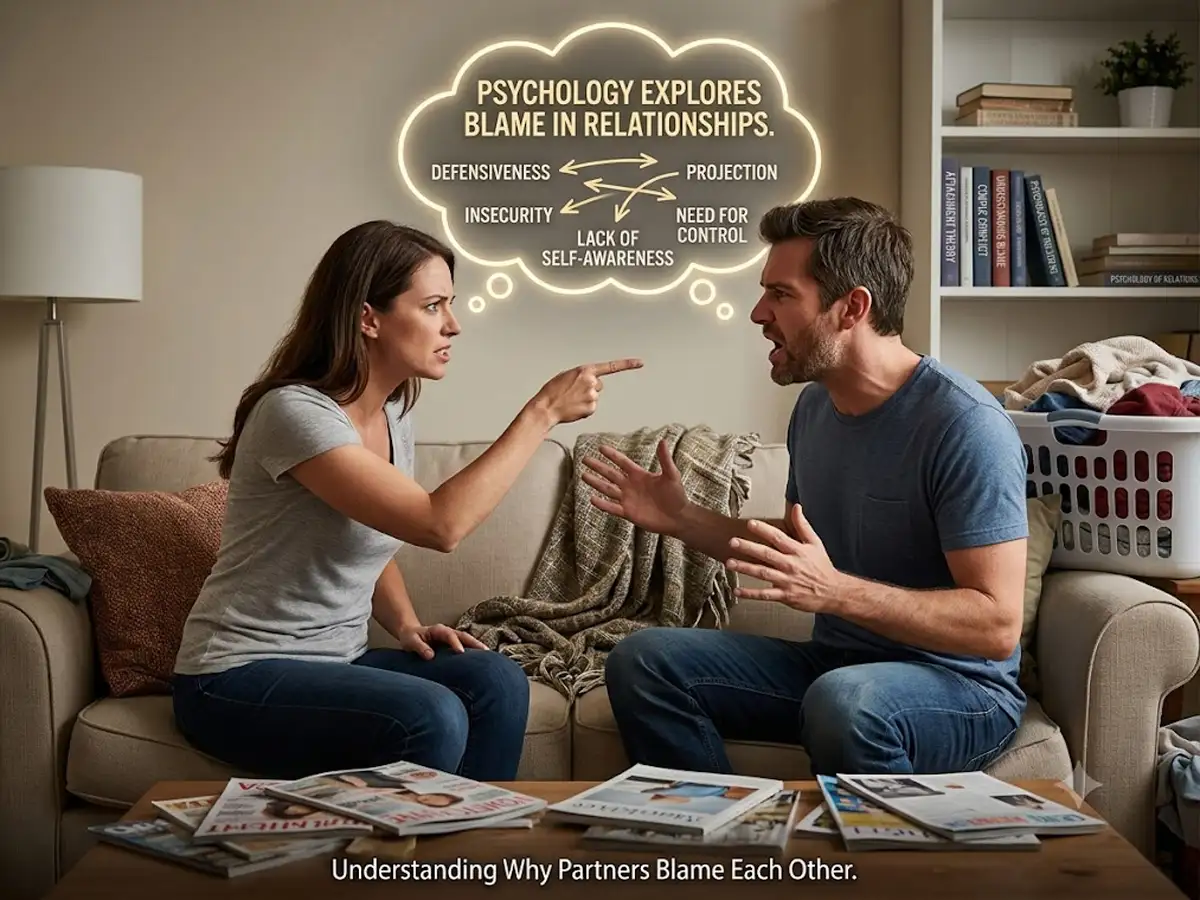
Blame can become one of the most exhausting patterns in a relationship. A small disagreement about dishes, money, parenting or being late can quickly turn into 'You always do this' or 'This is all your fault'. Psychology suggests that repeated blame is rarely just about the immediate problem. It can reflect deeper frustration, accumulated resentment and a tendency to interpret a partner’s behavior negatively. Research on couples has linked partner blame with lower relationship satisfaction, while relationship researcher John Gottman identified criticism and defensiveness as destructive communication patterns. The good news is that couples can change how they handle disagreements. Understanding why blame develops - and learning how to replace personal attacks with specific complaints and genuine listening - can help partners move from winning arguments to solving problems together.
WHY PARTNERS CAN FALL INTO A BLAME CYCLE