
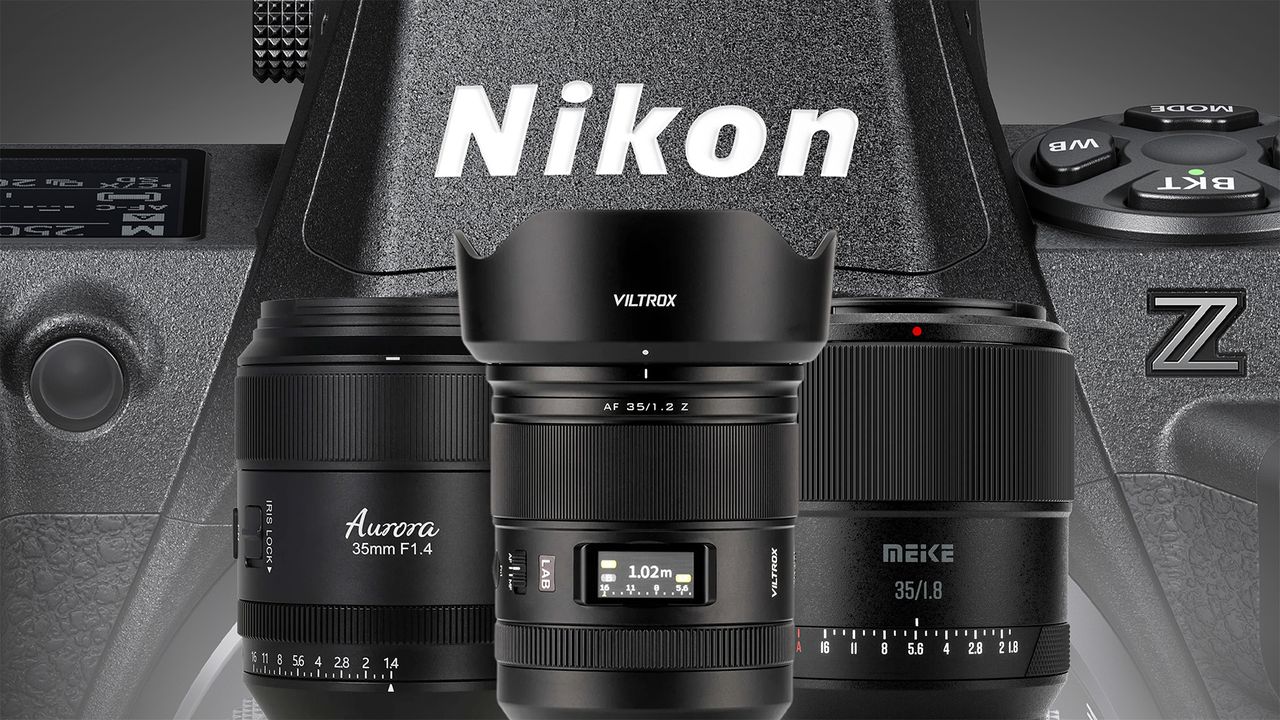
Earlier this year, news broke about Nikon suing Viltrox over unlicensed products for the Z-mount. And following reports that Sirui and Meike pulled Z-mount-compatible lenses from sale in China, the legal dispute is once again in the headlines following a new Viltrox Z-mount patent.
And while the big question is what Nikon hopes to achieve, the bigger question for many consumers is this: is Nikon in the right?

While it’s very easy to take the side of the cheap lens manufacturer, I really don’t think this is a case of greed on Nikon’s part.
It’s difficult to have a rock-solid opinion when we don’t have all the facts, so I can only go by what I know – which is that a patent dispute could suggest that Nikon’s problem isn’t with third parties making Z-mount-compatible lenses, but rather third parties using patented technology that supports the mount. Two very different things. Let me explain…
In a previous story I quoted Professor Bob Newman, whose Amateur Photographer article highlighted how an overarching Z-mount patent doesn’t exist, presumably because the concept of a camera mount isn’t wholly original, leading to the assumption that Nikon is, in fact, protecting the electrical-contact arrangement.
This would make a lot of sense, because cheap Chinese optics with robust autofocus systems are still relatively new. For a long time, most cheap Chinese optics were manual focus-only, which presumably reduced the chances of patent infringement.
However, I also came across another interesting point from ENS, whereby patent attorney Dr Bernard Dippenaar stated: “If a patent owner ignores large-scale, unauthorized use of its technology, those patent rights can become harder to enforce”.
Thus, Nikon’s motivations may also be to protect its patent long term.
If the legendary Japanese manufacturer’s goal is to obtain reasonable reparations via royalties, then I sit firmly on the side of Nikon – because the Z mount is so much more than just a mount. For that mount to have any relevance at all, an entire system had to be built around it at Nikon's expense.
A third-party manufacturer only has to worry about developing and building an optic. A first-party manufacturer has to develop and maintain an entire system, which requires pumping huge amounts of resources into the development of a mount, but also cameras – and all the technology that goes along with them – all the while creating a formidable lens ecosystem that redefines modern optical technologies.
This is why I think it’s only right that Nikon receives its dues.
My hope is that this is a relatively routine case in which an agreement can be reached that benefits both parties. Nikon protects its patent and receives reparations, and Viltrox is able to continue building affordable Z-mount optics.
And while it might be an unpopular opinion, if Viltrox has to raise its prices slightly to compensate, then so be it. Ultimately, a healthy relationship between first- and third-party brands is good for everyone, including the consumer.
In a world of computer chip shortages and rising memory costs, it feels like the fast-tech industry could be experiencing something of an affordable renaissance. And while I think cheap third-party optics are great – perhaps even necessary for a thriving camera industry – we still need to support first-party companies. Because without them, none of this exists.
You might also like...
Into Nikon? Check out the best Nikon cameras and the best Nikon Z lenses. If you'd like to read more of my ramblings: I chose the Nikon Z 180-600mm for its value and reach, but my chiropractor would recommend the Z 100-400mm.