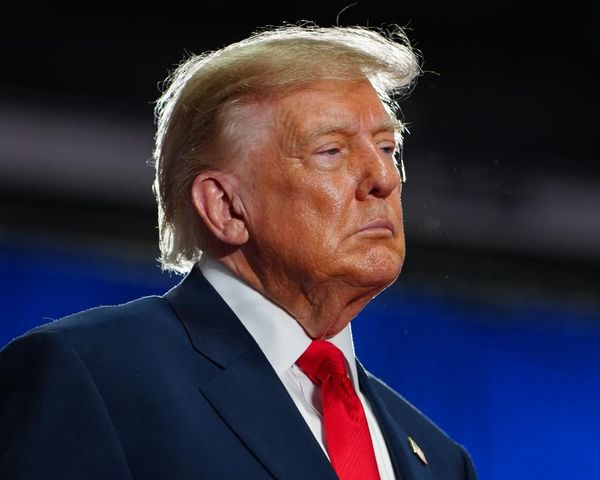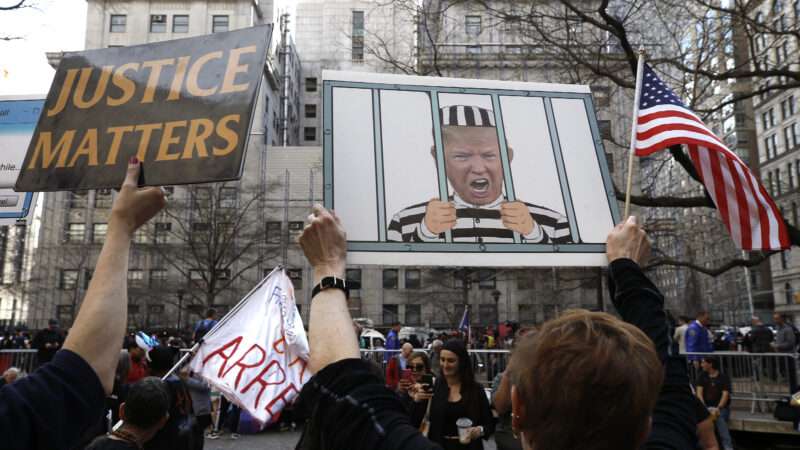
To treat Donald Trump's alleged falsification of business records as a felony, Manhattan prosecutors must identify "another crime" that he was trying to conceal or commit. But the indictment that was unsealed yesterday, which charges the former president with 34 felonies, is vague on that point. So is Manhattan District Attorney Alvin Bragg, who alluded to several possibilities in public statements on Tuesday.
That continuing ambiguity is striking, because the district attorney's office has been mulling charges like these against Trump for years. The idea was internally dubbed the "zombie case," because it kept coming back to life no matter how many times prosecutors working for Bragg's predecessor expressed skepticism about its viability. Yet here we are, nearly seven years after the hush payment at the center of the case, and Bragg still won't say precisely why he is charging falsification of business records, ordinarily a misdemeanor, as a felony.