Get all your news in one place.
100's of premium titles.
One app.
Start reading
TechRadar
TechRadar
Craig Hale

'Productivity and creativity shouldn’t live in separate silos': Why Canva's AI push is no different to its core principles of democratizing design

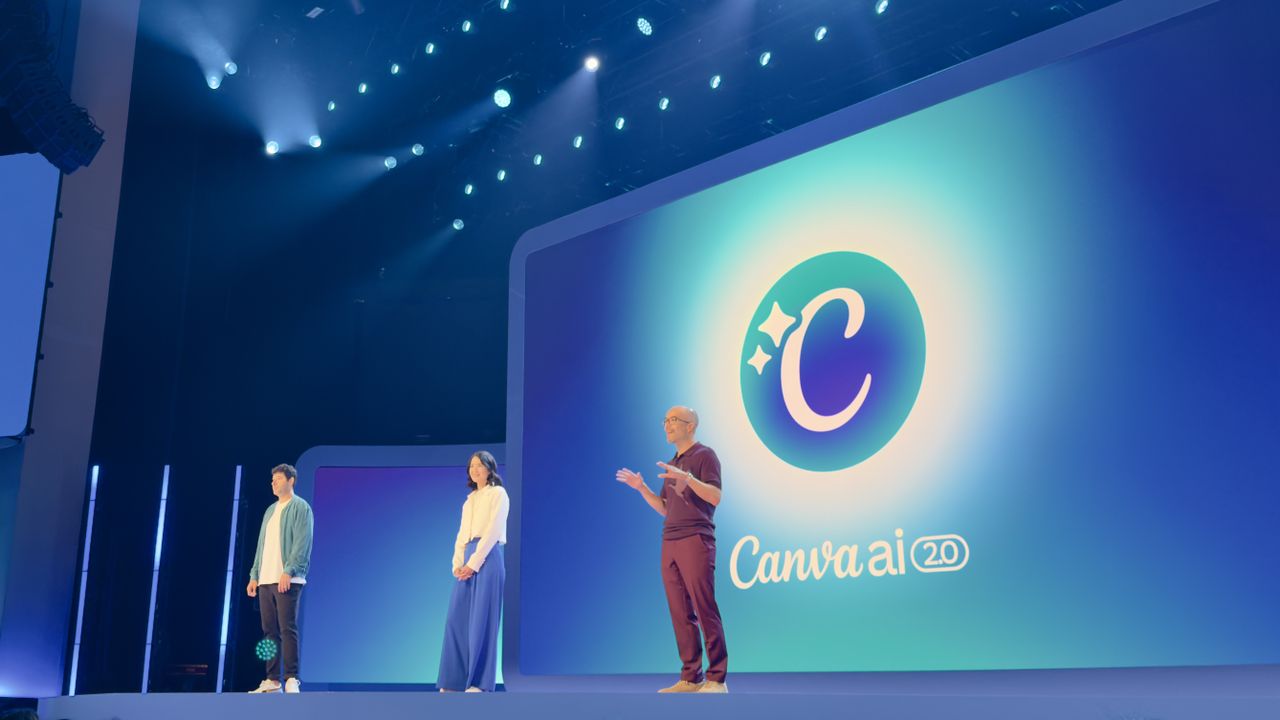
Canva's co-founders at Canva Create 2026.

For decades, work and creativity have been measured separately. Productivity tools like spreadsheets and documents were built for efficiency, while creativity lived elsewhere inside specialist tools that often required specialist training.

"They had been told themselves that they weren’t a designer, or they weren’t creative," Canva co-founder and CEO Melanie Perkins explained in a behind-doors session for journalists at the company's annual Canva Create conference.

Canva's mission has always been to "empower everyone to design anything with every ingredient in every language on every device," and its co-founders only see AI as one step in its long-term strategy to achieve this.

Where AI sits in Canva's latest suite

Traditional design workflows require active collaboration between multiple teams and the use of multiple tools, creating bottlenecks and wasting hours in repetitive labor.

To close the gap, the Australian tech firm, which now operates on a $4 billion annual recurring revenue rate, has spent the past 13 years laying the foundations for the Visual Suite. Think Docs, Sheets and Presentations; Social, Photo Editor and Video. Everything you interact with.

This year with the launch of Canva AI 2.0, the company goes one step further to democratizing design by eliminating the need for specialist skills, enabling faster iteration and even automating repetitive tasks.

In some ways, the message was that workers can go back to doing the work they signed up to do – brand leads can continue to build out brand guidelines, marketers can generate consistent assets, communicators can craft effective messages. Somehow all separately, but all in unison.

"We have always believed that creativity and productivity shouldn't live in separate tools," co-founder and Chief Product Officer Cameron Adams declared on stage in front of around 6,000 live attendees.

Will Canva make designers superfluous?

With content creation at an all-time high, company execs acknowledge the potential tension and scepticism that comes with. But even with AI lowering the barrier to entry, the company insists that expertise still matters.

"We think in the age of AI, craft is actually more important than ever," EMEA Managing Director Duncan Clark explained in an interview with TechRadar Pro.

As of early 2026, Canva reports 265,000 monthly active users with continued growth, with Clark hinting that AI is actually enabling more people to design rather than it replacing their roles.

Zooming out

Canva's vision clearly represents a broader industry shift, with Microsoft embedding design tools into its Office software, Google blending AI into its Workspace suite and Adobe seemingly covering all bases but with what's criticized to be a portfolio that's both expansive and expensive.

"I think that nimbleness and being able to really orientate the company towards the biggest goal is very much what's required in this new era," Perkins concluded, hopeful that Canva's youthfulness could give it the edge over more established giants going forward.

Sign up to read this article
Read news from 100's of titles, curated specifically for you.
Already a member? Sign in here
Related Stories
Top stories on inkl right now
One subscription that gives you access to news from hundreds of sites
Already a member? Sign in here
Our Picks
Fourteen days free
Download the app
One app. One membership.
100+ trusted global sources.