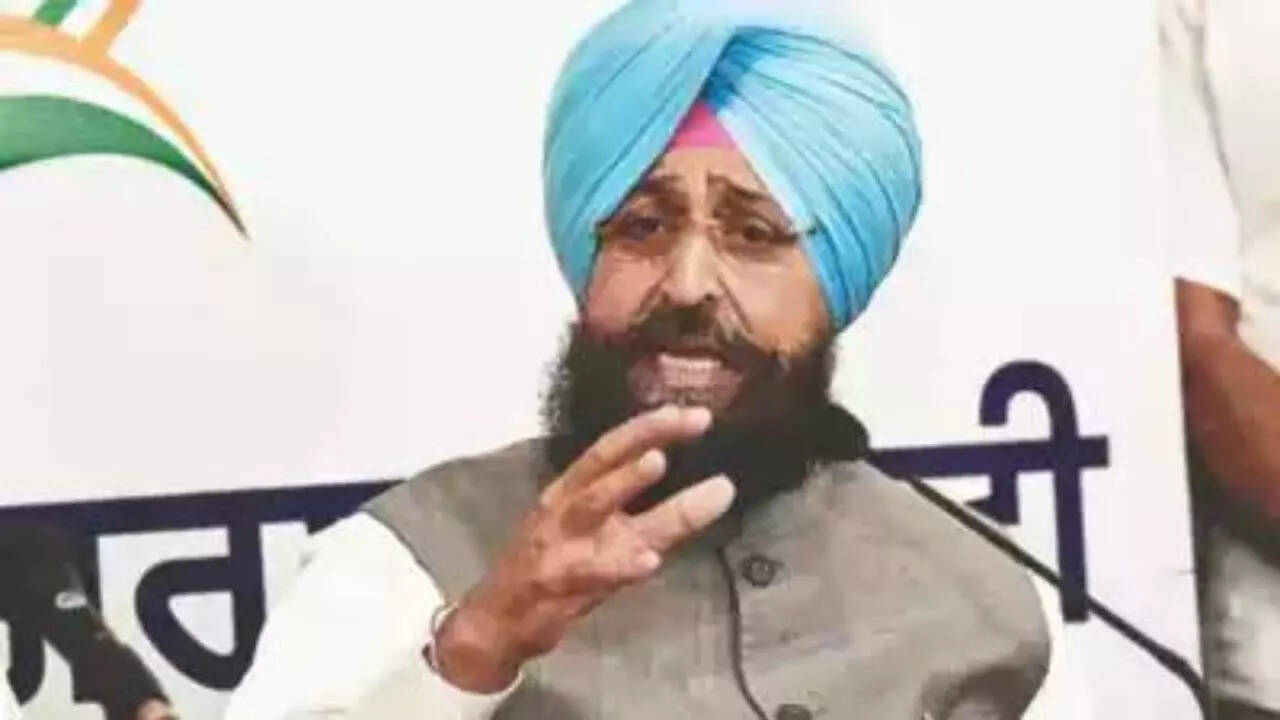
CHANDIGARH: Senior Congress leader Partap Singh Bajwa on Saturday said Punjab needed "strong political will", besides stringent laws to deal with sacrilege cases in the state.
The leader of opposition (LoP) in Punjab assembly was referring to chief minister Bhagwant Mann’s meeting with Union home minister Amit Shah, where the former sought help from the Centre on the Indian Penal Code (Punjab Amendment Bill), 2018, pending assent from the President.

The Punjab Vidhan Sabha had passed the bill in 2018, ushering in an amendment in section 295 and section 295A of the IPC with recommendation of enhancing punishment of life imprisonment for the sacrilege of holy books of all religions.
Bajwa said it required the political will of the Aam Aadmi Party (AAP) government in the state to resolve the issues of sacrilege with free and fair investigation rather than seeking stringent laws.
Bajwa said Bhagwant Mann’s meeting with Amit Shah was more of a political compulsion and was necessitated after the Punjab government failed to keep its poll promise to get justice for the protesters led by Sukhraj Singh, sitting on an indefinite dharna at Behbal Kalan for nearly a year now.
"We also demand the strictest of punishment for the perpetrators of the series of sacrilege incidents which occurred since 2015 on the soil of Punjab and hurt the sentiments of a large section of society, particularly of the Sikhs. However, till the law was not enacted, how can the criminals behind such acts of desecration go scot-free,” said Bajwa.
The senior also reminded the Union home minister of his statement on November 14 that “no doubt the law and order situation has deteriorated in Punjab after the AAP came to power there, but the Centre is keeping a close watch and we will not let the situation get out of control”.
The Congress leader said the AAP-led Punjab government was “inexperienced and lacked political will” and asked Shah for how long the Centre would continue to observe the situation in Punjab “before providing strategic support and coordination to the Punjab government”.
He warned that the delay would fuel a sense of insecurity among the general public and the state might witness a “repeat of the dark days of the 1990s”.