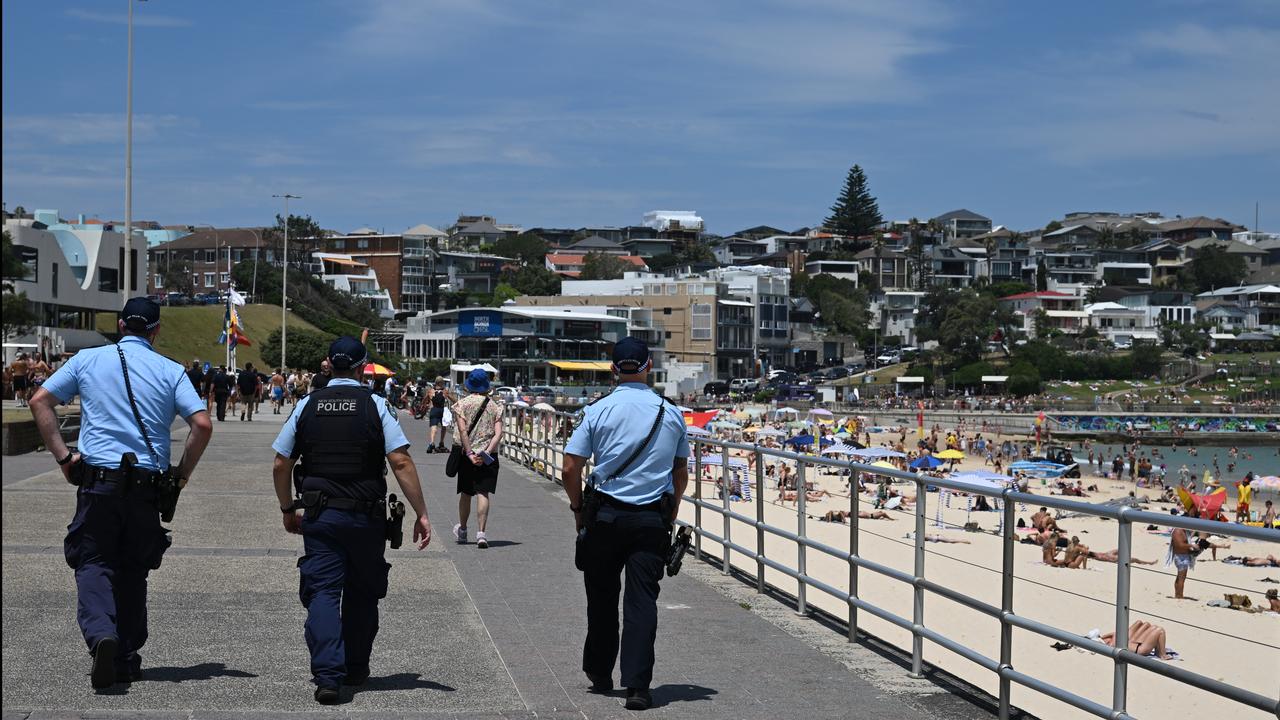
Police concede they should have conducted a threat assessment of Hanukkah events after a Jewish security group warned terrorist attacks were likely.
As a royal commission probed the actions of intelligence agencies and police in the lead-up to the Bondi massacre on December 14, NSW Police's terrorism head accepted they should have assessed the major Jewish celebration after security body CSG pled with them to ensure community safety.
The inquiry was earlier told there was no evidence any intelligence agency suspected a terror attack would take place before 15 people were killed in the anti-Semitic shootings.
But ASIO identified Jewish holy events as attractive targets for terrorists months before the Hanukkah tragedy.
NSW Police Assistant Commissioner Leanne McCusker, who commands the counter-terrorism squad, said threats to the Jewish community were concerning in the months before the attack.
But a threat assessment, which is carried out for major events such as New Year's Eve, Anzac Day and Mardi Gras and for the Jewish High Holy Days, was not done for Hanukkah.
Ms McCusker accepted the commission's interim recommendation that this be done in future was a good idea.
"It ensures the current threat environment is provided for that particular event (and) then is is detailed to that particular event," she told the commission.
A CSG manager - referred to as Witness ABO - said the organisation emailed police in November with its threat assessment for the Hanukkah period.
CSG's terrorist threat level was "likely', with reasons including a high level of anti-Semitic vilification.
CSG deployed 12 officers to the Bondi Beach events, none of whom were armed.
Witness ABO said another CSG official had requested police attend the event.
Police planned to provide a high-visibility presence, but only four officers and one area commander attended the event at various times.
Earlier, the commission explored ASIO circulating a threat assessment paper after two people were killed by an assailant at a synagogue in Manchester in October 2025.
The paper noted Jewish holy days and other significant dates were attractive targets for extremists, including Yom Kippur, the two-year anniversary of the October 7 attack on Israel by Hamas, and Hanukkah.
Yet the spy agency's summer holiday threat assessment published in December did not address warnings about terrorism at Jewish celebrations.
ASIO director-general Mike Burgess conceded in a written statement to the commission he should have noted the spy agency's general concern about terrorism threats and anti-Semitic conduct.
The December assessment should have been read in the context of Australia's terrorism threat level being at probable, meaning there was a greater than 50 per cent chance of an attack in the next 12 months, he said.
The October assessment after the Manchester attack noted ASIO's greatest concern was lone actors using simple tactics and readily-acquired weapons.
Mr Burgess said it was extremely hard to detect such attacks if people were not discussing plans with a broader circle, including at prayer groups.
"We aren't all-seeing or all-knowing and we don't aspire to be," he said.
Australian Federal Police Assistant Commissioner Stephen Nutt said the ASIO threat assessment was "reinforcement and reminder" of the heightened risk of incidents.
Before witnesses were called, counsel assisting the royal commission Richard Lancaster said the evidence was expected to show the massacre was a "surprise attack".