Police are “determined to do more” to hold to account domestic abusers who drive victims to kill themselves, the National Police Chiefs’ Council has said.
Assistant Commissioner Louisa Rolfe, the NPCC lead for domestic abuse, has said that “more posthumous investigations are taking place”, but that officers struggle with a lack of resources, adding that 20% of all crime relates to domestic abuse in most forces.
National guidance had been changed, she said, with the NPCC’s research team going into forces to look at how it was being applied. That guidance, she said, had been adapted based on feedback from families, who had consistently raised concerns about police response.
This included, Rolfe said, “officers too quick to assume, ‘well, it’s a suicide and therefore a case for the coroner, not an investigation to be had by policing’, too often assuming that the domestic abuse perpetrator was the primary next of kin, and therefore risking evidence being lost by, for example, returning personal property like phones to those individuals.
“Not being sufficiently curious in speaking to family, wider family members about what might be going on. So we changed the guidance and we have seen some improvements.”
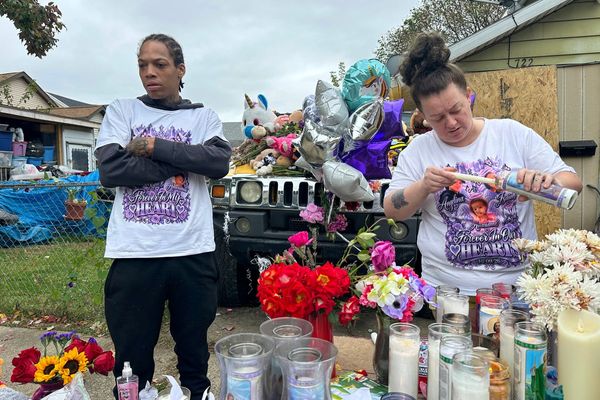
Rolfe made the comments after the Guardian revealed analysis suggesting that the number of women driven to suicide by domestic abusers was being seriously under-reported, with their cases often overlooked by the police. To illustrate the scale of the crisis, the Guardian is publishing a series of articles about some of those who have died by suicide after domestic abuse.
Rolfe said police forces had been urged to introduce a local review system, similar to that introduced by the Met after the case of Stephen Port, who killed young gay men in east London. Despite similarities in the deaths of four men, the Met failed to recognise that they might be connected.
Scotland Yard, she said, had introduced “a daily review process for all unexpected deaths to just ensure that there was a second opinion on each of those cases”. As a result of the recommendations in relation to domestic abuse suicides, “we’re certainly seeing more posthumous investigations”, Rolfe said.
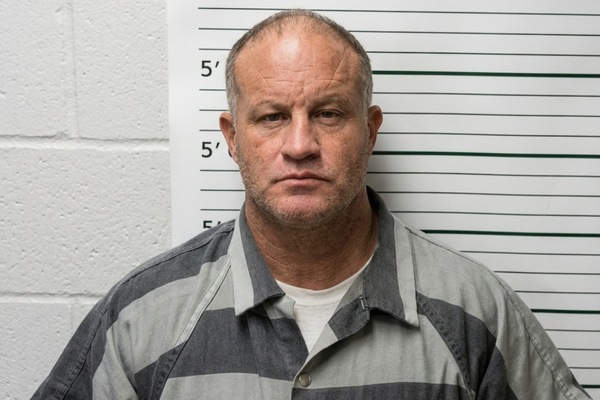
She pointed to the case of Kiena Dawes, who was subjected to repeated assaults, bullying and belittling from her partner Ryan Wellings before she took her own life, as an example of the difficulty in securing prosecutions. Dawes left a note on her phone saying “Ryan Wellings killed me”. He was found guilty of assault and coercive and controlling behaviour and sentenced to six and a half years, but found not guilty of manslaughter.
“We know from that case how difficult it can be to secure a prosecution that makes a causal link between the abuse and the death, so a manslaughter charge or homicide charge, but we want to pursue more of those,” she said.
Rolfe added: “But also for many families, ensuring that we’re investigating the coercive controlling behaviour that happened in an abusive relationship. So we are seeing more posthumous investigations, which is heartening.”
One of the biggest barriers to progressing investigations, Rolfe said, was diminishing resources, coupled with long delays in the criminal justice system. “The scale of this is challenging, policing has a finite resource,” she said. But she added: “The one really good thing I’ve seen in policing in my 35 years is that the focus on this work has really increased.”
Another challenge, Rolfe said, was the huge amount of digital data that police investigations now involved. “The more data that technology [such as mobile phones] includes, the more work there is for policing,” she said, “but we probably have less resources now than we had 20 years ago when people didn’t really use smartphones.”
Some families whose loved ones killed themselves after domestic abuse have complained that ongoing investigations into that abuse were dropped after a victim took their own life.
Katie Madden, whose case was revealed by the Guardian on Monday, took her own life hours after her partner Jonathon Russell told her to kill herself. At an inquest, Russell said he then ‘went back on’ himself and told her not to. He also admitted to giving her a black eye weeks before she died.
No criminal investigation was ever launched. Madden’s mother was told by police that officers only had the capacity to examine one month’s worth of messages, and dropped an investigation into alleged coercive and controlling behaviour.
In relation to posthumous investigations being dropped, Rolfe said: “There is a reality that we have more work than we can cope with and we have to cut our cloth and make really tough decisions about the prioritisation of cases. And for domestic abuse investigators, sometimes that might mean the cases where they are seeking to protect a victim who needs protection right now might take precedence over a case where sadly the victim is no longer around to be protected.”
However, she said that while she could understand see why officers might choose to discontinue cases, “that doesn’t mean they should stop”. “The most serious cases we deal with are deaths, and therefore we should not be not investigating,” she said.
Another issue, Rolfe said, was “poor communication by investigators overwhelmed with cases, and particularly with the impact of the crisis in the wider justice system”.
While a police investigator should have a caseload of about 15 cases, she said, some now would have more than double that, with the corresponding number of families to keep in touch with. “Ten years ago most of those cases will be in court over the next six months and then move out of their caseload,. For the last five years, those have not been going through the court process, so the list of victims that they’re keeping updated and supporting is just growing, so that’s really tough for policing.”
Rolfe added: “We’re were determined to do more. We’re seeing green shoots of improvement in our response. There’s still a huge amount more to do.”
In the UK, Samaritans can be contacted on 116 123 and the domestic abuse helpline is 0808 2000 247. In Australia, the crisis support service Lifeline is on 13 11 14 and the national family violence counselling service is on 1800 737 732. In the US, the suicide prevention lifeline is 1-800-273-8255 and the domestic violence hotline is 1-800-799-SAFE (7233). Other international helplines can be found via www.befrienders.org