How do you get a podcast on a weighty topic like pay equity to stand out in a crowded market with myriad listening choices?
The question was front of mind for feminists Angela Meyer, Erin Jackson and Tania Domett after they decided a podcast was the best way to protest the Government’s changes, which saw 33 active pay equity claims cancelled overnight.
Rather than producing a conventional current affairs podcast, they opted for a format blending investigative journalism with comedy and elements of true-crime storytelling.
“We’re savvy ladies. What’s the most popular podcast genre? True crime. Well, here’s a true crime,” says Meyer.
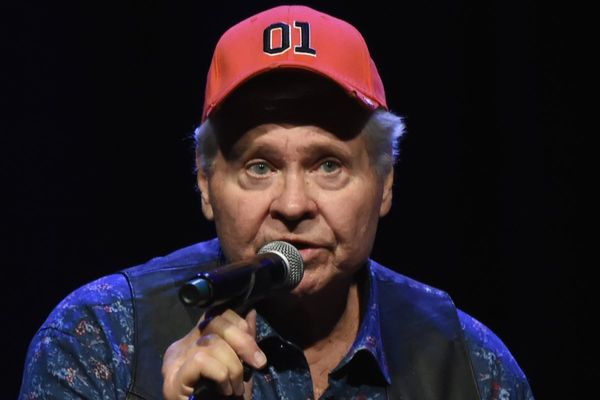
It helps if your circle of friends includes comedian Tom Sainsbury and actor Neill Rea, best known for his role as Detective Mike Shepherd in The Brokenwood Mysteries.
Meyer says the two helped frame the narrative as an investigation into a political mystery. Sainsbury and Rea also make cameo appearances in the four-part series.
The creative approach was designed to make a technically complex subject more engaging without sacrificing depth.
“We didn’t want people just jabbering away with hot takes,” she says. “We wanted something more in-depth.”
Sainsbury’s involvement proved particularly valuable in helping shape the storytelling.
“He’s a very smart human,” says Meyer.
“He helped us think about how to explain complicated concepts in ways people could actually follow.”
Beyond unpacking the legislation, the women hope the series reignites public discussion about gender equality more broadly.
“Our mission is always to keep gender on the agenda,” says Meyer.
The three women are co-founders of feminist social-change agency, Project Gender, which specialises in research and advocacy.
In 2022 it took TVNZ to task over its decision to air FBoy Island NZ. Meyer says its “Sort it out, Simon” (Simon Power was TVNZ’s CEO at the time) campaign produced a quick result.
“We’d done a piece of work around online dating habits and one of the things that had come through in the research was the high rates of non-consensual choking with people who’d just met on a dating app. TVNZ had a contestant that had been taken off FBoy because he’d gone to court on choking charges so that was the context.”

The idea of a pay equity podcast emerged during a conversation with former Cabinet ministers Marilyn Waring (National) and Margaret Wilson (Labour) at a Global Women’s conference in Rotorua.
Unions (including the PSA, PPTA, NZEI, and Nurses Organisation) were launching a a High Court challenge against the Government, while the Pay Equity Coalition Aotearoa and the Human Rights Commission were taking the issue to the UN.
“We were asking ourselves how to connect all these dots and take them to a broader audience,” Jackson says. “There are so many amazing people doing incredible work. The podcast became the mechanism to showcase that.”
“I think also a lot of my friends who were coming to me saying I don’t understand what this pay equity thing is but I think it’s something I should really care about,” adds Meyer.
Shortchanged investigates the events leading up to the Government’s legislative changes, which were developed in secrecy and rushed through Parliament without the usual scrutiny. It also explores the work of the unofficial People’s Select Committee, a cross-party group of former MPs who concluded the process represented a “flagrant and significant abuse of power”.
For Jackson, the announcement landed as more than a political story.
“My reaction was a deep sense of overwhelm and despair at the use of urgency and the speed of it,” she said. “It felt like they’d screwed people over again in a way that was more insidious than before.”
Domett says the changes felt like the reversal of decades of gradual progress.
“I felt shock and anger but also I just felt a bit defeated because having been a lifelong feminist, the work that I’ve done with others has always been about incremental progress and this was just yanking us back to 1972. Are you kidding me?”
Meyer recalls her initial doubts before the scale of the decision became clear.
“I was almost confused at first. Like, what? I don’t understand. Then came that dawning realisation: how is this possible?”
The trio said one of the most surprising findings during their investigation was the extent to which some ministers appeared convinced they had improved the system.
After attending a public meeting hosted by Workplace Relations Minister Brooke van Velden, Domett came away with an unexpected impression.
“What shocked me was realising she absolutely believes what she did was for the better,” she says. “She really believes she’s made the pay equity regime better.”
The series also grapples with the uncomfortable role played by female MPs in advancing legislation that overwhelmingly affects women workers.
Jackson rejects the notion that women politicians should automatically be expected to champion feminist causes.
“There’s a danger in assuming women will always bond together simply because of their gender,” she says. “That’s actually quite patronising. People make political choices.”
At the same time, she argues that some leaders made what she describes as a “patriarchal bargain” in pursuit of political objectives.
“They made a political gamble. There’d be some heat, but they’d save $12.8 billion and move on.”
Whether the issue ultimately influences voting behaviour is a question still to be answered. The women believe many New Zealanders remain deeply troubled by not only the substance of the changes but the way they were pushed through.
“I think they’ve underestimated how angry people are,” Jackson said. “Not just about the impact on low-paid women, but about what it means for our democratic processes.”
As election campaigning begins to loom on the horizon, the podcast’s final message is a simple one drawn from the key workers whose claims were halted.
“Think about us,” Jackson says. “And think about who you vote for.”