Get all your news in one place.
100's of premium titles.
One app.
Start reading
The Times of India
The Times of India
World
Chidanand Rajghatta

Pod Save America: How Rogan is losing his josh for Trump

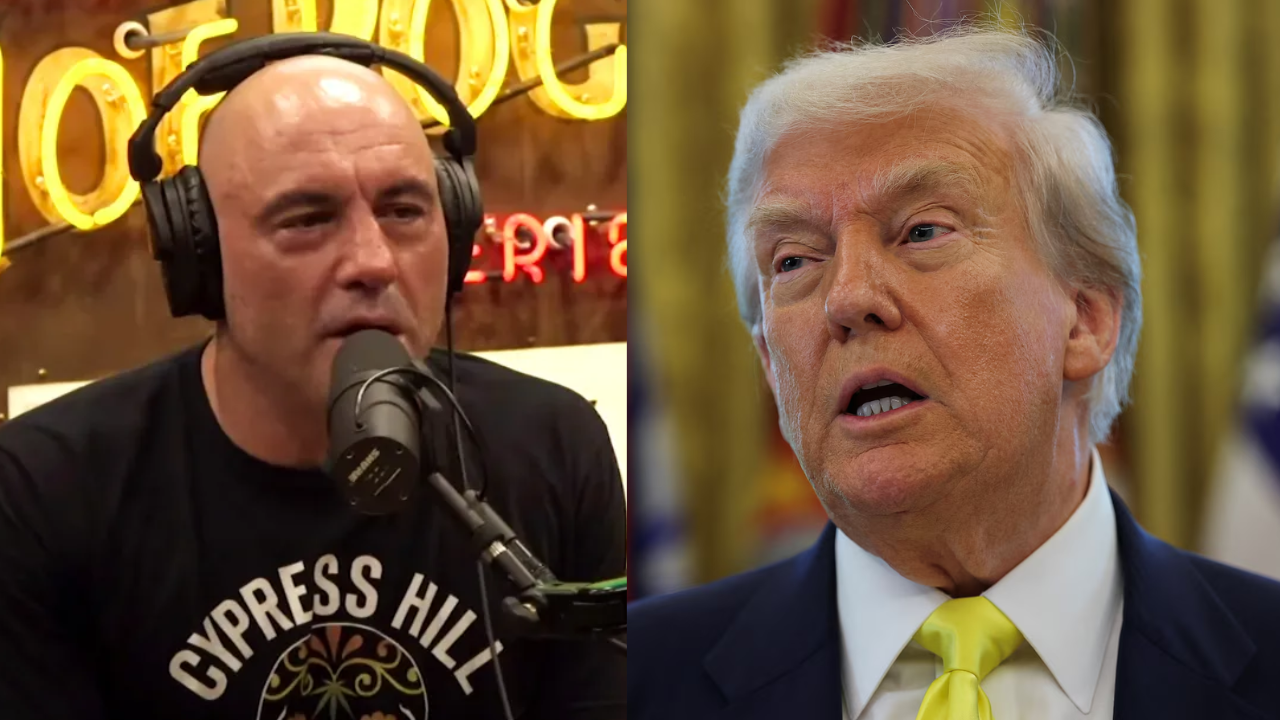
TOI correspondent from Washington: A loose but influential coalition of American podcasters, digital commentators, and influencers that helped propel Donald Trump back to power in 2024 is showing visible signs of fracture, with several high-profile voices now openly questioning — even skewering — his presidency and its policies.

At the center of this shift is Joe Rogan, whose show, The Joe Rogan Experience, remains one of the most powerful media platforms in the world, with close to 4 million views/downloads per episode. Rogan’s late endorsement of Trump in 2024 was widely seen as a decisive boost, particularly among younger male voters who distrust traditional media, giving the 45th President an unfiltered channel to bypass mainstream outlets and speak directly to a politically disengaged demographic.
But in recent weeks, Rogan’s tone has shifted sharply. In a widely discussed episode last week, he suggested Trump may have launched the Iran war as a diversion from domestic scandals, calling aspects of the conflict “psychotic” and questioning its motives. He has also described Trump’s actions as “so insane, based on what he ran on,” capturing a sense of ideological betrayal felt by parts of his anti-war audience.

In a March episode, Rogan, referring to reports of a military commander who claimed Trump was "anointed by Jesus to cause Armageddon," explicitly called out "crackpot Christian nationalists" -- an ironic come-to-Jesus moment for a man who has platformed some of the same wingnuts.

The disillusionment is not confined to Rogan. A cluster of podcasters in the Trump “manosphere” — including Theo Von and Andrew Schulz — have begun voicing disquiet about the President’s policies, especially the Iran conflict. On recent podcasts, they spoke of feeling “scared” about the administration’s direction and questioned whether Trump had abandoned his anti-war and anti-establishment promises.

Criticism is also coming from ideological allies such as Tucker Carlson, whose podcast ranks among the most popular conservative programs in America. Carlson has accused Trump of betraying “America First” principles, calling the Iran war a strategic and moral error. In blunt terms, he described the military action as “absolutely disgusting and evil,” marking one of the starkest breaks between Trump and a media ally.

Even within Trump-friendly media, fractures are widening. Megyn Kelly, host of The Megyn Kelly Show, has publicly split with the administration over the Iran conflict, questioning the rationale for US involvement, giving airtime to dissenting voices within the national security establishment, and hosting Trump critics like former Congresswoman Marjorie Taylor-Greene. Even right wing crazies like Nick Fuentes and Candace Owens are starting to think Trump is too crazy for America.

The growing unease is significant because these podcasters were not merely commentators — they were seen as kingmakers. Trump’s 2024 campaign invested heavily in non-traditional media, appearing on podcasts and leveraging influencer networks rather than relying solely on legacy outlets. Figures like Rogan helped normalise Trump among younger, politically unaffiliated men, while a broader ecosystem of streamers, meme accounts, and culture-war commentators amplified his messaging. This decentralised media strategy played a crucial role in mobilising new voters.

But that same decentralisation is now working against Trump. Unlike party officials or traditional media allies, influencers are accountable primarily to their audiences and algorithms. As one recent analysis noted, their loyalty is “to their audiences rather than to a central leadership,” making the movement inherently unstable. The result is what some observers are calling a “MAGA media civil war,” although many of these influencers built their brands on anti-establishment skepticism, making unconditional loyalty to any political figure — even Trump — difficult to sustain.

As cracks appear on the right, left-leaning podcasts have intensified their attacks on Trump, seeking to capitalise on the fragmentation. Podcasts like The MeidasTouch along with other progressive outlets such as Pod Save America and The Young Turks, have adopted an aggressive, rapid-response strategy — flooding social media with short, shareable clips attacking Trump’s policies and amplifying dissent within his base.

For Trump, the emerging rift underscores the risks of relying on a personality-driven media ecosystem. The same influencers who helped elevate him are now questioning his decisions — and doing so before audiences numbering in the millions. Early signs suggest this could have political consequences. Trump’s approval ratings have dipped amid the controversy, and unease among influential podcasters may signal deeper erosion within key voter blocs. More fundamentally, the moment highlights a structural reality of modern politics: in an age of decentralised media, no leader — not even one as dominant as Trump — can fully control the narrative.

Sign up to read this article
Read news from 100's of titles, curated specifically for you.
Already a member? Sign in here
Related Stories
Top stories on inkl right now
One subscription that gives you access to news from hundreds of sites
Already a member? Sign in here
Our Picks
Fourteen days free
Download the app
One app. One membership.
100+ trusted global sources.