A senior cabinet minister has delivered a sharp response to threats by Donald Trump if the UK and other Nato countries refuse to send warships to protect oil supplies in the Middle East.
Work and pensions secretary Pat McFadden said the Iran war had nothing to do with Nato and Britain did not have to support all military actions by the US.
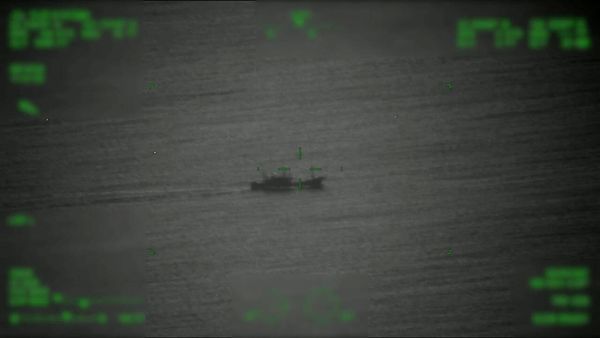
Mr McFadden’s comments came after Mr Trump said Nato faced a “very bad future” if member states did not use their navies to support the US in the Strait of Hormuz, where Iran is blocking fuel tankers taking oil to the rest of the world.
Sir Keir Starmer said on Monday the UK “will not be drawn into the wider war”, but said he is working with allies on a plan to reopen the strait.
Mr McFadden said: “It is not a Nato war, it is a US-Israeli action. The articles of association of Nato are that it is a defensive alliance.

“We come to one another’s aid when those articles have been breached. We are deeply committed to Nato, but it was not conceived and does not operate in the kind of situation we are seeing in the Gulf right now.”
Mr McFadden said Sir Keir had made it clear from the start of the conflict that “the UK is not a protagonist in it and that will frame the discussions we have with the US or anyone else about our involvement or (military) equipment or anything like that.”
Asked if he took Mr Trump’s comments about Nato seriously, Mr McFadden said it was necessary to “see through” some of the statements made by him.
“We always take the president seriously, but we have learned in the last 15 months or so since he came into office that there is a lot of rhetoric and statements.”
The UK was determined to maintain its historic alliance with America, but that “does not mean we have to support every single decision or military intervention that the US takes”.
Mr McFadden said he supported the former head of UK armed forces, General Sir Nick Carter, who also criticised Mr Trump’s comments about Nato.

Sir Nick, chief of the defence staff from 2018 to 2021, said: “Nato was created as a defensive alliance. It was not designed for one of the allies to go on a war of choice and then oblige everyone else to follow. I am not sure if that is the sort of Nato any of us wanted to belong to.”
Mr McFadden described Mr Trump’s presidency as “transactional”, adding: “Our job is to navigate this, to always remember that the friendship between the United States and the United Kingdom runs very deep.
“It’s a good relationship. It’s enduring and I think it will outlast all the personalities involved.”
The US president piled pressure on the prime minister to deepen his involvement in the escalating conflict over the weekend, calling on Britain and other nations – including France, China and Japan – to send ships to the area to protect oil tankers from Iranian attacks.
But Sir Keir did not heed the calls, with ministers instead mulling over the possibility of sending mine-hunting drones to the region as anxiety grows over an Iranian build-up of explosives in the narrow sea passage.
In an interview with the Financial Times on Monday, Mr Trump reiterated his call for allied assistance in the Strait of Hormuz: “It’s only appropriate that people who are the beneficiaries of the strait will help to make sure that nothing bad happens there.”
Arguing that Nato faces a “very bad” future should its member states fail to help, the president added: “We’ll see if they help us. Because I’ve long said that we’ll be there for them, but they won’t be there for us.”

As pressure grows on the PM to take more action over the Middle East crisis, he instead held a press conference on Monday where he pledged to help households with the cost of living crisis worsened by an energy price spike driven by the conflict.
Sir Keir said on Monday that helping households with living costs is “my first priority” and he announced a subsidy for those who use heating oil to warm their homes, after they faced price spikes caused by the war.
The announcement comes after chancellor Rachel Reeves said Treasury officials had “found the money” to help the 1.5 million households relying on the fuel.
Heating oil is not protected by the energy price cap and its price per litre has more than doubled as a result of the stranglehold on shipping in the Middle East.
Inside Downing Street, Sir Keir said: “It’s moments like this that tell you what a government is about.
“My answer is clear. Whatever challenges lie ahead, this government will always support working people.
“That is my first instinct – my first priority – to help you with the cost of living through this crisis.”
The prime minister also raised concerns about claims suppliers of heating oil have cancelled orders and then jacked up prices.
Last week, Ms Reeves and energy secretary Ed Miliband met oil firm bosses and forecourt operators to warn them against profiteering.
In his press conference, Sir Keir said: “I will not tolerate companies trying to exploit this crisis to make money from working people… if the companies have broken the law, there will be legal action.”
On Sunday, Sir Keir spoke to Mr Trump for the first time since the US president called for help from other nations to secure the Strait of Hormuz.
The pair “discussed the ongoing situation in the Middle East and the importance of reopening the Strait of Hormuz to end the disruption to global shipping, which is driving up costs worldwide”, a Downing Street spokesperson said.
"One way or the other, we will soon get the Hormuz Strait OPEN, SAFE, and FREE!" - President DONALD J. TRUMP pic.twitter.com/8XzG2aTmQT
— The White House (@WhiteHouse) March 14, 2026
But there was no response from the prime minister to the president’s call for the UK and other nations impacted by the blockade to send warships to the region to protect the Strait of Hormuz.
Britain is “intensively” looking at what it can do to help reopen the route, Mr Miliband said on Sunday.
The military could send mine-hunting drones to the region, defence sources have said, as the government seeks to stave off criticism from Mr Trump for ignoring his call for warships.
Elsewhere, foreign secretary Yvette Cooper has mobilised more than £5m in aid for humanitarian organisations in Lebanon as the conflict intensified between Israel and the militant group Hezbollah.
She said she was “gravely concerned about the developing conflict in Lebanon and the scale of the humanitarian impact”.
US-Iran war will cause food prices to spike, NFU chief warns
Iran-US war latest: Nato allies reject Trump’s demand to help open Strait of Hormuz
Starmer tells Trump: Britain will not be dragged into wider war on Iran
Home Office use of AI in asylum cases could be unlawful, legal experts warn
DJ Charles serves up royal remix during visit to arts organisation
Richard Tice defends tax record as he questions Labour’s contributions