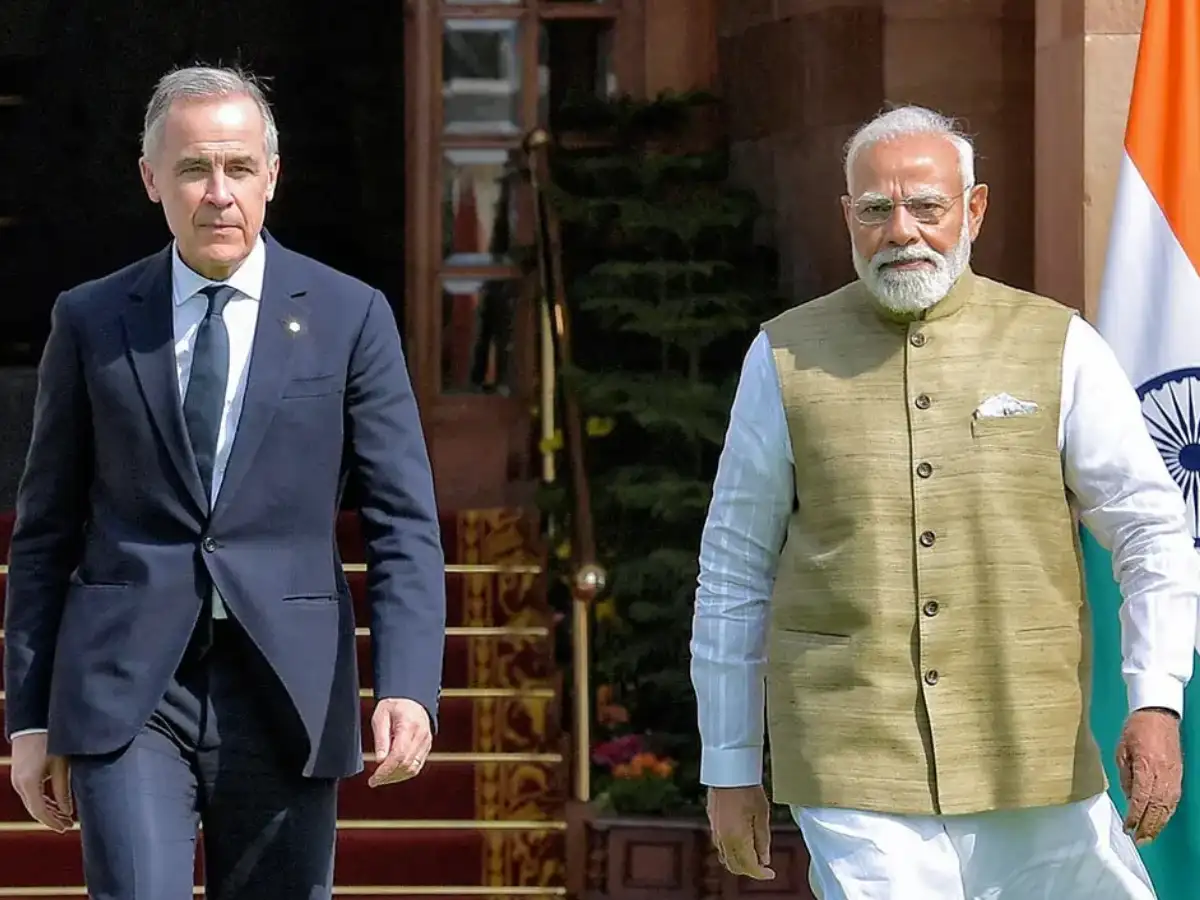
Prime Minister Narendra Modi is expected to visit Canada in December as New Delhi and Ottawa push to conclude negotiations for a trade agreement by the end of the year, Canadian Prime Minister Mark Carney said on Tuesday.
Speaking at a news briefing on the sidelines of the United Nations General Assembly in New York, Carney said negotiations between the two countries were progressing well and described Canada's relationship with India as "exceptionally important".

Also Read: India, Chile working towards CEPA, top official says
"We're making good progress in our trade negotiations with India. It is an exceptionally important relationship, on many, many levels. People-to-people levels, security levels and also trade and economic. He (PM Modi) will be visiting Canada around that time. I very much look forward to hosting him," the Canadian PM said.
Carney's confirmation of the expected visit comes as India and Canada accelerate negotiations for a Comprehensive Economic Partnership Agreement (CEPA), with both governments seeking to conclude the talks by the end of 2026.
According to a Bloomberg report, a trade agreement is likely to be signed around Modi's expected December visit to Canada. The report cited The Globe and Mail, which quoted India's envoy Dinesh Patnaik on the expected timing.
The renewed trade push marks a significant shift in India-Canada relations following a prolonged period of diplomatic strain under former Canadian prime minister Justin Trudeau. Relations had deteriorated sharply after Trudeau accused Indian agents of involvement in the killing of Hardeep Singh Nijjar in Canada, allegations New Delhi rejected.
Engagement began gathering momentum again in 2025, when the two countries moved to rebuild diplomatic and economic ties. Trade negotiations were subsequently revived as both governments sought to deepen commercial engagement.
Also Read: India-New Zealand FTA to come into force on October 20: Union Minister Piyush Goyal
Fifth round of trade talks from October 5
The next round of negotiations is scheduled to begin on October 5, less than three weeks after the previous round, underscoring the faster pace at which the two sides are now pursuing the agreement.
Commerce and Industry Minister Piyush Goyal said on September 21 that India and Canada had agreed to fast-track the CEPA negotiations after he held talks with Canadian International Trade Minister Maninder Sidhu in Mumbai.
"I have concluded the fourth round of negotiations for the Canada trade deal with my counterpart Mr Maninder Sidhu in Mumbai on Friday. Very productive discussions and both sides have resolved to fast-track negotiations, in view of which our team is now slated to go for the fifth round," Goyal said.
Goyal said the fifth round would begin on October 5 and indicated that the coming months could prove crucial for economic ties between the two countries.
"Fifth of October. So you can see that as the progress is taking shape, the speed of negotiations with Canada is also improving. Let's see, the next 90 days should be a very defining period in the Canada-India relationship," the Minister said.
Ahead of Sidhu's September 18-19 visit to Mumbai, Canada had said three rounds of the renewed CEPA negotiations had already been completed and that both countries shared the objective of wrapping up negotiations by the end of 2026.
The Canadian side has said an agreement with India could help double bilateral trade to $70 billion.
Trade talks revived after years of negotiations
India and Canada have been discussing a comprehensive trade agreement for more than a decade.
Negotiations were formally relaunched in March 2022, alongside efforts to negotiate an Early Progress Trade Agreement as an interim arrangement. Nine rounds were held between 2022 and 2023 before negotiations were paused in August 2023 as diplomatic tensions between the two countries escalated.
The trade relationship began to regain momentum in 2025, followed by the launch of a fresh CEPA process. Goyal and Sidhu signed the Terms of Reference for the negotiations on March 2, 2026, during Carney's visit to India, with both governments committing to work towards concluding negotiations by the end of the year.
Bilateral goods trade stood at around $8 billion in FY2025-26, according to Commerce Ministry data. India exported goods worth $4.67 billion to Canada while importing $3.28 billion during the year.
India steps up trade diplomacy
The Canada negotiations are part of India's broader effort to expand access to overseas markets and diversify its commercial relationships.
Bloomberg reported that New Delhi is also working with Mexico to finalise a framework for formal trade negotiations, citing people familiar with the discussions. Officials are seeking faster progress as India, Canada and Mexico look to diversify their trading relationships amid disruptions stemming from US trade policies, according to the report.
Mexico's Economy Ministry told Bloomberg that it was analysing the possibility of an agreement with India but that there was no concrete or final proposal yet. India's Commerce and Industry Ministry did not respond to Bloomberg's request for comment.
India and Mexico recorded two-way trade of nearly $8 billion in 2025-26, according to the report.
Mexico is seeking greater access to the Indian market for products including tequila, fruit and automobile components, while India wants Mexico to lower barriers on automobiles, auto parts and steel, Bloomberg reported, citing people familiar with the discussions.
The report said India is considering a limited preferential trade agreement covering a relatively small number of goods rather than a broader trade pact. The terms for negotiations are expected to be signed soon, with the two sides seeking to conclude the talks by December, according to the report.
The accelerated engagement with Canada and Mexico comes as India expands its network of trade agreements. New Delhi has struck agreements with the UK, Oman and New Zealand over the past year and concluded long-running negotiations with the European Union, while continuing negotiations with other trading partners.
With inputs from agencies