Get all your news in one place.
100's of premium titles.
One app.
Start reading
The Times of India
The Times of India
World
TOI World Desk

Plastic collected from mangroves became scarves in a village recycling effort

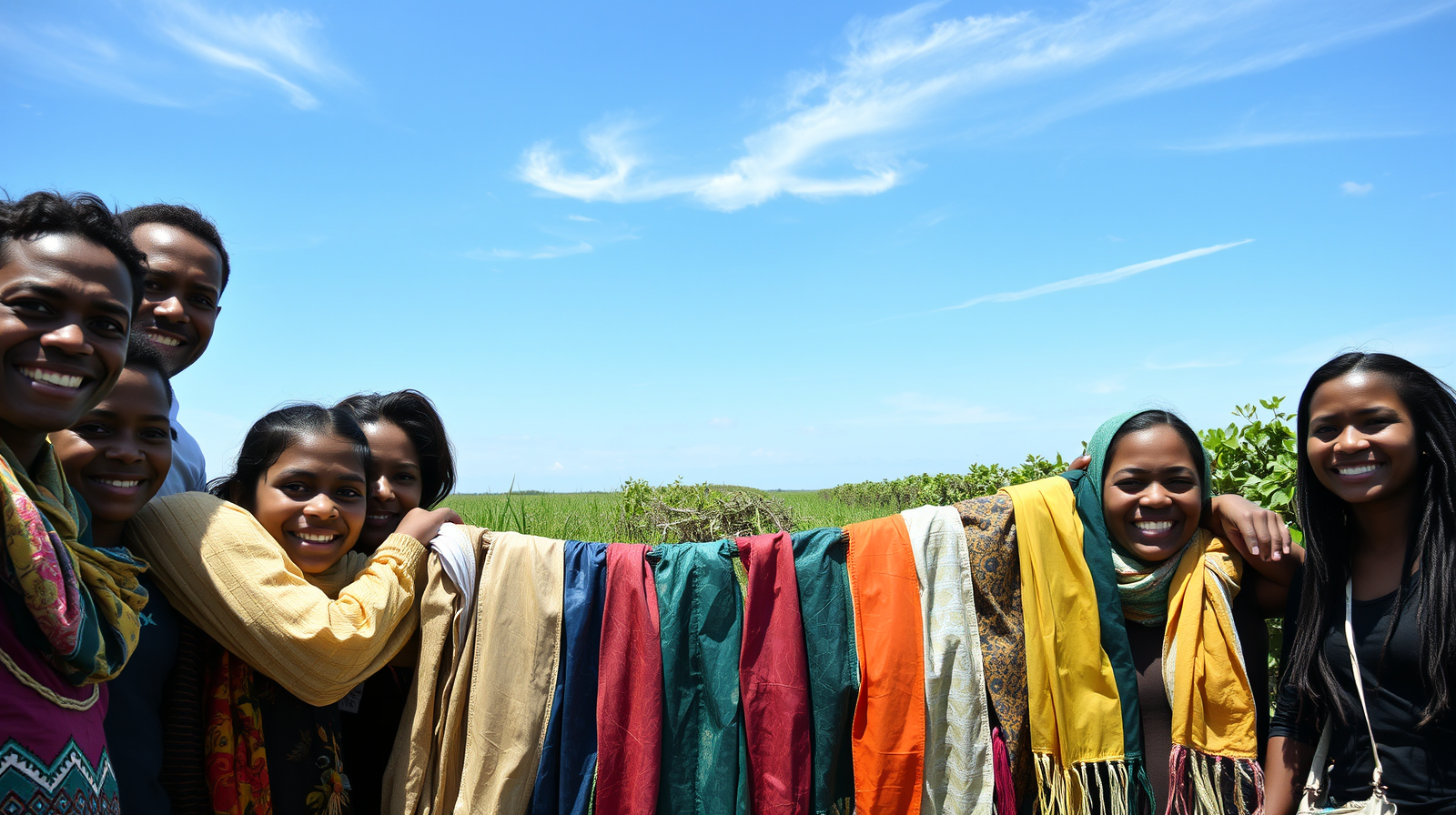
In Tantou Village, in Nansha District of Guangzhou, Guangdong Province, mangroves were once little more than ordinary shoreline plants to many residents. Huang Jinhua, the village's Party secretary, recalled growing up catching fiddler crabs and river shrimp along the beach without giving much thought to the mangroves around them. That changed in 2019, when a powerful typhoon struck the area, and the water level rose so quickly that villagers began preparing to evacuate. But the tide eventually receded, prompting residents to recognise the role the mangroves played as natural coastal protection. The village began organising regular beach cleanups and carrying out pest and disease control for the plants. What started as a local effort later grew into a more organised conservation programme involving researchers, volunteers, students and residents. The village now recycles plastic collected from its mangroves into silk-like scarves, which are given to volunteers as a reminder of their efforts.

Get breaking news anytime, anywhere. Download the TOI app now!

How a tense encounter with researchers turned into a scientific partnership

The village's conservation work became more systematic after an unexpected encounter in 2022. During a routine patrol, residents spotted a group of strangers near the mangrove forest and immediately became suspicious. They approached the visitors and warned them not to cut the trees. The strangers turned out to be researchers from the Guangzhou Marine Carbon Peaking and Carbon Neutrality Research Association, who had travelled to Tantou to survey the mangroves. The researchers had previously identified the forest using drones and remote sensing technology and found that although the mangroves were growing well, the area lacked proper scientific management. The misunderstanding quickly turned into cooperation. With support from the United Nations Development Programme, the association helped build a 300-metre mangrove science corridor in 2023, featuring 46 display panels along the wetland. The corridor gave the village a way to explain the ecosystem to visitors while connecting local conservation work with scientific research. Instead of viewing outside researchers with suspicion, residents began working with them to better understand and protect the mangroves. The partnership also brought more organised environmental education into the village.

How the village turned its library into a marine science base

The new partnership encouraged residents to become more involved themselves. Song Meiying, Tantou's deputy Party secretary, said seeing a public welfare organisation travel so far specifically to help protect the mangroves inspired the village to increase its own efforts. One part of that response was transforming the local library into a marine science base containing more than 1,000 specialised books. The village also formed a volunteer team of more than 50 local women and children who serve as science interpreters for visitors. Academics have joined the effort as well. Liang Xiaoting, an associate professor at Guangdong Eco-Engineering Polytechnic, became involved after being moved by the mangroves during a summer cleanup. She spontaneously picked up a microphone and began explaining the ecological value of mangroves to people nearby. Liang now regularly volunteers in Nansha and leads her students in developing ecological courses for primary and secondary schools.

Why the village decided collecting trash was not enough

Regular beach cleanups eventually showed residents and researchers that simply removing rubbish from the wetland was not enough. That led to a "waste-to-wealth" initiative in which plastic collected from the mangroves was recycled into silk-like scarves. The scarves are given to volunteers as a tangible reminder of their contribution to the cleanups. The programme has also brought volunteers from beyond Tantou. Huang said people now travel from across the Guangdong-Hong Kong-Macao Greater Bay Area to take part in beach cleanups, including many young people from Hong Kong and Macao. With more people visiting the wetland for cleanups and field research, local leaders are considering a small station near the mangroves where volunteers and researchers can rest.

How Tantou's mangrove work fits into China's wider conservation effort

Tantou's experience comes as China's mangrove coverage has grown nationally. During the 14th Five-Year Plan period from 2021 to 2025, China's mangrove area expanded to 465,000 mu, or about 31,000 hectares, making China one of the few countries in the world to record a net increase in mangrove coverage during the period. Mangroves, alongside seagrass and coral reefs, are recognised globally as one of the three main marine coastal ecosystems. They support offshore fisheries, help purify the surrounding environment and contribute to carbon sequestration.

Sign up to read this article
Read news from 100's of titles, curated specifically for you.
Already a member? Sign in here
Related Stories
Top stories on inkl right now
One subscription that gives you access to news from hundreds of sites
Already a member? Sign in here
Our Picks
Fourteen days free
Download the app
One app. One membership.
100+ trusted global sources.