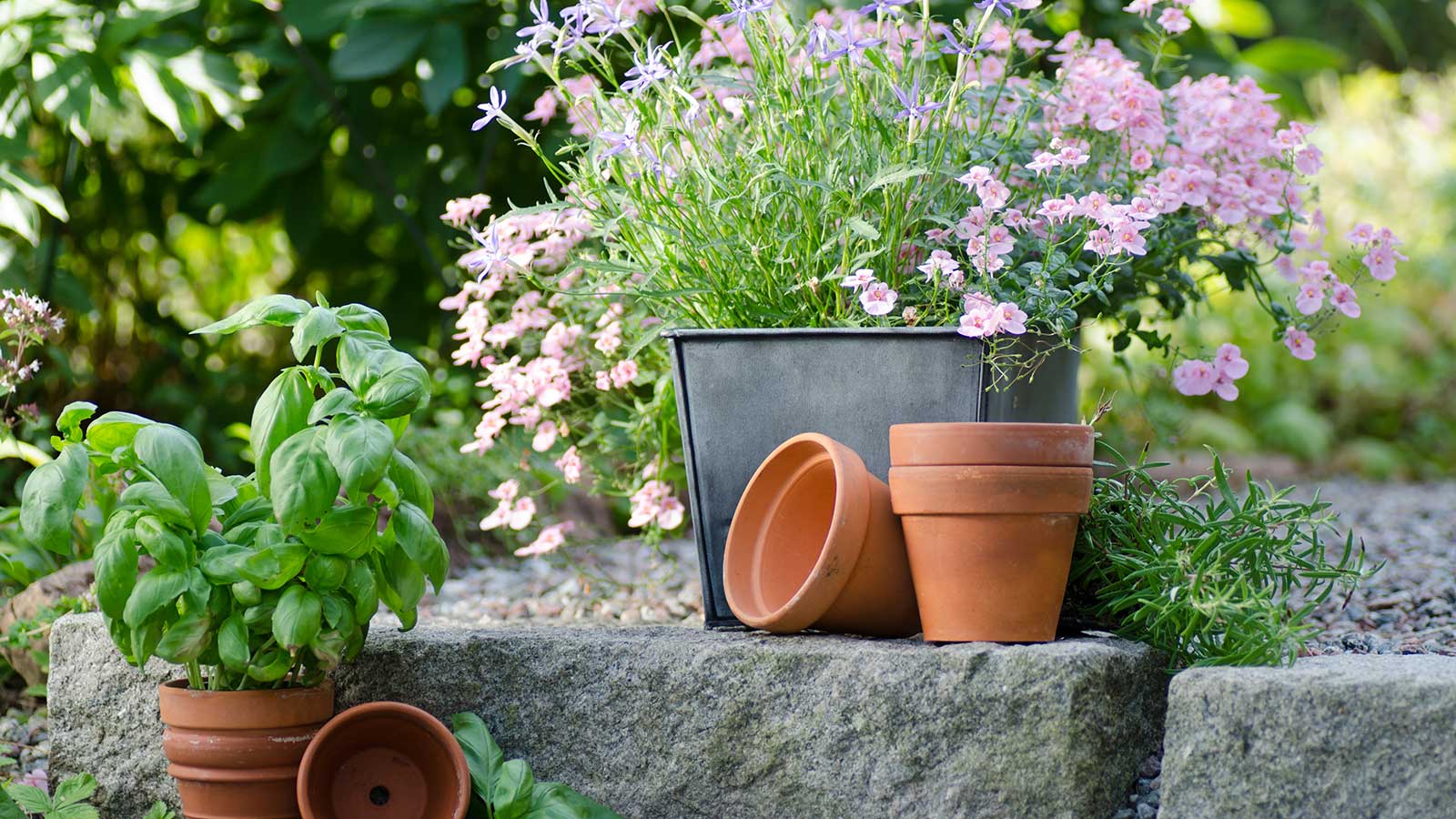
Many of us buy plastic for our yard without much thought. It's easy to do, as plastic tools, pots, and weed-suppressant fabric are readily available and often cheap. However, knowing the downfalls of this material may make you think twice, next time you're in the market for something new.
Opting for non-plastic alternatives is key for a more sustainable garden. Anna Ohler, owner of Bright Lane Gardens nursery, explains: 'Plastic is very common in gardening these days, but it breaks down over time, becoming brittle and difficult to recycle. Exposure to sunlight causes most plastic materials to degrade even faster, which is very hard to avoid in the sunny environment of a garden. An astounding amount of plastic products end up in landfills or release microplastics into the soil every year,' she adds.