Global efforts to limit climate change require deep cuts to carbon emissions. However, global emissions are still growing. Currently, we emit roughly 42 billion tonnes of carbon dioxide from fossil fuel use and land use changes every year.
To achieve the targets of the Paris Agreement, which included a long-term commitment to limit global warming to 1.5°C, it will also be necessary to do more than cut emissions. What is also needed is large-scale removal of carbon dioxide from the atmosphere. Any delay in emission reductions increases our reliance on future carbon removal. Yet, carbon removal does not come without trade-offs.
Some strategies to remove carbon are very land intensive. Examples include planting trees, or growing crops that can be used as alternative sources for energy production. This would have to be done at massive scale – across millions of square kilometres of land. In turn, this could have serious biodiversity implications if not carefully managed.
In a recent study, our team of climate scientists set out to better understand the dynamics between future climate action and the protection of biodiversity. Our aim was to identify potential conflicts – but also synergies – between carbon removal and biodiversity conservation goals.
We analysed widely used decarbonisation scenarios. Scientists use these to figure out how our energy, economy and land use patterns should change to achieve ambitious climate targets. We wanted to gain deeper insights into how much – and where – land is allocated for carbon removal strategies in such scenarios, and how that might affect biodiversity conservation.
We combined scenario-based global maps of future land use for carbon removal (like planting trees or energy crops) with biodiversity maps and assessed the extent to which these overlap.
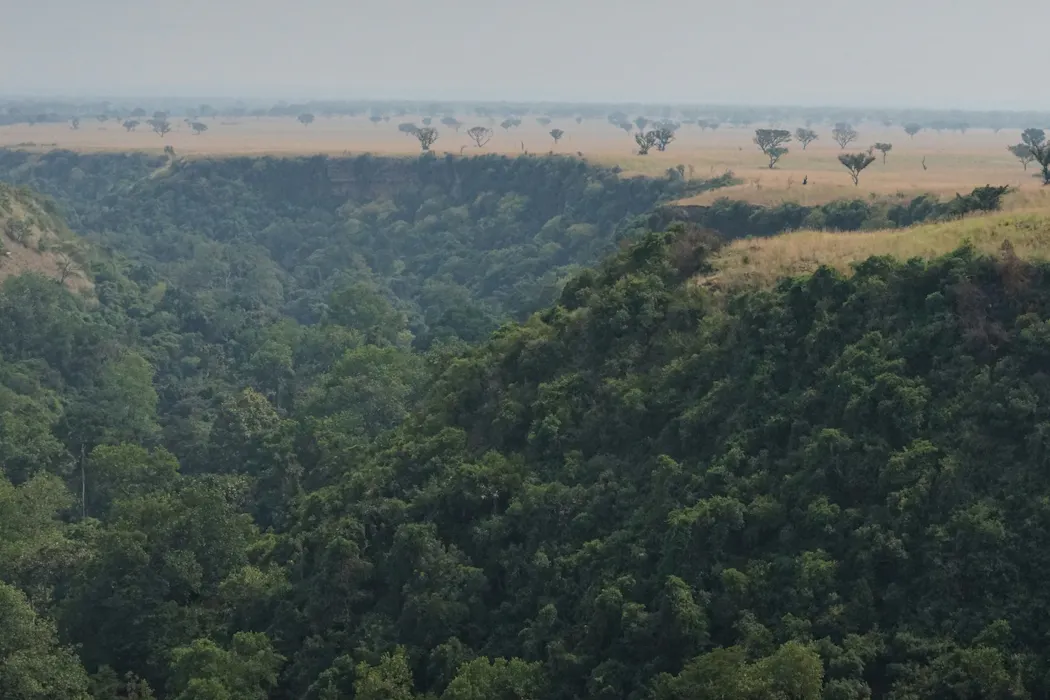
We found that, in many places of overlap, carbon removal strategies may conflict with biodiversity conservation. For example, in pristine ecosystems such as savannas and grasslands, which do not normally have much forest cover, planting trees and energy crops can harm habitats.
But our study also showed how careful choices about locating land-intensive carbon removal strategies may avoid negative impacts. There could even be benefits for biodiversity.
Our findings could inform plans for how to achieve ambitious climate action as well as biodiversity conservation.
Important biodiversity areas
The world has been losing biodiversity at a rate of 2%-6% per decade over the last 30-50 years. Intense resource extraction, climate change, environmental pollution and invasive species are some of the drivers. Biodiversity is critical for pollinating food crops and regulating water and nutrient cycles.
To address this crisis, the 2022 landmark biodiversity conservation agreement, the Kunming-Montreal Global Biodiversity Framework, set out a target to
bring the loss of areas of high biodiversity importance … close to zero by 2030.
But the framework does not clearly define areas of high biodiversity importance. In our study, we set a focus on so-called climate refugia, which are critical areas for biodiversity. These climate refugia areas were defined by a team of biodiversity experts as part of the Wallace Initiative. Specifically, climate refugia are areas where climate change occurs relatively slowly. In these locations, animal, plant and fungal species are protected from harm – at least to some degree.
We also looked at biodiversity hotspots. These are areas that have very high levels of different and rare species. Both climate refugia and biodiversity hotspots require special policy attention to avoid human disturbances and to curb global biodiversity loss.
Carbon removal in biodiversity areas
Our analysis took in various scenarios, ranging from current policy plans to highly ambitious ways to limit long-term global warming to 1.5°C. It showed that land-intensive carbon removal strategies would take place in up to 13% of global climate refugia areas. The overlap between carbon removal and biodiversity areas is not a problem in every case, but we identified several areas where it would likely be harmful for ecosystems.
Read more: Zimbabwe’s forest and energy projects reveal the downside of carbon credits
One example is western Africa. Here, several of the scenarios show overlap between important biodiversity areas and future production of energy crops – crops grown to produce energy and capture carbon, such as miscanthus or switchgrass.
The Global Biodiversity Framework aims to prevent harmful changes in land use (for example, changes from a biodiverse natural area to a single-crop area). But this restriction could make it more difficult to allocate enough land for carbon removal to meet ambitious climate targets.
Our study shows that if this target is strictly enforced, more than 50% of the land set aside for carbon removal in the assessed scenarios would become unavailable. Other land would have to be used instead, potentially abandoned cropland. Or less land-intensive strategies to remove carbon would be needed.
Towards biodiversity-sensitive planning
Careful planning and site selection for carbon removal are key. Our study shows several biodiversity areas in which carbon removal strategies may bring ecosystem benefits.
Read more: Mozambique forest stores huge amounts of carbon: laser technique puts new value on miombo woodlands
For example, forest restoration (to remove carbon) in degraded areas could create green corridors, reconnecting fragmented habitats. That would be good for biodiversity. Carbon removal strategies may also reduce the warming-related loss of biodiversity areas. That would help preserve important habitats.
But carbon removal interventions must be carefully tailored to the local context.
Ultimately, rapid and deep emission reductions are our best chance to limit global warming, reduce the need for carbon removal and lower the related risks to biodiversity.

Ruben Prütz received funding from the European Union’s Horizon Europe research and innovation programme under grant agreement no. 101081521 (UPTAKE).
Gaurav Ganti received funding from the European Union's Horizon Europe research and innovation program under grant agreement nos. 101081521 and 101081369.
Joeri Rogelj received funding from the European Research and Innovation programme, which partially funded involvement in this research.
Sabine Fuss received funding from the European Union’s Horizon Europe research and innovation programme under grant agreement no. 101081521 (UPTAKE).
This article was originally published on The Conversation. Read the original article.