
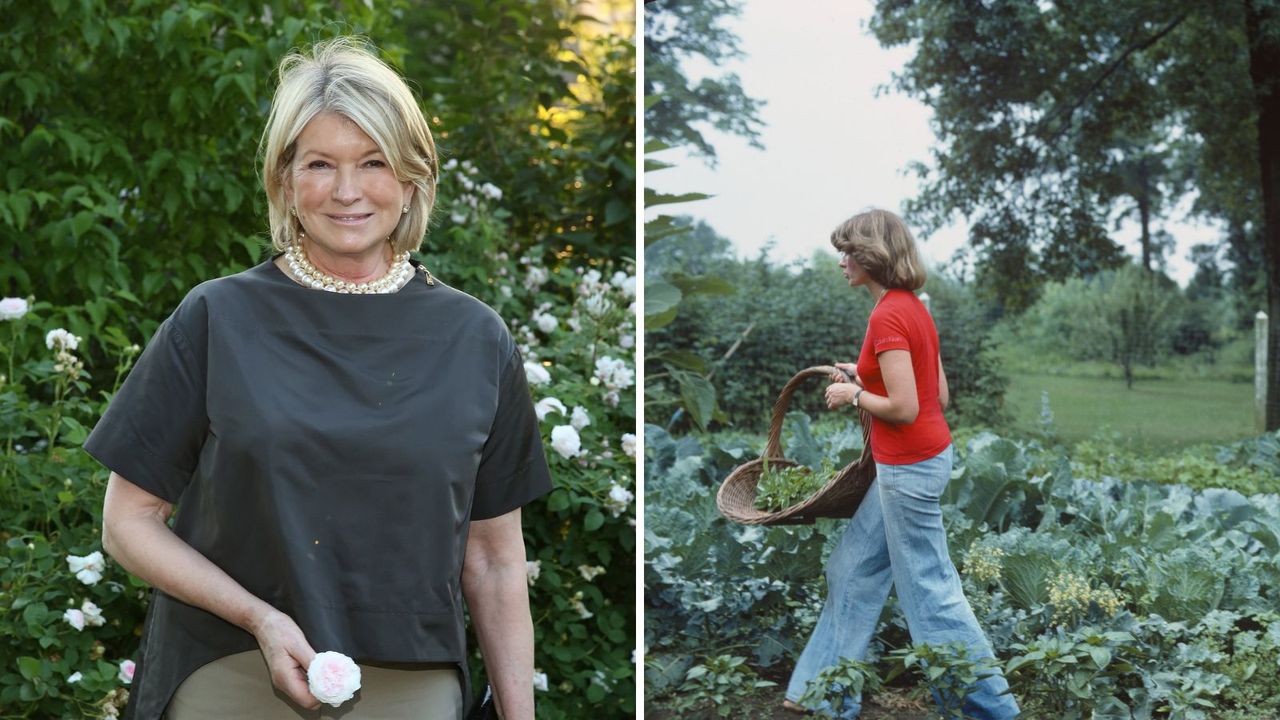
There's nothing more wholesome than growing your own and Martha Stewart has been leading the charge for over 50 years. The archival image below, taken at her home in Westport, Connecticut, in August 1976, paints quite the bucolic scene of Martha harvesting her summer vegetables, homestead-style, no doubt planning to cook up something delicious with them in her kitchen later on.
If you've always wondered how to grow vegetables like Martha Stewart, our Gardens Content Editor and former Kitchen Gardener, Drew Swainston has plenty of advice, so you can try your hand at creating your own Martha-style vegetable patch. Plus, I've rounded up the seeds, tools, and accessories you might need to start a vegetable garden.

Kitchen Garden Essentials

This trowel and cultivator set, will not only be really useful for planting up your Martha-style vegetable patch but they look gorgeous, too.

Make like Martha with a basket-style vegetable trug – perfect for harvesting your lovingly grown vegetables come summer.

This anniversary seed set features a mix of vegetable and flower seeds that have become iconic varieties in American farms and gardens.

Designed for harvesting, these will be an essential tool in your vegetable gardener's kit and they come recommended by Garden's Content Editor, Drew.

This 3-in-1 garden essential is a kneeler pad, seat stool and tool pouch in one. It'll save your knees and back when you're planting and harvesting.

Made from durable waxed canvas this apron will protect your clothing from stains and scratches, while the pockets provide ample storage for tools.
Planning a kitchen garden like Martha Stewart's can be a wonderful way to repurpose an underused area of your garden, and it doesn't have to be a huge undertaking. You can work with the space you have available, and you can also work upwards, encouraging taller plants like beans to grow up trellis or bamboo canes.
But, before you start sowing, follow this advice: 'When planting a summer vegetable patch, I always recommend succession planting and growing smaller, quicker crops among the slower-growing vegetables,' explains Drew. 'The likes of radish, lettuce, beets, and carrots can be sown every few weeks for a longer harvest, which also helps prevent a glut of crops all ready at the same time.' If you are a novice, these are great options to start with, as they are some of the easiest vegetables to grow.
In the picture of Martha Stewart's 1970s patch, Drew identifies predominantly brassicas, including cabbage, broccoli, and kale, which are some of the easy vegetables to plant in March for summer harvests. 'Brassicas are also suitable for such succession planting to prevent unwanted gluts (and a desperate search to find as many cabbage recipes as possible) and enjoy hearty vegetables from summer throughout fall and into winter.'
If space is at a premium and you want to stagger your supply of seasonal veg, Drew recommends this technique: 'Fast-growing vegetables like radish, lettuce, spinach, or green onions can also be sown in between larger, slower-growing vegetables to maximize your harvests from one space.' You can also try these small vegetable garden ideas.
And if you want to avoid them bolting – where plants put their energy into flowering, which can result in a bitter flavor, particularly for lettuce, radish, or chard – 'keep plants well-watered throughout the warm summers,' advises Drew. Plus, this vegetable bolting tip from Martha Stewart, herself, could also help combat the issue.
Don't think you have enough space for a kitchen garden? You'll be surprised – you can even try your hand at a Martha Stewart-inspired vegetable patch if you have a small garden. These are some of the best vegetables to grow in pots. So there's no excuse not to give it a go.
If you enjoy our celebrity news and interior design advice, why not sign up to our newsletter so you never miss the latest features.