
Get all your news in one place.
100's of premium titles.
One app.
Start reading
Times Life
Times Life
Aishwarya Kapoor

Planning a Trip to Lakshadweep: Permits, Ferries, Budget, and Whether the Islands Are Worth It

The Permit Problem Nobody Warns You About

Foreign nationals need an entry permit to visit Lakshadweep, and so do Indian citizens, though the process differs. Indians travelling to most islands need a permit issued by the Lakshadweep Administration, and the catch is that independent travellers cannot get one on their own. The permit is tied to a registered tour operator or the government-run SPORTS (Society for Promotion of Nature Tourism and Sports). Walk-in tourism does not exist here.

The practical consequence: you cannot book flights or a ferry and figure out accommodation later. The operator books the package, the package triggers the permit application, and the permit takes anywhere from two to four weeks to process. Start this at least six weeks before your intended travel date. If you are applying during peak season (October to May), add another week of buffer.

Agatti island has the only airport in the archipelago. Flights operate from Kochi, and seats are limited, the ATR aircraft used on this route carry fewer than 80 passengers. Book flights the moment your permit is confirmed, not before. Airlines will not hold seats against a pending permit.

Getting There: Ferry vs. Flight

The choice between ferry and flight is not just about cost. It is about tolerance.

Flights from Kochi to Agatti take roughly 90 minutes and cost between Rs 8,000 and Rs 18,000 one way depending on season and how far in advance you book. The ferry, MV Kavaratti, MV Arabian Sea, and a handful of other vessels operated by the Lakshadweep Administration, departs from Kochi and takes 14 to 20 hours depending on the island. Berth prices range from Rs 900 (bunk class) to Rs 5,000 (first class). The sea crossing can be rough, particularly between June and September. Motion sickness medication is not optional if you are prone.

Many travellers fly one way and take the ferry back. This is sensible: you arrive rested, see the islands, and get the overnight sea experience on the return without it eating into your stay.

What a Lakshadweep Trip Actually Costs

Budget is where the reality check lands hardest. Lakshadweep is not a budget destination. The government packages through SPORTS start at roughly Rs 6,000 to Rs 8,000 per person per day for the most basic options on Kavaratti or Minicoy, and go significantly higher for Bangaram (the only island that allows foreign tourists without special clearance) or Agatti beach resorts.

Private operators charge more. A four-night package including accommodation, meals, ferry transfers between islands, and some water activities can run Rs 25,000 to Rs 60,000 per person depending on the operator and the island combination. Scuba diving and glass-bottom boat rides are usually add-ons. The coral around Lakshadweep is among the most intact in India, and the diving here, particularly around Bangaram and Kadmat, is consistently ranked among the best in the country. That access costs money.

There are no ATMs on most islands. Carry enough cash for tips, small purchases, and any unplanned expenses. Cards are accepted at larger resorts, but do not count on it universally.

Which Islands Can You Actually Visit

The archipelago has 36 islands, 10 of which are inhabited. Tourists are permitted on only a handful: Kavaratti (the administrative capital), Minicoy, Agatti, Bangaram, Kadmat, Kalpeni, and Androth. Bangaram is uninhabited and accessible only through the Bangaram Island Resort. Minicoy has a distinct Maldivian cultural character, the language spoken there is Mahl, not Malayalam, and its lighthouse is one of the oldest in the region.

Kavaratti is the most accessible and the most developed for tourism. Agatti is the entry point by air and has a good beach and lagoon. Kadmat is preferred by divers. Kalpeni has a reef that creates a natural lagoon ideal for non-swimmers and children. Each island has a different character, and most packages cover two or three rather than trying to cover all of them in one trip.

Whether It Is Actually Worth It

The honest answer depends on what you are comparing it to. If your reference point is Goa or the Andamans, Lakshadweep will feel restrictive. You cannot simply wander, eat at a random shack, or change plans on the fly. The permit system, the operator dependency, and the limited infrastructure mean the trip is structured in a way that independent travellers often find uncomfortable.

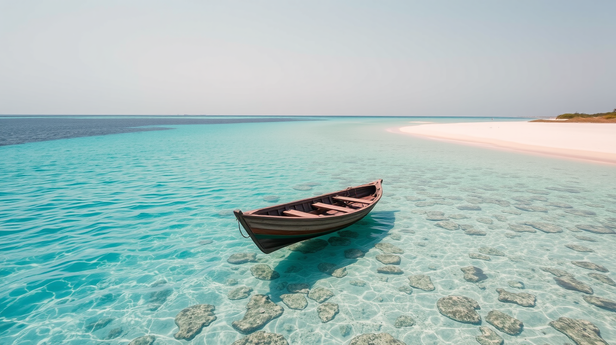
If your reference point is the Maldives, Lakshadweep is cheaper for comparable coral and water clarity, and it is Indian territory, which removes the foreign exchange and visa friction entirely. The beaches are not crowded. The water is the particular shade of blue that photographs cannot accurately capture. The coral is alive in ways that the bleached reefs of more heavily visited Indian coastal destinations are not.

The planning overhead is real. The cost is real. The reward, if you are someone for whom clear water, intact reef, and genuine quiet are the point, is also real. Lakshadweep does not reward impulse. Every traveller who has a good trip there planned it like a project, not a holiday.

The permit requirement that feels like bureaucratic friction is, in a roundabout way, the reason the coral is still there. The islands that are hardest to reach are usually the ones that still look the way they are supposed to.

Sign up to read this article
Read news from 100's of titles, curated specifically for you.
Already a member? Sign in here
Related Stories
Top stories on inkl right now
One subscription that gives you access to news from hundreds of sites
Already a member? Sign in here
Our Picks
Fourteen days free
Download the app
One app. One membership.
100+ trusted global sources.