March Madness is here! That means it’s time to get down to the business of making brackets, falling in love with Cinderella teams, and picking title favorites. With so many teams—68— and so many seeds—16, it can be tough to sort through which teams are the best, particularly at each seed line.
So, in a fun exercise, let’s go down each seed line and pick which team is shining the brightest entering the NCAA tournament.

No. 1 seed
Arizona Wildcats
Simply put, Arizona looks the best of the No. 1 seeds at the moment. The Wildcats started 23-0 for the first time in program history, then stumbled in back-to-back February losses against Big 12 rivals Kansas and Texas Tech, in which star forward Ko Peat suffered a leg muscle strain.
The Wildcats didn’t miss a beat without Peat, winning the three games he missed, one of which was against Big 12 power Houston.
All told, the Wildcats have won nine straight games entering the NCAA tournament. Arizona is one of just two teams to rank inside the top-five in KenPom’s offensive and defensive efficiency (Duke is the other). That impressive balance is reflected in the Wildcats’ lineup: Few teams in the country can match their combination of elite backcourt play with a stout frontcourt.
Guard Brayden Burries has grown into an electric scorer while backcourt mate Jaden Bradley is a 3-and-D menace. Shot-blocking, 7’ 2” center Motiejus Krivas cuts off all avenues to the rim and is complemented well in the frontcourt by versatile forwards in Peat and Ivan Kharchenkov.
The Wildcats don’t quite shoot the three as well as fellow powers Duke and Michigan.
But Tommy Lloyd’s squad is deep and doesn’t have the injury concerns that the Wolverines and Blue Devils are currently dealing with.
No. 2 seed
Houston Cougars
Of the No. 2 seeds in the NCAA tournament, Houston was the only one that didn’t lose to an unranked team this season. Of the four, the Cougars, led by explosive freshman guard Kingston Flemings, have the second-best offense in KenPom’s efficiency ratings—and are tied for the best defense alongside Big 12 rival Iowa State.
The Cougars aren’t as strong defensively as last year’s team that made the national championship, but they’re still a stout unit and Flemings has raised the ceiling of this team’s offense.
In Emmanuel Sharp and Milos Uzan, the Cougars have the senior leadership, guys who have been there and done that. Few teams possess as much firepower in the backcourt as Houston. And the Cougars, who averaged the fewest turnovers per game in all of Division I this year, simply don’t beat themselves.
The x-factor? It could be freshman big man Chris Cenac Jr., who tallied 17 points and 14 rebounds while draining a trio of three-pointers in a Big 12 tournament semifinal demolishing of Kansas. Houston, playing in the South region, will benefit from potential home games in the Sweet 16 and Elite Eight.
No. 3 seed
Illinois Fighting Illini
Illinois has lost three of its last five games heading into the NCAA tournament and has had some head-scratching losses this season.
But this is a dangerous team. Brad Underwood’s Fighting Illini rank second in KenPom’s offensive efficiency, are led by a legit star in Keaton Wagler, who can take over any game with his elite three-point shooting and playmaking ability, and are one of the few teams with the size in the frontcourt to tango with the likes of Florida, Duke, Arizona and Michigan.
An underrated reason to like the Fighting Illini? They ranked sixth in the country in free-throw percentage, a valuable asset to have when attempting to close out tight games in March.
No. 4 seed
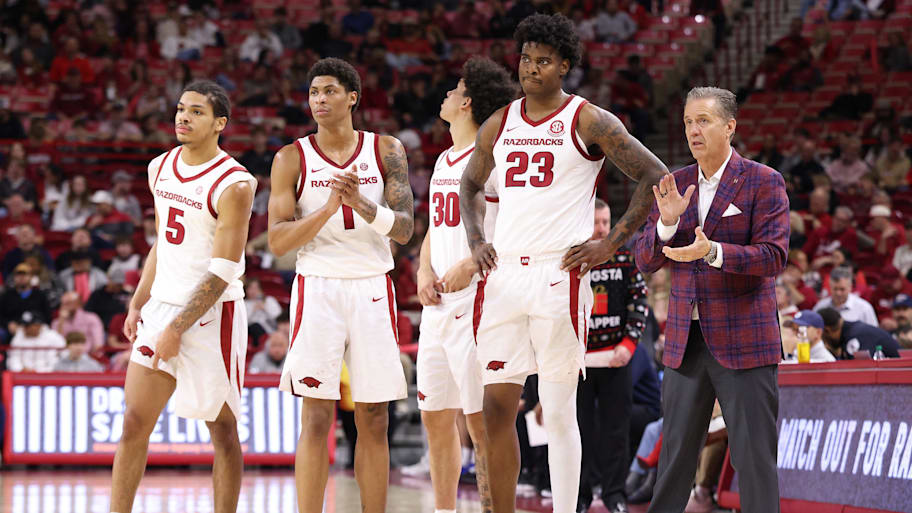
Arkansas Razorbacks
There’s a lot to like about Arkansas. The Razorbacks have one of the winningest coaches in college basketball history pacing the sidelines in John Calipari, who won the 2012 national championship with Kentucky.
Arkansas has a star in freshman point guard Darius Acuff Jr., a cold-blooded killer in the clutch, a scorer who can hurt defenses at all three levels, and an elite facilitator who commands attention from defenders while possessing the vision to find his open teammates. Acuff is joined by sharpshooting guard Meleek Thomas, giving the Razorbacks one of the best offenses, and backcourts in the nation. Arkansas, with the second-most fastbreak points in the country, is particularly lethal in the open court.
If there’s one bugaboo with Arkansas, it’s the fact that they can be pushed around in the paint by bigger teams. But if Trevon Brazile—16 points, nine rebounds, two blocks in the SEC tournament championship win—plays like he did against Vanderbilt, the Razorbacks will be able to compete with anyone.
No. 5 seed
St. John’s Red Storm
St. John’s is still led by dominant big man and Big East Player of the Year Zuby Ejiofor, who has the footwork to score in the low post and the ability to space the floor to the three-point line. But Ejiofor’s greatest value to the Red Storm lies in his defense—just put on the tape of his seven-block performance in the Big East tournament final thrashing of UConn.
But the biggest difference between this year’s Red Storm and the team that bowed out in the second round of last year’s tourney is the 2025–-26’s squad’s improved shooting, particularly from beyond the arc.
There are simply more offensive options on this year’s team. And while they might not be as good defensively, Ejiofor’s presence patrolling the paint still allows the Red Storm to play aggressive on-ball defense on the perimeter.
After routing the Huskies by 20 points in the Big East title game, the Red Storm might just be peaking at the right time.
No. 6 seed
Tennessee Volunteers
Tennessee is led by one of the best coaches in college basketball in Rick Barnes, who has won the 11th-most games in the sport’s history and has led the Volunteers to the Elite Eight in each of the last two tourneys.
The Volunteers have inside-outside starpower in Ja’Kobi Gillispie and Nate Ament, who returned to play in two games in the SEC tournament after dealing with an ankle sprain.
Tennessee is one of the best defensive and rebounding teams in the country, two areas where it will be able to impose its will on teams in the NCAA tournament.
The Volunteers likely don’t have enough shooting to make the kind of March Madness run that has eluded Barnes in his career. But this is still a team capable of winning a few games this March.
No. 7 seed
UCLA Bruins
Guard Donovan Dent is one of the best decision-makers in the country, averaging 7.6 assists compared to 1.9 turnovers this season. Tyler Bilodeau, Trent Perry and Skyy Clark give the Bruins a whole lot of firepower from beyond the arc, where they shot 38.2%, 16th in the country.
Bilodeau and Dent had injury scares in the Big Ten tournament but both are expected to play in March Madness.
The Bruins don’t have as much size as other teams in the country, and don’t have a ton of juice on the defensive end. But it may not matter, because they have proved they can out-score almost anybody—as evidenced by wins over Illinois and Michigan State—when they need to.
Winners of four of their last five, Mick Cronin’s squad seems to be firing on all cylinders.
No. 8 seed
Georgia Bulldogs
Georgia hasn’t won an NCAA tournament game since 2015, but this will be just its second attempt at doing so since that year.
And coach Mike White’s squad has a good chance of breaking that trend. The Bulldogs are one of the very best offensive teams in the country, scoring the fifth-most points per game while ranking 16th in KenPom’s offensive efficiency.
The Bulldogs play fast—13th in the country in pace—and are capable of spacing the floor while scoring at all three levels. With four players averaging in double figures and center Somtochukwu Cyril falling just under that mark, this is also an offense that isn’t overly reliant on one or two players.
Georgia puts a lot of pressure on opposing teams and could be a tough out in the NCAA tournament.
No. 9 seed
Saint Louis Billikens
Yes, my pick of Saint Louis means we are in for a heck of a game between the Billikens and Bulldogs in the first round. The Billikens enter the NCAA tournament on shaky footing after losses to Rhode Island, Dayton (twice), and George Mason in the season’s final few weeks.
But Josh Schertz’s squad has an inside presence in center Robbie Avila and the guards to make some noise in March. The Billikens scored 1.24 points per possession, 14th in the country, and drained 40.1% of their three-point attempts this year, third in the country. They’re also one of the better rebounding teams, an important factor in a year when squads are seemingly bigger than ever.
The Billikens’ biggest strength is their depth: nine players reached an average of double figures in minutes per game. If there are any concerns with Saint Louis, it’s the fact that they sometimes have a propensity to turn the ball over.
But this team’s offensive profile makes it an appealing No. 9 seed.
No. 10 seed
Santa Clara Broncos
The last time Santa Clara won an NCAA tournament game? You’d have to go all the way back to 1996. But don’t let that scare you away from the Broncos.
A well-rounded offensive unit filled with capable playmakers, Santa Clara ranked inside the top 40 teams in points per game, KenPom’s offensive efficiency, three-pointers made and assists.
Two sneaky ways the Broncos can swing games in their favor this March? They work the offensive glass to create second-chance opportunities and are particularly adept at forcing turnovers, creating opportunities to get out on the break.
With their most talented team in years, the Broncos might be feeling like it’s 1996 this March.
No. 11 seed
South Florida Bulls
If you like the running of the bulls, then get ready to watch South Florida in March Madness.
Bryan Hodgson’s squad played at the ninth-fastest pace in the country. With multiple rebounding guards and the incredibly-athletic Izaiyah Nelson at forward, the Bulls are tireless at working the offensive glass to create second-chance points—that can swing games in March.
If there’s one weakness here, it’s that South Florida doesn’t shoot consistently from beyond the arc. But their ability to get to the free-throw line for easy points—they average the most made free throws per game in the country—certainly helps to offset their Jekyll-and-Hyde three-point shooting, giving them an easier avenue to offense in close games.
The Bulls have a variety of ways to put pressure on opposing teams and have won 11 straight games entering March Madness.
No. 12 seed
High Point Panthers
There’s a lot to like about High Point. In a year where plenty of teams are laden with freshman and sophomore stars, the Panthers boast as many as nine seniors and two juniors. The team’s six leading scorers are upperclassmen.
In addition to their experience up and down the roster, the Panthers possess one of the best offenses in the country led by slashing wings Terry Anderson and Rob Martin, as well as one of the most opportunistic defenses. The Panthers forced the third-most turnovers in the nation this season and were one of the best teams at scoring in the open court.
High Point can be streaky from three-point range and doesn’t rebound the ball well, two weaknesses that could bite them in the tourney. But their ability to limit their own turnovers helps them prevent games from snowballing out of control.
Flynn Clayman’s Panthers boasted the best point differential in the country this season, and while that comes with the caveat of playing their games in the Big South, this team has the tools to compete this March.
No. 13 seed
Hofstra Pride
Like former Hofstra player and current coach Speedy Claxton once did, the Pride can hang their hat on a strong defensive effort. Only Arizona and UC Irvine were better at defending two-pointers this season, and the Pride boasted the 19th-best scoring defense in the country this season, largely thanks to 7’0”, 282-pound rim protector Silas Sunday. It allows the guard-heavy Pride to aggressively defend the three-point line, knowing that the paint is well defended.
On offense, the Pride rely on a backcourt attack led by Cruz Davis and Preston Edmeade, and are one of the more efficient three-point shooting teams in the country. Davis, with 18 games with 20 or more points this season, is capable of taking over any contest.
Hofstra possesses a better defense than its fellow No. 13 seeds and ranks higher in KenPom’s adjusted offensive efficiency, lending hope that the Pride can compete with first-round opponent Alabama, the best offensive team in the nation this season.
No. 14 seed
North Dakota State Bison
David Richman’s North Dakota State team embodies the three-and-D archetype. The Bison shot 36.5% from three-point range this season and possess five players who shoot at least 36% from downtown.
On defense, Richman’s squad ranked 66th in opponent points per game and forced 13.7 turnovers per game, which ranked inside the top-50 teams in the nation.
They don’t have a ton of size and aren’t an elite rebounding team, but the Bison make up for it with multiple guards—Trevian Carson and Demari Wheeler-Thomas—who can crash the glass. The Bison haven’t won a tournament game since 2015, but this team might just have the goods to get it done.
No. 15 seed
Idaho Vandals
We’ve arrived at the close-your-eyes-and-pick portion of this article. In the NIL era of haves and have-nots, it’s almost impossible to imagine a No. 2 or No. 1 seed losing to a No. 15 or No. 16 seed, as has occurred in past tourneys.
But that doesn’t mean we don’t still have a clear winner among the four teams at the 15 seed line. Of the quartet, only the Vandals had a positive net rating on KenPom. They did so despite losing their best player Kristian Gonzales to an injury in the season’s first game.
Idaho is loaded with sharpshooters—Isaiah Brickner and Brody Rowbury each connected on over 40% of their three-point attempts.
The Vandals’ three-point shooting gives it a chance against first-round opponent Houston. But if its shooters go cold, Idaho’s lack of size and inability to create second-chance points could result in the program quickly getting exposed.
No. 16 seed
UMBC Retrievers
UMBC is no stranger to being a massive underdog. Back in 2018, the Retrievers became the first No. 16 seed to defeat a No. 1 seed, when the Retrievers upset Virginia. And while it’s highly unlikely that an upset of that magnitude will occur in this year’s tourney, UMBC would seem to be the best equipped to do so.
Of the teams at the 16 seed line, the Retrievers posted the best point differential, in which they ranked 46th. They were the highest-rated of the No. 16 seeds in KenPom’s rankings. The Retrievers, led by sharpshooting guard DJ Armstrong Jr., can catch fire from beyond the three-point line.
Plus, UMBC hasn’t lost a game since Jan. 31. They have a great chance to win their First Four game against Howard, but will certainly be up against it in the first round against Michigan.
More March Madness on Sports Illustrated
- Ranking Every Mascot in the 2026 Men’s March Madness Field
- March Madness: Four Teams With the Hardest Path to the Men’s Final Four
- Ranking the Best 68 Men’s Basketball Players in the March Madness Field
- Ten Teams That Could Make Cinderella Runs in 2026 Men’s March Madness
This article was originally published on www.si.com as Picking the Best Men's NCAA Tournament Teams at Each Seed Line.