The new year arrived in many forms across parts of Asia on Tuesday, as communities marked the day with traditions shaped by faith and spring harvests.
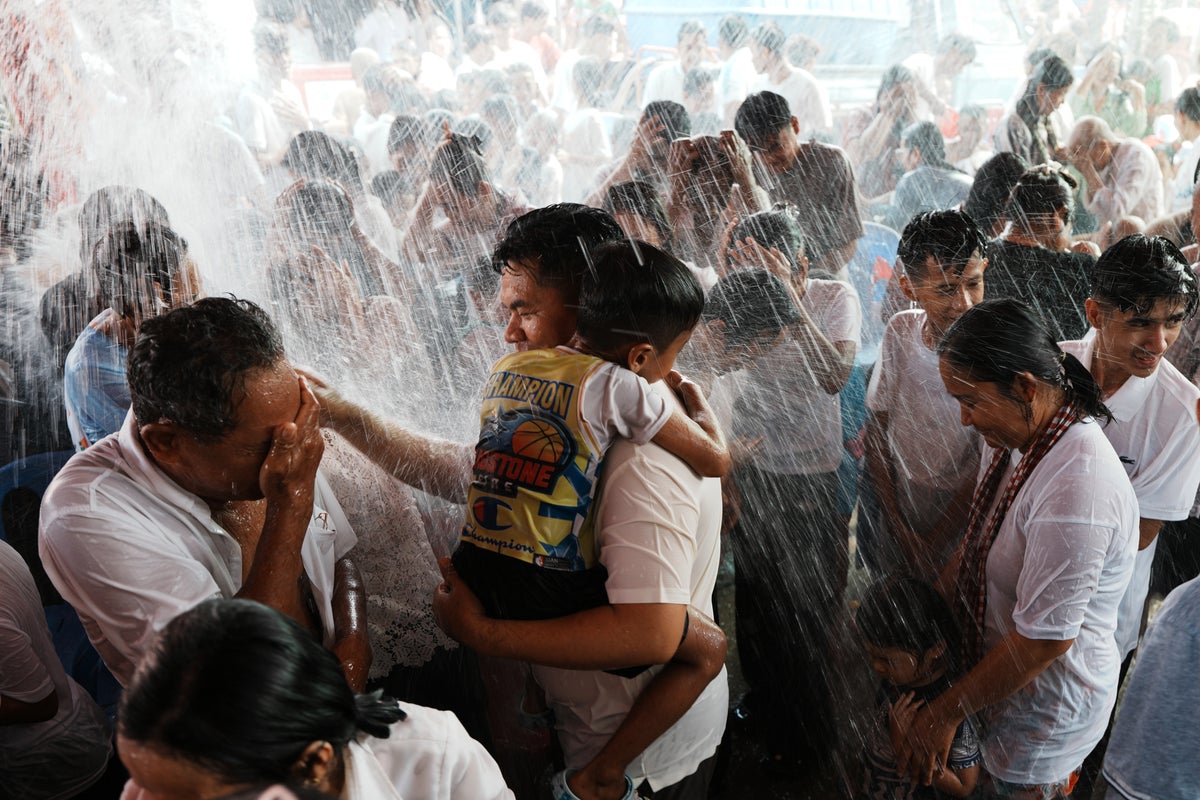
In Cambodia, farmers gathered to receive a blessing of holy water from a monk during the Khmer New Year, as they enjoy the fruits of their labor before the rainy season begins.
In Bangladesh, the streets filled with color for Pohela Boishakh, the Bengali New Year, where processions and music signaled a new beginning. At dawn in British-era Ramna Park, an annual concert opened with morning ragas. Later, students at University of Dhaka led a procession with colorful banners and sculptures marked with folk motifs.
The festival traces its roots to reforms under Mughal Emperor Akbar, who aligned the calendar with the agricultural cycle. Over time, it has come to embody spring harvest and Bangladesh’s distinctly secular cultural inheritance.
Meanwhile across India and Pakistan, Sikhs marked the festival of Vaisakhi with hymns and music, offering thanks for the harvest and prayers for abundance in the year ahead. The festival also marks the Sikh New Year under the solar Nanakshahi calendar.
In Pakistan, thousands gathered at Sikh temples to mark the occasion, including more than 2,000 Indian pilgrims at Gurdwara Panja Sahib in Hasan Abdal, in the country's eastern Punjab province. The pilgrims traveled from neighboring India to Pakistan despite ongoing tensions between them, underscoring their shared faith.
Similar scenes played out in India’s northeastern state of Assam as people marked Bihu, the harvest festival that ushers in a new season. Celebrated with rhythmic drumming and spirited dance, it marked the start of the agricultural cycle.
In Thailand, the arrival of Thai New Year was marked by the Songkran festival, where the ritual splashing of water symbolizes purification and the promise of good fortune. In modern times, it's also marked by thousands of people gathering for public water fights, popular with tourists, as temperatures creep over 37 degrees (100 F).
This is a photo gallery curated by AP photo editors.