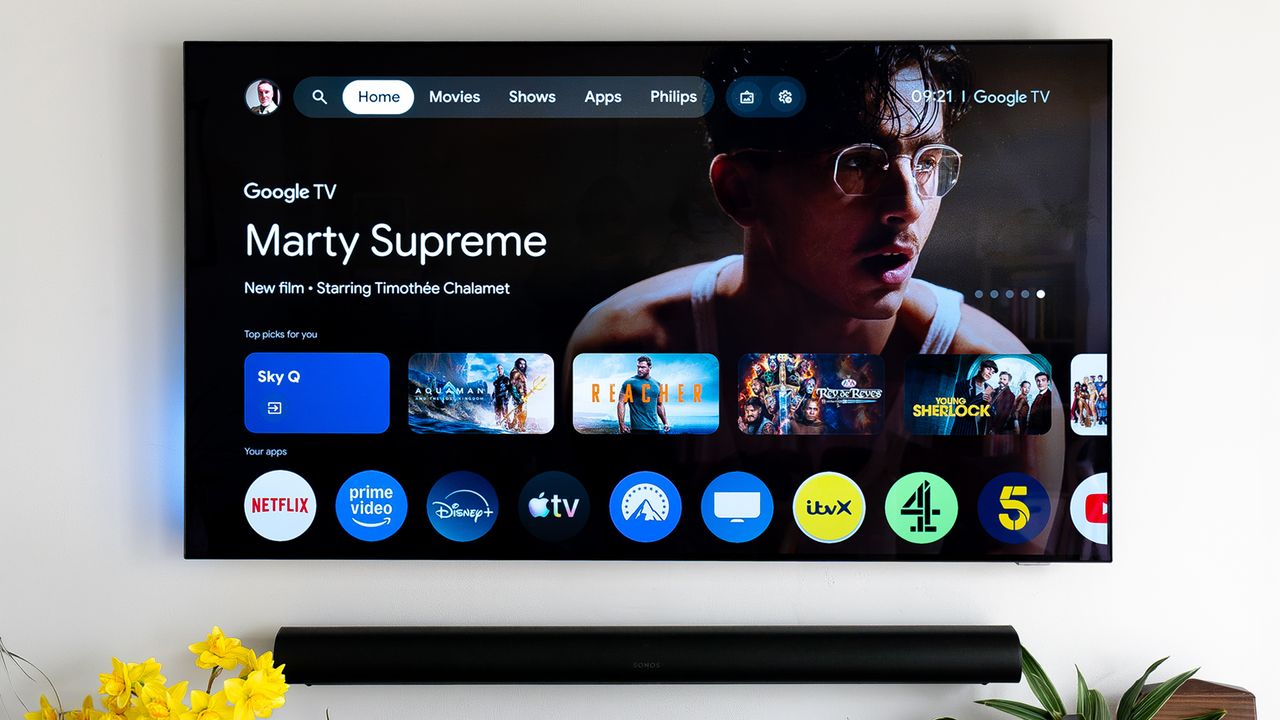
Philips has made the bold decision to ditch Google TV as its Smart TV platform for high-end OLED TVs.
Already utilised on the brand's low to mid-range TVs, Titan OS will be the new universal system going forward.
TP Vision unveiled its new, flagship Philips OLED TVs last week, and demonstrated a couple of tech innovations to take televisions to the next level – AmbiScape and Dolby Vision 2 Max. However, one other major change coming to its sets this year largely flew under the radar.
The manufacturer confirmed that it has decided to ditch Google TV entirely, in favour of the lesser known smart TV platform Titan OS. And that will be for all 2026 models and beyond.
That might come as a shock to some – after all, Google TV is well known and well respected – but I as a Philips OLED 809 owner with Google TV, I can see why.
I was also one of the first UK journalists to see Titan OS in operation, having visited the developer in Spain two years ago. The platform was destined for Philips' more affordable and entry-level TVs at the time, but the potential was clear.
Like the latest iteration of TiVo, which powers many rival sets and the Manhattan Aero 4K TV Streamer with Freely, Titan OS is an internet-connected platform that stores apps in the cloud rather than on your TV itself. That means you never have to download or update an app manually – it's done for you.
The apps and content are all streamed over broadband, yet feel the same as if you are interacting with them locally. This improves speed of use, as it doesn't depend on your TV's processing power, and you won't be locked out of apps that are too advanced for the set's hardware.
For example, some older Samsung Smart TVs have already lost Netflix as their internal CPU is not powerful enough to run the latest updates. That won't be the case with Titan OS. As long as your TV is connected to the internet and can stream video, it will always be able to access the latest versions of apps and services.
This is also similar to the Amazon Fire TV 4K Select.
There are some downsides in comparison with Google TV – there are some apps currently missing, such as Apple TV and Spotify, and you don't get Google Cast support. But there are some other benefits too...
Why I'm not sad Philips is ditching Google TV
Not only do I own a Philips OLED 809 with Google TV, I have an earlier Philips OLED 806 which runs Android TV. And it must be said, while a little more clunky there are a few things the older OS does better. It has BBC iPlayer, for starters.
Philips TVs with Google TV have never been able to access iPlayer, even though it's available on the Google TV Streamer and other devices that run the platform. That's not really a Philips issue, more the BBC's, but it's really annoying.
Considering iPlayer is the UK's biggest free on demand and catch-up service, it's insane that it's still not available on a flagship TV.
I have also had issues with some of the other streaming services that are present – audio inconsistencies, stuttering, frame rate issues, and general lag. It has lead to me using other devices rather than the built-in Google TV services, including an Apple TV 4K box and Sky Stream. So it makes sense to me that Philips wants to switch.
Titan OS is not perfect, but these are still early days for its development, so it'll get better the more people use it. Google, on the other hand, has had plenty of years to perfect its service and yet it still struggles at times.
I look forward to seeing the Philips OLED 911 in operation myself, therefore, to see the difference.