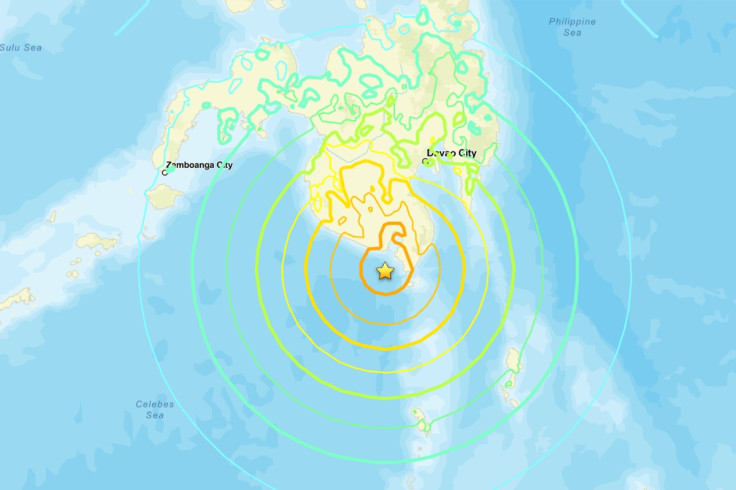
A powerful earthquake struck off the southern coast of Mindanao in the Philippines on Monday, prompting tsunami warnings and evacuation orders across several coastal provinces after authorities warned that waves could exceed one metre above normal tide levels.
The United States Geological Survey (USGS) initially recorded the offshore earthquake at magnitude 7.8, while the Philippine Institute of Volcanology and Seismology (PHIVOLCS) measured it at magnitude 7.0 and a depth of 10 kilometres. Seismic agencies often issue differing preliminary assessments following major earthquakes before data is refined. The quake struck near Sarangani in the southern Philippines, with international monitoring agencies issuing differing preliminary assessments as authorities worked to evaluate the potential tsunami threat.

PHIVOLCS issued a tsunami warning shortly after the earthquake, advising residents in vulnerable coastal areas to move to higher ground or further inland. The agency said the first tsunami waves could arrive within hours of the tremor and warned that wave activity could continue for several hours after the initial impact.
Tsunami Warning Triggers Evacuations
In its first tsunami bulletin, PHIVOLCS said wave heights of more than one metre above normal tide levels were possible and could be higher in enclosed bays and narrow straits. The agency urged residents in coastal communities across Sarangani, Davao Occidental, Tawi-Tawi, Sulu, Basilan, Zamboanga del Sur, Zamboanga Sibugay, Sultan Kudarat and South Cotabato to evacuate immediately.
Boat owners in harbours, estuaries and shallow coastal waters were instructed to secure their vessels and move away from waterfront areas. Authorities also advised vessels already at sea to remain in deeper waters until further notice.
The Pacific Tsunami Warning Centre said waves between one and three metres above tide levels were possible along parts of the Philippine coastline. It also issued advisories for parts of Indonesia and Malaysia, although forecast wave heights outside the Philippines were lower than those expected near the earthquake's epicentre.
The US Tsunami Warning System, alongside disaster management agencies in the Philippines and Indonesia, issued tsunami alerts following the earthquake.
Government Response and Aftershocks
President Ferdinand Marcos Jr said he had directed all relevant government agencies to respond immediately and urged residents in affected areas to move to higher ground and follow evacuation instructions. He said national and regional authorities were coordinating emergency operations as officials monitored the developing situation.
Authorities said at least one person had died and four others had been injured following the earthquake. Police in General Santos City also reported that several buildings had collapsed as emergency crews carried out rescue operations.
Several aftershocks were recorded following the initial earthquake, including tremors above magnitude 5, according to international seismic monitoring agencies. Philippine authorities later reported at least 16 aftershocks ranging in magnitude, as officials continued assessing damage and monitoring seismic activity across the region.
More wild footage from today’s massive earthquake in the Philippines. pic.twitter.com/Cdylad2d7W
— Breaking911 (@Breaking911) June 8, 2026
Images shared by Philippine authorities showed damage to buildings and shopfronts in General Santos City, near the epicentre, while rescue teams assessed reports of people trapped inside damaged structures.
Ring of Fire Region Under Close Monitoring
The Philippines experiences thousands of earthquakes each year because it sits along several active fault systems within the Pacific 'Ring of Fire'. While most cause little damage, powerful offshore earthquakes can generate tsunami threats for densely populated coastal communities across the southern archipelago.
Authorities said tsunami conditions can persist for several hours after the first wave arrives and warned residents not to return to coastal areas until official all-clear notices have been issued. Emergency agencies continued monitoring sea levels and aftershock activity as assessments remained ongoing across southern Mindanao.