Get all your news in one place.
100’s of premium titles.
One app.
Start reading
Reason
Reason
Jack Salmon

Peter Navarro Promised $700 Billion in Tariff Revenue. The Actual Amount Was About $240 Billion.

When President Donald Trump implemented his Liberation Day tariffs last spring, the president's senior adviser, Peter Navarro, suggested that these tariffs could generate an additional $700 billion a year.

At the time, I estimated that a more realistic estimate of the maximum additional revenue these tariffs could reap was likely less than $300 billion, which would barely fund two weeks of federal government spending.

Almost a year later, customs duties revenue data suggest that prediction was far closer to reality than what the administration was promising. 

Tariff revenues did tick up during this 11-month period, averaging just under $27 billion a month from April 2025 through February 2026, or roughly $296 billion in cumulative tariff revenues since Liberation Day. 

Using the average monthly revenue figure to estimate the revenue of the 12th (forthcoming) month, we can estimate that about $323 billion would have been raised over the entire year. 

However, this figure isn't all "additional" tariff revenue raised by the Liberation Day tariffs. In the year leading up to April 2025, the treasury already collected about $83 billion in customs duties

So Trump's tariffs led to about $240 billion in additional revenue within 12 months. This equates to enough revenue to fund an additional 12 days of federal government spending. 

If we were to use a slightly more generous measure of monthly tariff revenue by annualizing only the monthly collections when the effective tariff rate was 10 percent or more, then we get about $264 billion, or enough to fund about 13 additional days of government spending. 

What's more, the negative economic impact of tariffs and broader trade uncertainty means that economic output was lower over the last year than it would have been absent tariffs. The Yale Budget Lab estimated that this dynamic effect reduces tariff revenues by at least $41 billion this year. 

Adjusted for these feedback effects, additional tariff revenue covers only 10 or 11 days of government spending, rather than 12 or 13.

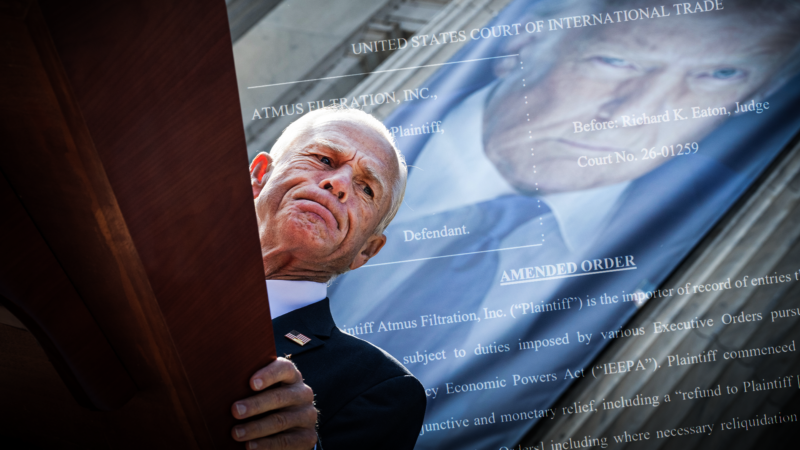
Compounding this, the Supreme Court has since ruled that the administration lacked legal authority to impose these tariffs under the International Emergency Economic Powers Act, raising the possibility that some portion of the revenue collected could ultimately be subject to refund claims.

The past year provides a useful reality check on claims that tariffs can meaningfully improve the federal government's fiscal position. The lesson is straightforward: Tariffs cannot solve the federal government's fiscal imbalance. If policymakers are serious about addressing the deficit, they will have to look beyond protectionist taxes and confront what's really driving our deficits, namely out of control growth in entitlement spending.

The post Peter Navarro Promised $700 Billion in Tariff Revenue. The Actual Amount Was About $240 Billion. appeared first on Reason.com.

Sign up to read this article
Read news from 100’s of titles, curated specifically for you.
Already a member? Sign in here
Related Stories
Top stories on inkl right now
One subscription that gives you access to news from hundreds of sites
Already a member? Sign in here
Our Picks
Fourteen days free
Download the app
One app. One membership.
100+ trusted global sources.