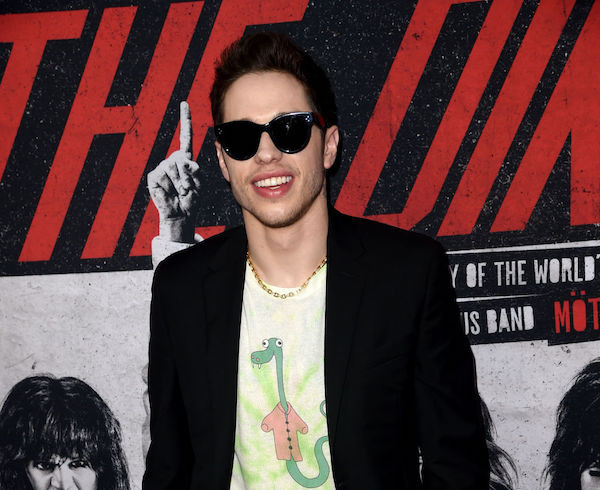
It began as a throwaway line on stage. But for Pete Davidson, a joke about fatherhood has quickly turned into a wave of criticism online.

The 32 year old American comedian told a crowd that becoming a 'girl dad' has made it harder for him to watch porn. It drew laughs in the room, but the tone shifted once the clip reached a wider audience.
Now, the backlash is building. What some heard as awkward honesty, others see as uncomfortable and out of place, raising questions about how far personal humour should go.
A Joke that Travelled Fast and Hit Harder
The moment spread quickly after a post surfaced online, with users reacting almost instantly. According to a post shared on X, one user called the comment 'weird,' a sentiment echoed by many others. Some questioned why Davidson would connect fatherhood with such a topic at all.
hey so that’s a really weird thing to say https://t.co/xTn987RITQ
— corb (@awshuqs) April 12, 2026
The reaction came fast and with feeling. Some users said the joke crossed a line, especially given the sensitivities around raising a daughter.
Others came to his defence, arguing that stand-up often leans into uncomfortable truths. Even so, the divide shows how quickly a joke can shift once it leaves the stage.
Inside the Stand-Up Set that Sparked It
Davidson, who welcomed his firstborn daughter Scottie Rose with girlfriend Elsie Hewitt in December last year, made the remark during a live performance in Las Vegas on 11 April. The American actor and writer spoke about life as a new father, blending personal reflection with his usual sharp humour.
According to LADbible, he spoke openly about how having a daughter has changed his perspective. He admitted that certain habits, including watching porn, now feel different, even difficult, as he adjusts to fatherhood.
In a clip posted by TMZ, Davidson admitted that it felt 'weird having a little girl,' citing how hard it is to 'watch porn in front of' his daughter. But despite the challenge, the comedian said he 'powered through.'
For those in the room, it landed as part of a broader story about change. Outside that setting, the line stood on its own and drew closer scrutiny.
The gap between intention and interpretation was clear. What sounded self-awareness humour to some came across as jarring to others.
Fatherhood Reshapes the Punchline
The public's controversial reaction touches on something deeper than a single joke. Davidson's life has shifted in recent years, and fatherhood now sits at the centre of that change.
He has spoken before about his early experience as a parent, saying 'it's a lot of fun.' Yet the remarks that followed showed how he continues to fold personal moments into his comedy.
As reported by Complex, he has been open about how becoming a parent has influenced his mindset. He is trying to balance his public persona with a more grounded role at home.
That tension often shows up in his material. He still pushes limits, but those limits now include his own life as a father.
For some, that makes his comedy feel more human, drawing on everyday moments. For others, it raises questions about what should stay private or be handled with more care.
When Humour Meets Public Discomfort
The strong reaction reflects a growing sensitivity around topics involving children and family life. Audiences are more vocal now about what they find appropriate, especially when it touches on parenting.
Davidson's comment may not have been meant to provoke. Still, it landed in a space where personal identity and public humour meet head on.
Comedians have always tested boundaries. The difference now is how quickly those boundaries shift, shaped by changing values and the speed of online reaction.
For Pete Davidson, the moment underscores how a single line can open up a much wider conversation. It also shows how fatherhood, once a private milestone, can reshape not just a life but the way every word is heard.
In the end, the response says as much about the audience as it does about the comedian. It reflects a time when humour is no longer just about laughter, but about how people see themselves and the roles they hold close.