Get all your news in one place.
100's of premium titles.
One app.
Start reading
Kiplinger
Kiplinger
Business
Karee Venema

Pershing Square IPO: Should You Buy the PSUS Shares?

(Image credit: PATRICK T. FALLON/AFP via Getty Images)

The market for initial public offerings (IPOs) got off to a slow start in 2026, with the pipeline pressured by broad risk-off sentiment, skittishness around all things artificial intelligence (AI) and geopolitical uncertainty.

But things appear to be picking up. According to Renaissance Capital, 81 IPOs have been filed this year through April 29, up more than 5% from the year prior. However, 46 offerings have been priced, a 33% drop from 2025.

The IPO market regained its footing in 2025, but it's still far from the levels seen in 2021, says Kaush Amin, head of private market investing at U.S. Bank.

"If the Iran conflict resolves in the near term with oil flow resuming to prior levels and earnings continue to deliver," Amin explains, "conditions are in place for a faster pace in 2026." What will matter most, he adds, "is pricing discipline and deal quality."

Looking ahead, there are several large private companies listed among the hottest upcoming IPOs this year — one just made its long-awaited market debut.

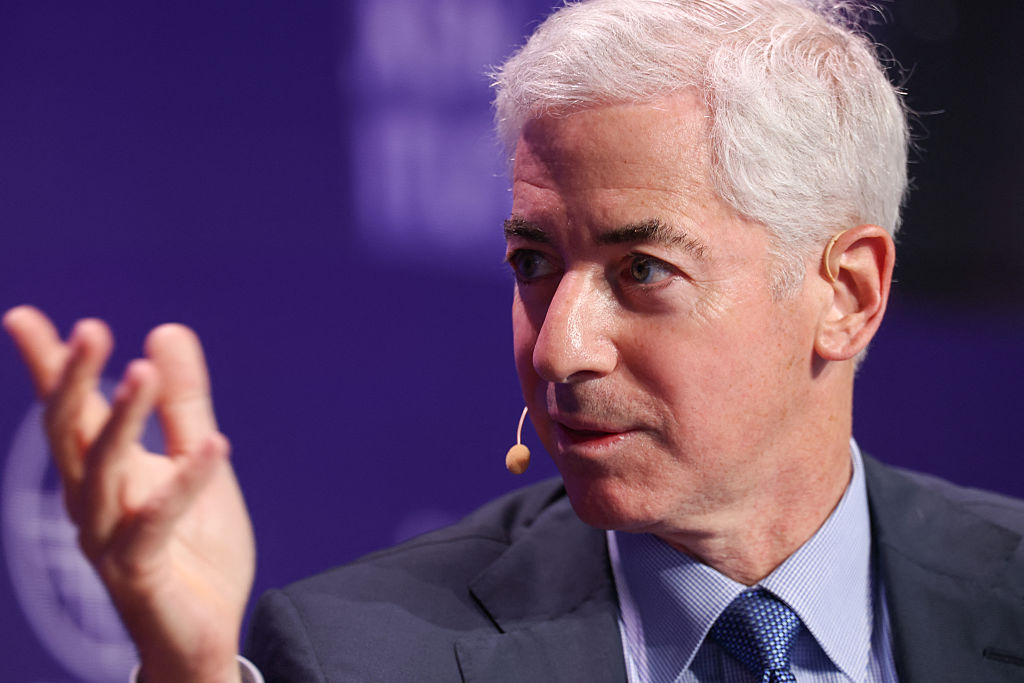
On April 29, Bill Ackman's Pershing Square USA, a closed-end fund that invests in a dozen or so large public companies, began trading. He also took Pershing Square, his hedge fund firm, public in a "combined IPO."

How did the Pershing Square IPO perform?

On April 13, Ackman announced that he had kicked off the roadshow for the combined Pershing Square IPO. The general purpose of the roadshow was to generate interest and build momentum.

Pershing Square USA is listed on the New York Stock Exchange (NYSE) and trades under the ticker "PSUS." The shares were priced at $50 each in the offering, but opened well below here on April 29, at $42. Shares closed the session at $40.90.

As part of the "combined offering," Ackman simultaneously took his hedge fund firm public. Pershing Square also trades on the NYSE under the ticker symbol "PS." The two securities were taken public simultaneously but trade separately.

PS shares opened at $24 on April 29 and closed at $24.20.

To participate in the PSUS IPO, investors had to buy at least 100 shares of the closed-end fund in its offering, which works out to a minimum initial investment of $5,000. They received 20 shares of PSI stock for every 100 shares of PSUS purchased in its IPO at no additional cost.

Pershing also said that, leading up to the market debut, it had commitments from private placement investors, including family offices, pension funds and ultra-high-net-worth investors, who received 30 shares of PSI stock for every 100 shares of PSUS they purchased.

According to the S-1 filing, individual trading of each security — meaning investors can buy and sell shares of PSUS and PS on a separate basis — "will begin the first trading day following the pricing of the PSUS IPO."

This isn't the first time Ackman has attempted to take the closed-end fund public. In 2024, the billionaire investor withdrew plans for a Pershing Square USA IPO in order "to reevaluate PSUS's structure."

The PSUS offering in mid-2024 sought to raise $2 billion, well below a prior target of $25 billion. This time around, Ackman sought an offering size from $5 billion to $10 billion, which included $2.8 billion in private commitments.

Ackman raised in $5 billion in the PSUS offering, making it one of the biggest IPOs of the year.

What is a closed-end fund?

A closed-end fund (CEF) is an investment company that raises capital through an IPO. Unlike a mutual fund or an exchange-traded fund (ETF), a CEF offers a fixed number of shares at inception.

"Because there is no ongoing creation or redemption mechanism, CEFs can trade at prices that diverge materially from NAV," writes Kiplinger contributor Tony Dong in his feature on the best closed-end funds to buy. "For example, a CEF with $15 per share in underlying assets may trade at $17 if demand is strong, or at $13 if investor interest is weak."

Dong adds that the structure of CEFs gives "managers more flexibility to own less liquid assets such as private credit or private equity."

The investment strategy for Pershing Square USA, according to the SEC filing, is to acquire "long-term, large minority stakes in 12 to 15 high-quality, predominantly North American-listed, large-capitalization growth companies at attractive valuations during periods in which the manager believes they have underperformed their potential and/or when the manager believes they are undervalued because the market underestimates their potential or overestimates the impact of certain negative factors on their businesses."

The filing also states that management will complement its core strategy using options and credit default swaps.

Should you buy the PSUS IPO?

"An initial public offering enables a private company to 'go public,' or start trading in public markets, by issuing its own shares on a stock exchange for the first time. In this way, any investor can buy shares and the company can raise capital to grow," Kiplinger contributing writer Tom Taulli writes in his article, "What Is an Initial Public Offering (IPO)?".

But buyer beware: IPOs can be volatile — especially for retail investors. In the "froth and frenzy, opportunities mix with peril," writes David Milstead, senior associate editor at the "Kiplinger Personal Finance" magazine. "The safest course may be to wait for companies to settle in some months after their debut, after one or two quarterly earnings reports."

U.S. Bank's Amin reminds us that the Pershing Square IPO "is unusual" because of its combined offering for a closed-end fund and an equity stake in the hedge fund company.

"Investors should make sure they understand what they own, how the fund structure works, and how market price can deviate from underlying value in closed‑end vehicles," he advises.

As for PS stock, Pershing shares a boilerplate warning in its S-1 filing: "No public market for our common stock currently exists, and an active trading market for our common stock may never develop or be sustained after the combined offering. Following the combined offering, our stock price may fluctuate significantly."

Related content

Sign up to read this article
Read news from 100's of titles, curated specifically for you.
Already a member? Sign in here
Related Stories
Top stories on inkl right now
One subscription that gives you access to news from hundreds of sites
Already a member? Sign in here
Our Picks
Fourteen days free
Download the app
One app. One membership.
100+ trusted global sources.