
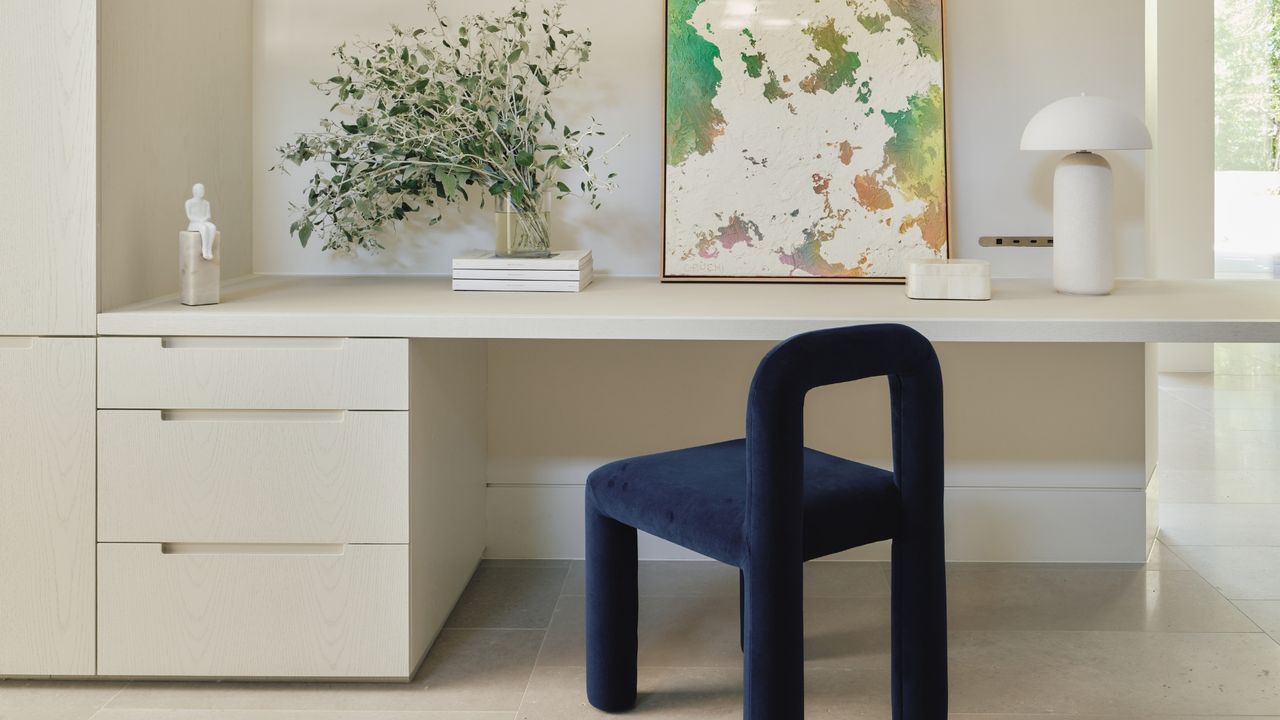
After recently moving into a new apartment, I have changed my typical study layout from having a clear view of the surrounding room to facing a wall, and it has significantly improved the way I work.
According to psychologists, this layout for a home office is a common indicator that you create clear boundaries between professional and personal responsibilities, even while working from home. You might also take purposeful breaks and intentionally reduce distractions from your study.

Let's take a look at why these work habits are commonly tied to this layout and how it can impact your productivity.
1. You Create Clear Boundaries Between Work and Home Life
"By placing your desk against the wall, it takes away many of the visual reminders that signal tasks to be carried out around your home," says psychologist Bonnie Lambert.
"So, if you have a minimalist home office set up with your desk facing the wall, you pride yourself on using your layout to create a clear distinction between when you're on and off the clock."
2. You Take Purposeful Breaks From Low-Stimulation Work Spaces
"Although a desk facing a wall is a clever way to retain focus in a home office, people who do well with these types of setups also tend to make a habit of getting up and out of the chair, stepping back, walking around the space, or changing locations while taking a break," says Bonnie.
"This contrasting environment between being able to concentrate on your tasks and using those breaks to recover will help you make the most of working from home."
3. You Intentionally Reduce Visual Distractions
"Working in front of a wall is one of many ways to control the number of things you see," Bonnie notes. "And those who work facing walls are typically much more conscious of eliminating as many distractions from view."
She explains that making an effort to put your phone away, keeping a tidy desk, regularly closing browser windows, and undertaking digital minimalism results in fewer stimuli and improved focus.
Home Office Decor


Moving beyond your home office, interior psychology finds that people who display lots of books share habits, too. And if you want to continue learning about the relationship between you and your space, sign up for the Livingetc newsletter.