Get all your news in one place.
100's of premium titles.
One app.
Start reading
The Times of India
The Times of India
World
TOI World Desk

People kept returning to a cave high in the Pyrenees for 5,500 years, and green stones may show they were making copper there

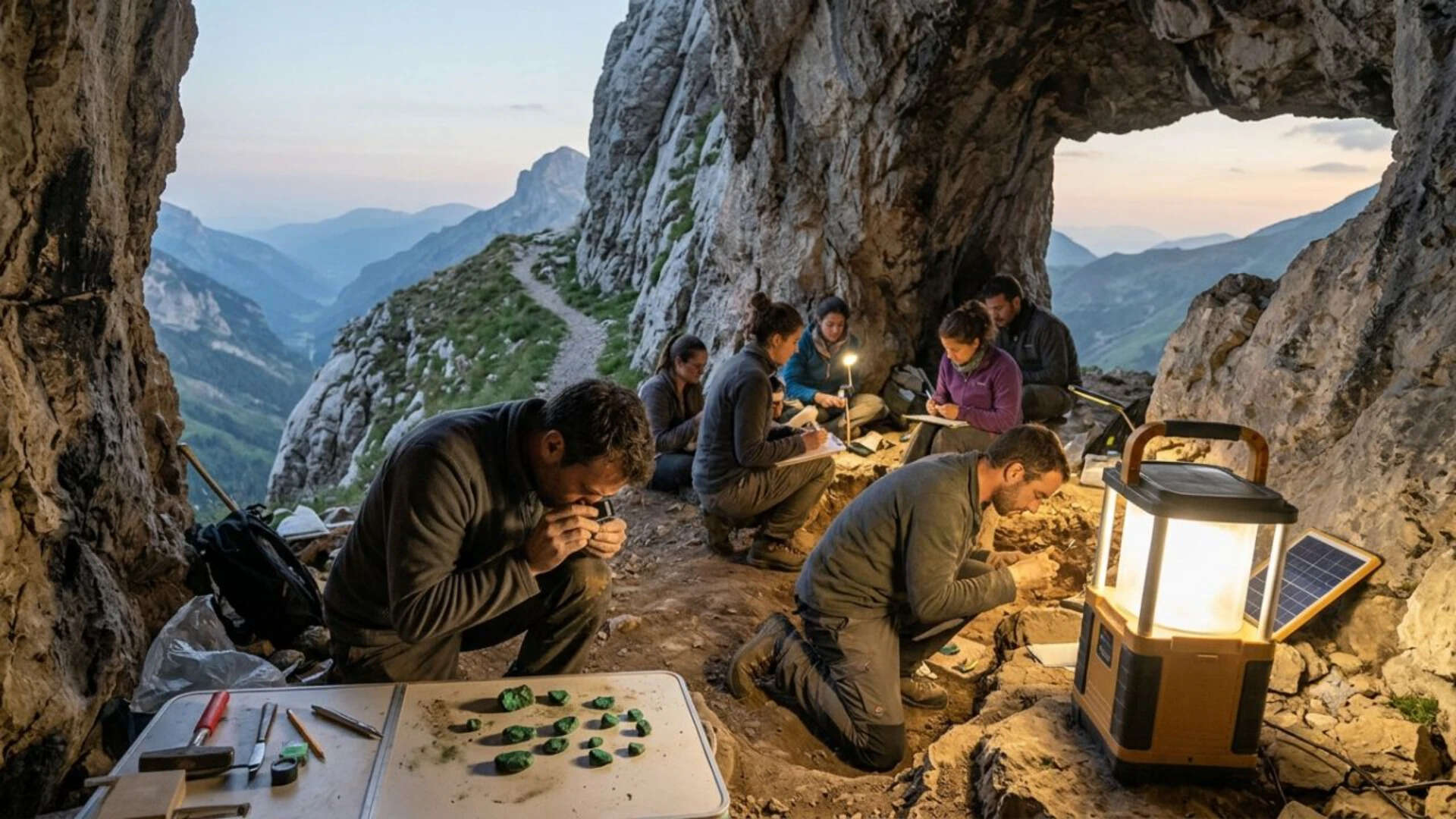
For thousands of years, a small cave tucked high into the Pyrenees remained largely untouched, exposed to freezing temperatures and difficult terrain that still makes reaching it a demanding journey. At first glance, it hardly seems like a place where prehistoric communities would have chosen to spend time. Yet beneath its rocky floor, layer after layer of material is telling a rather different story. Burnt mineral fragments, traces of ancient fires, personal ornaments and scattered human remains all point towards repeated visits over an exceptionally long period. The site, known simply as Cave 338, is slowly changing archaeologists' understanding of how mountain landscapes were used during later prehistory. Instead of acting as isolated wilderness, these high elevations may have supported specialised activities that drew people back again and again across many centuries.

Get breaking news anytime, anywhere. Download the TOI app now!

The long history hidden inside Cave 338 in the Pyrenees

The recent study published on 5 May 2026 in Frontiers in Environmental Archaeology, titled, ‘ Beyond 2,000 meters, first evidence of intense prehistoric occupation in the Pyrenees ’ revealed Cave 338 lies at an altitude of roughly 2,235 metres in the Spanish Pyrenees, where snow, cold weather and steep approaches would have made any visit challenging. Even so, excavations suggest that prehistoric groups repeatedly occupied the shelter between the Late Neolithic and the Bronze Age rather than passing through only occasionally.

Excavation work has only covered around six square metres so far, yet the amount of archaeological material recovered from that limited area surprised the research team. The deposits span several thousand years, preserving evidence from different periods instead of a single episode of activity. That repeated pattern hints that the cave held a lasting purpose rather than serving as a temporary refuge during travel.

Green mineral fragments at Cave 338 point to early copper working

Among the most unusual discoveries are dozens of small green mineral fragments scattered through several archaeological layers. Many of them show clear signs of having been exposed to intense heat, while surrounding materials were unaffected, suggesting they were deliberately placed into fires.

Although laboratory work is still needed to confirm their exact composition, specialists believe the fragments are likely to be malachite, a copper-bearing mineral. If that identification proves correct, the cave may have been linked to early copper production, with raw material gathered nearby before being processed at the site.

The excavators identified 23 separate hearths within the cave, strengthening the idea that fire was repeatedly used as part of a specific activity rather than for ordinary domestic purposes alone. Evidence currently points towards copper-working taking place sometime between about 3500 BCE and 1000 BCE, although further analysis is expected to refine that timeline.

A child's tooth and ancient pendants deepen the Cave 338 mystery

The excavation also produced a small collection of human remains. One is a finger bone, while another is a tooth that belonged to a child who was at least 11 years old when they died. Whether both remains came from the same individual is unknown. Equally uncertain is why they were left inside the cave. They may represent a burial, but the evidence uncovered so far is not complete enough to confirm that interpretation. Future excavation may reveal whether human bodies were intentionally placed there or whether another explanation better fits the archaeological record.

Several decorative objects recovered from the deposits add another layer to the story. A shell pendant resembles examples previously discovered at archaeological sites elsewhere in Catalonia, suggesting that communities living in different areas shared certain traditions or maintained contact across considerable distances.

A pendant made from a bear tooth stands out for a different reason. Finds of this kind are comparatively uncommon, and archaeologists believe it may reflect local customs or symbolic practices connected with the surrounding mountain landscape. Without additional evidence, it remains difficult to know exactly how such objects were used or what they represented to the people who carried them.

Cave 338 still has thousands of years of history to uncover

Only a small portion of the cave has been explored, leaving most of the deposits untouched. Archaeologists intend to continue excavating deeper into the site, where older occupation layers or additional evidence of mining and metalworking may still be preserved.

Every new layer has the potential to answer questions raised by the first discoveries. The green minerals could confirm an unexpectedly early mountain copper-working location, while further human remains or artefacts might clarify whether the cave also served ceremonial or funerary purposes.

Sign up to read this article
Read news from 100's of titles, curated specifically for you.
Already a member? Sign in here
Related Stories
Top stories on inkl right now
Our Picks
Fourteen days free
Download the app
One app. One membership.
100+ trusted global sources.