The Pentagon is reviewing its US nuclear strategy as officials consider ways to give President Donald Trump a wider range of options in a potential regional conflict, amid reports that the review could expand the role of limited nuclear options.
The ongoing review, overseen by Under Secretary of Defence for Policy Elbridge Colby, is reported to place greater emphasis on limited nuclear options alongside existing strategic capabilities. NBC News reported the development, citing five people familiar with the plans.

A Push for More Flexible Options
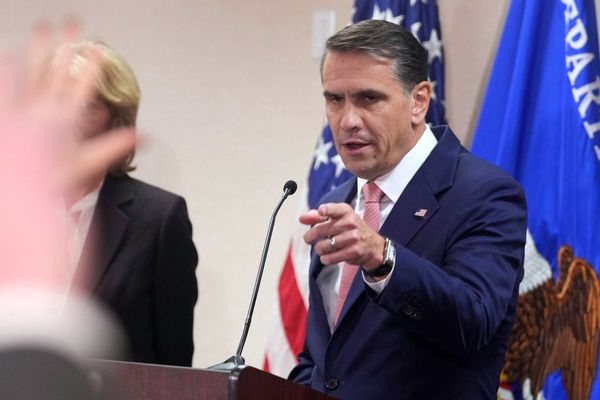
Colby and US Strategic Command Commander Adm. Richard Correll have described the effort as expanding the president's 'decision space' during a nuclear crisis. At the 2026 Strategic Command Deterrence Symposium in Omaha, Nebraska, on 5 August, Colby said the Pentagon wanted to provide the president with 'credible, rational nuclear options.'
Colby also identified a regional conflict as a particular concern, warning about a conventional war in which nuclear weapons could be used locally and then escalate. He said he would 'fear more' a regional war than a 'mass attack' on the US, describing it as 'kind of local war, a conventional war that might have local employment, God forbid, of (nuclear) weapons that could escalate from there.'
Russia and China Drive the Review
The reassessment comes as China expands and modernises its nuclear arsenal, while Russia continues to maintain a large strategic nuclear force. Colby has argued that nuclear capabilities should be integrated with conventional forces and a broader US defence strategy.
The Pentagon is conducting the effort as a nuclear strategy review rather than a formal Nuclear Posture Review, according to the Arms Control Association, which cited Colby's earlier comments. Reporting and arms-control analysis have pointed to greater consideration of existing low-yield and non-strategic nuclear capabilities. The US already fields nuclear capabilities, including the B61-12 gravity bomb and the W76-2 low-yield warhead.
The review is also unfolding after the New Strategic Arms Reduction Treaty, or New START, expired on 5 February 2026. The treaty imposed verifiable limits on US and Russian strategic nuclear forces, including 1,550 warheads on deployed ICBMs and SLBMs, and warheads counted for deployed heavy bombers. Although Russia had announced a suspension of the treaty in 2023, its formal expiration on 5 February 2026 ended the treaty's remaining legal limits.
Deterrence or Escalation Risk?
Colby has described the review as an effort to maintain deterrence and stability while rejecting the idea that it is intended to increase the focus on theater-range nuclear weapons. He said the review was examining 'rationally employable, limited options' that could help manage escalation. He later clarified that the review was still pre-decisional and said its goal was 'to maintain deterrence and stability rather than to exacerbate it.'
The Arms Control Association has nevertheless raised concerns about the potential consequences of placing greater emphasis on limited nuclear options. It warned that greater reliance on tactical nuclear weapons could increase escalation risks, arguing that a nuclear exchange between nuclear-armed states could quickly move beyond a limited conflict.
The review therefore remains a work in progress and does not yet represent a publicly announced change to US nuclear declaratory policy. Its eventual recommendations and any resulting changes to US nuclear strategy have yet to be made public.