
Get all your news in one place.
100's of premium titles.
One app.
Start reading
Tom’s Hardware
Tom’s Hardware
Technology
Etiido Uko

Pentagon budget reveals it's pursuing containerized 300kW+ laser weapons, ambitious Joint Laser Weapon System designed to shoot down cruise missiles — system part of $17.9 billion Golden Dome missile-defense initiative

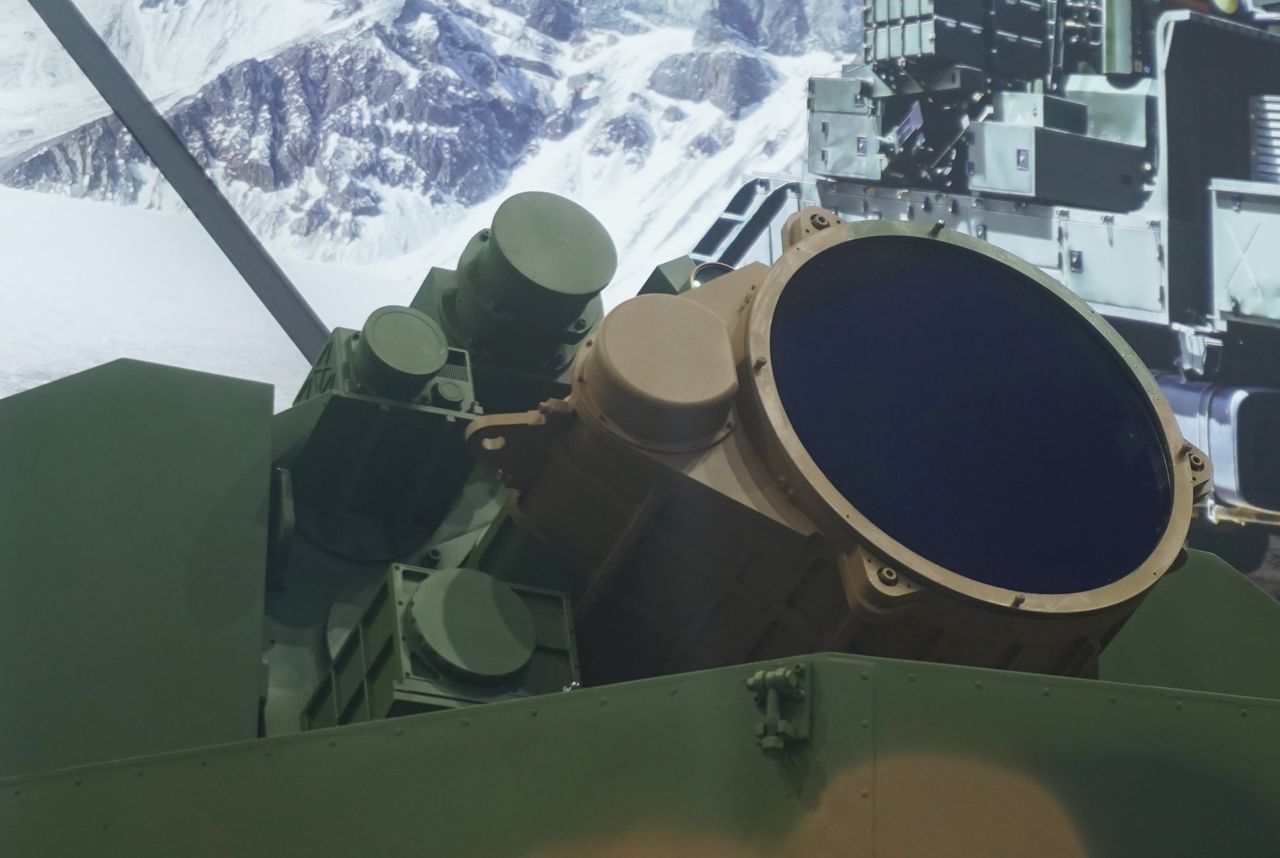
Laser weapon system.

Newly released Pentagon budget documents published earlier this month reveal that the US military is accelerating development of a new Joint Laser Weapon System (JLWS) designed to shoot down cruise missiles. The documents, including the Department of War's fiscal year budget for 2027 (FY2027), research and development justification books, and Golden Dome missile-defense funding proposals, signal one of the most serious pushes yet toward operational directed-energy missile defense systems.

The JWLS is part of a broader “Golden Dome for America” missile-defense initiative, a layered homeland defense architecture designed to counter ballistic, hypersonic, and cruise missile threats.

Newly published RDT&E (Research, Development, Test and Evaluation) documents describe the JLWS initiative as a strategy to develop “Laser Weapon System (LWS) prototypes for counter-missile defensive applications”. According to the Navy’s research documents, the program aims to integrate new high-energy laser subsystems into operational weapon prototypes for testing in naval environments.

The documents reveal that the Pentagon is pursuing a containerized laser architecture capable of scaling beyond 300 kilowatts. The Navy states that the JLWS Science & Technology initiative will develop “a containerized 300+ kW HEL weapon prototype ready for Test & Evaluation exercises”.

That level of power marks a significant escalation from many currently deployed tactical laser systems, which are primarily designed to disable drones or small boats.

The documents also suggest the Pentagon sees cruise missile defense as a central future mission for directed-energy weapons. The broader Golden Dome initiative explicitly prioritizes protection against “sophisticated ballistic, hypersonic, and cruise missiles” as part of a homeland missile-defense architecture.

Funding levels reflect that urgency. The FY2027 budget allocates hundreds of millions of dollars toward Golden Dome-related directed-energy and missile-defense programs. The budget includes $452 million for “Directed Energy System Development, Integration and Assessment” under the Golden Dome initiative.

Meanwhile, Navy research documents show growing investment in the maturation of JLWS-related technology. The service says the effort will focus on integrating high-energy laser sources with critical subsystems, including command-and-control systems, thermal management, tracking systems, and power infrastructure.

The Pentagon appears to be building JLWS from lessons learned across earlier laser weapon programs. Those earlier efforts include systems such as HELIOS, the Navy’s ship-mounted High-Energy Laser with Integrated Optical Dazzler and Surveillance system, as well as the Army’s Indirect Fire Protection Capability-High Energy Laser program.

The renewed push comes after decades of failed or impractical laser weapon projects. Since the Cold War, the US military has repeatedly attempted to develop missile-killing lasers. Earlier systems demonstrated that powerful lasers could damage airborne targets under controlled conditions, but many became too large, expensive, or operationally impractical for widespread deployment.

The Pentagon now appears to believe advances in solid-state lasers, thermal management, beam control, and modular power systems may finally make operational deployment feasible.

Yet cruise missile interception remains an exceptionally difficult engineering challenge. Unlike slower drones, cruise missiles fly fast, often skim terrain, and can maneuver unpredictably. Destroying them requires maintaining precise beam focus on a rapidly moving target long enough to inflict catastrophic structural or thermal damage.

Atmospheric interference further complicates matters. Moisture, dust, turbulence, and thermal distortion can scatter or weaken laser beams over distance, reducing effectiveness even at extremely high power levels.

The Pentagon is pursuing a containerized design — most likely an attempt to address the long-standing problem of deployment flexibility. Rather than permanently integrating massive laser systems into specialized ships or vehicles, containerized architectures could theoretically allow rapid deployment across multiple platforms with fewer structural modifications.

For now, the JLWS remains a development effort rather than a fully operational weapon. However, with the scale of funding, the integration into the Golden Dome initiative, and the Pentagon’s growing emphasis on directed-energy systems, we are very likely to see a fully functional system soon.

Sign up to read this article
Read news from 100's of titles, curated specifically for you.
Already a member? Sign in here
Related Stories
Top stories on inkl right now
One subscription that gives you access to news from hundreds of sites
Already a member? Sign in here
Our Picks
Fourteen days free
Download the app
One app. One membership.
100+ trusted global sources.