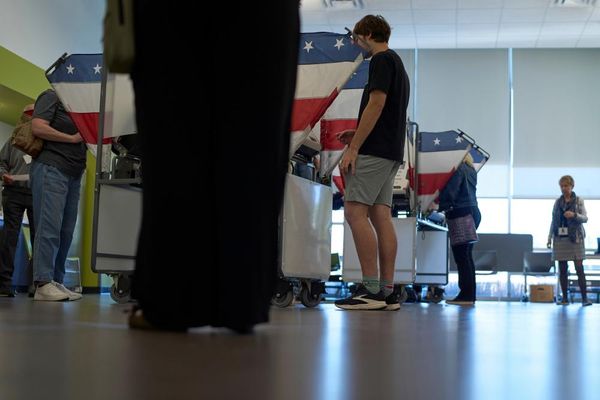
Classrooms across Lancaster County, Pennsylvania, and Geauga County, Ohio, are reopening inside two of the country's most active measles clusters, and state rules mean the first confirmed case inside a school building will send home far more than one child. Under state guidance for schools and child care programs, exposed students and staff who cannot document immunity should be kept out from day five after the first exposure through day 21 after the last one.
That is a stretch of up to three weeks away from school, sports, clubs, and any school-related activity. Exposure means sharing a space with an infected person, or entering that space within two hours after the person has left. It applies to children whose families have filed religious or philosophical exemptions, regardless of whether the excluded child ever develops symptoms.

For working parents, the consequence lands as a scheduling and money problem before it lands as a medical one. A 21-day exclusion outlasts most paid leave balances and most backup childcare arrangements. The rule itself is not new. What has changed is how likely it is to be triggered this fall.
The Exclusion Rule Most Families Have Never Read
The Pennsylvania Department of Health does not generally recommend closing schools during an infectious disease outbreak. Its approach is narrower and more personal: identify who is susceptible, then remove those individuals from the building.
Proof of immunity is defined tightly. The state counts written documentation of age-appropriate measles vaccination, laboratory evidence of immunity or of past infection, or birth before 1957. Age-appropriate means at least one dose for preschool-age children and two doses for school-age children. A parent's verbal assurance does not count, and neither does an incomplete record.
There is one narrow exit, and it comes from federal guidance. The CDC manual for measles surveillance states that, outside health care settings, a susceptible person who receives a dose of MMR within 72 hours of the first exposure may return to child care, school, or work. Pennsylvania directs schools to make every exclusion decision in consultation with the state or a local health department, so families should confirm the outcome rather than assume it. Either way, the window is short, and it closes before most families have finished reading the notification letter.
Schools are also expected to pull attendance records, bus assignments, and classroom rosters for the exposure window and hand them to public health investigators. Parents should expect a phone call rather than a form letter if their child appears on that list.
Lancaster County Coverage Sits Below the Level That Stops Transmission
Pennsylvania has recorded 296 measles cases in 2026, with at least 145 of them in Lancaster County, roughly 49 percent of the state total. Fifty-two people statewide have been hospitalized, and no one has died. State and county officials have said the confirmed cases have occurred in people who were not vaccinated.
Local coverage explains why the county carries so much of the load. Lancaster reported 87.6 percent of kindergartners and 83.3 percent of seventh graders vaccinated against measles, according to vaccination figures reported by the Philadelphia Inquirer. Interrupting spread generally requires about 95 percent coverage, because up to 90 percent of susceptible people exposed to the virus become infected.
Lancaster County Commissioner Alice Yoder, a nurse and former Lancaster General administrator, told the paper that there will be a large number of children coming together every day, and that "measles is just extraordinarily contagious." Physicians at Lancaster General Hospital, many of whom had only read about the disease in textbooks, are now treating measles patients for pneumonia and brain swelling. Jeffrey Martin, who chairs the department of family and community medicine at the Penn Medicine-affiliated health system, described the experience as "surreal."
The county has no independent health department, which shapes how quickly community-level messaging reaches households. That gap matters more in a district where a single introduction can spread rather than fizzle.
The Ohio Cluster Has Tripled Since Its First Cases
Geauga County, in northeast Ohio, confirmed its first five measles cases in early August and now counts 16. Investigators have pointed to large community gatherings as likely exposure sites, including a horse sale in North Bloomfield, a related event in Sugarcreek, and an auction in Lancaster County, Pennsylvania.
Officials have described those as possible exposures rather than a confirmed transmission chain, and no agency has published genetic sequencing that links the two states. Even so, the pattern is one of gatherings that draw attendance across state lines rather than infections confined to a single county.
Ohio Department of Health Director Bruce Vanderhoff has said all identified cases involve unvaccinated or under-vaccinated people, adding that "given the exposures of large community events, we unfortunately expect this case count to grow."
Nationally, 67 percent of this year's cases have been in children and teenagers, and 93 percent of patients were unvaccinated or had unknown vaccination status. Seven percent have been hospitalized, down from 11 percent last year. No measles deaths have been reported this year, after three in 2025. Those figures come from federal measles surveillance data current through the middle of August, and they are revised weekly as new cases are confirmed, as covered in MedicalDaily's report on the latest weekly increase.
Steps Worth Taking Before an Exposure Letter Arrives
The single most useful action is administrative. Families should confirm what the school nurse actually has on file, because exclusion decisions are based on documentation rather than memory. Records can be requested from a pediatrician, a prior school district, or a state immunization registry.
Families in outbreak counties who are considering vaccination should ask a pediatrician about timing rather than adjusting anything themselves. Two doses of the measles, mumps, and rubella vaccine are about 97 percent effective, and one dose is about 93 percent effective. Doctors' offices, urgent care centers, pharmacies, state health centers, and federally funded health centers all offer the vaccine, and the Vaccines for Children program covers it at no cost for eligible children who are uninsured, underinsured, enrolled in Medicaid, or American Indian or Alaska Native.
Symptoms usually begin seven to 14 days after exposure and can take as long as 21 days. They start with fever, cough, runny nose, and red, watery eyes, followed by a rash that begins on the head and moves downward. Anyone with those symptoms should call ahead before visiting a clinic or emergency department so staff can prevent further exposure. Trouble breathing, seizures, severe dehydration, or sudden confusion warrant urgent evaluation.
What remains unsettled is how many introductions school reopening will actually produce. No agency has published a projection of school-linked case counts. Pennsylvania has, however, released school-by-school vaccination figures, which lets parents look up their own building rather than rely on a countywide average that hides wide variation between districts.
Key Questions Answered
Can a school really keep my child home for three weeks? Yes. Pennsylvania guidance directs schools to exclude exposed children and staff without proof of immunity from day five after first exposure through day 21 after last exposure, in consultation with the health department.
Does an exemption protect my child from being excluded? No. Religious and philosophical exemptions allow a child to attend school without vaccination, but they do not exempt that child from exclusion once measles is identified in the building.
Is there any way to avoid the exclusion? Federal guidance says a susceptible person who receives a dose of MMR within 72 hours of first exposure may return to school. Ask the health department directly, since Pennsylvania makes these decisions on a case-by-case basis.
What counts as proof of immunity? Written documentation of age-appropriate measles vaccination, which means two doses for school-age children, plus laboratory evidence of immunity or past infection, or birth before 1957.
Which counties are carrying the most cases? Lancaster County holds at least 145 of Pennsylvania's 296 cases this year. In Ohio, Geauga County has grown from its first five confirmed cases to 16.
Should my child get an extra dose before school starts? Not automatically. The routine schedule is two doses. Families in outbreak counties should ask a pediatrician whether earlier timing of a second dose is appropriate for their child.
Where can uninsured families get the vaccine? State health centers, federally funded health centers, and the Vaccines for Children program provide MMR vaccines at no cost to eligible children.