South Carolina is one of 20 states that authorize indefinite civil commitment of sex offenders after they have completed their prison sentences. Under state law, such continued detention is allowed only when a jury concludes beyond a reasonable doubt that a respondent qualifies as a "sexually violent predator" (SVP), meaning he "suffers from a mental abnormality or personality disorder that makes [him] likely to engage in acts of sexual violence if not confined in a secure facility for long-term control, care, and treatment."
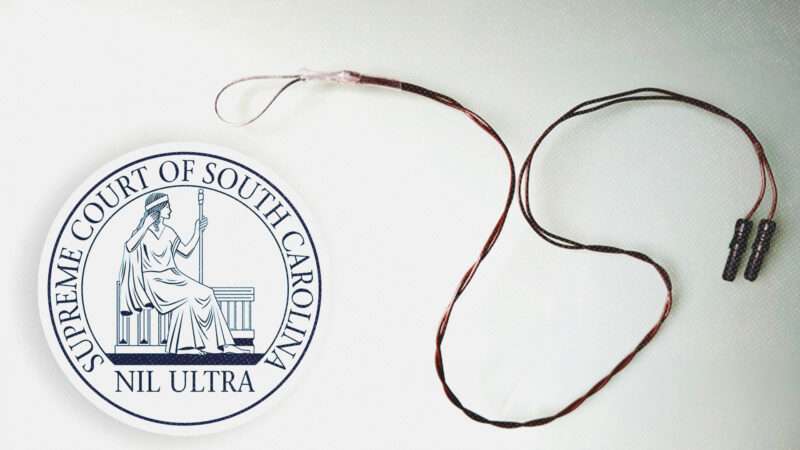
Although the South Carolina Office of Mental Health (OMH) concluded that Andy Hyman was not an SVP, a jury disagreed, swayed by a second opinion based largely on penile plethysmography (PPG), a scientifically dubious technique that aims to measure sexual response to images, audio narratives, or textual descriptions by gauging tiny changes in the circumference of the subject's penis. That test, the South Carolina Supreme Court unanimously ruled last month in response to Hyman's appeal, is "generally inadmissible in judicial proceedings" because it suffers from a "glaring lack of standardization," which casts doubt on its validity as a predictor of recidivism.