
Predator. Omen. Legion, Asus. Imposing gaming PC sub-brands signal the power that elevates them over web-and-Word workhorses. But even before AI model training became the new killer app, gaming wasn’t the only application where performance, even GPU performance, commanded a premium.
Workstations such as Lenovo’s ThinkPad P series and HP’s Z series, optimized for applications like advanced data science, computer-aided design and 3D model rendering, have long boasted specs similar to leading gaming PCs. However, they ship in more conservative exteriors, offer greater durability, and traverse different distribution channels en route to the desks of enterprise users.

But there’s a third type of power user that PC makers have long courted: so-called “creatives” who work in a range of media from video to print.
These pros also need power, but their needs often fall between the gaming and workstation markets; this could be driven either by work setting and structure (corporate vs. independent) or kinds of tools and media needed.
While some PC makers have left these buyers to choose the path that they think best suits them, others offer—or have at least tried—targeting certain sub-brands or configurations more explicitly.
Pros and Configurations
Acer was early to recognize the “creator” market potential, launching a line in 2019 called ConceptD. It featured powerful configurations that included Intel Xeon CPUs and Nvidia Quadro GPUs and bold yet organic-looking industrial designs, including a “pull-forward” convertible laptop (like the Surface Laptop Studio) line called Ezel.
It also included display products, including a monitor and a mixed reality headset. While the company shifted away from the sub-brand, Acer America's associate director of product marketing Eric Ackerson says that ConceptD helped validate the market segment and served as a testing ground to understand the needs of creative pros, which span a broad spectrum.
Today, he notes, Acer sees the key to reaching those customers more in terms of configurations than branding. “There are meaningful crossovers between [the gaming and creative] categories,” he notes. “The needs are similar, but the workflows are different.” In general, creatives tend to favor more subdued PC designs, an aesthetic that has much in common with what Ackerson calls “executive gaming,”
In contrast, in keeping with the high degree of specialization within its sprawling portfolio, Asus has leaned into its ProArt sub-brand, which targets creative pros, although he agrees on customer aesthetic preferences.
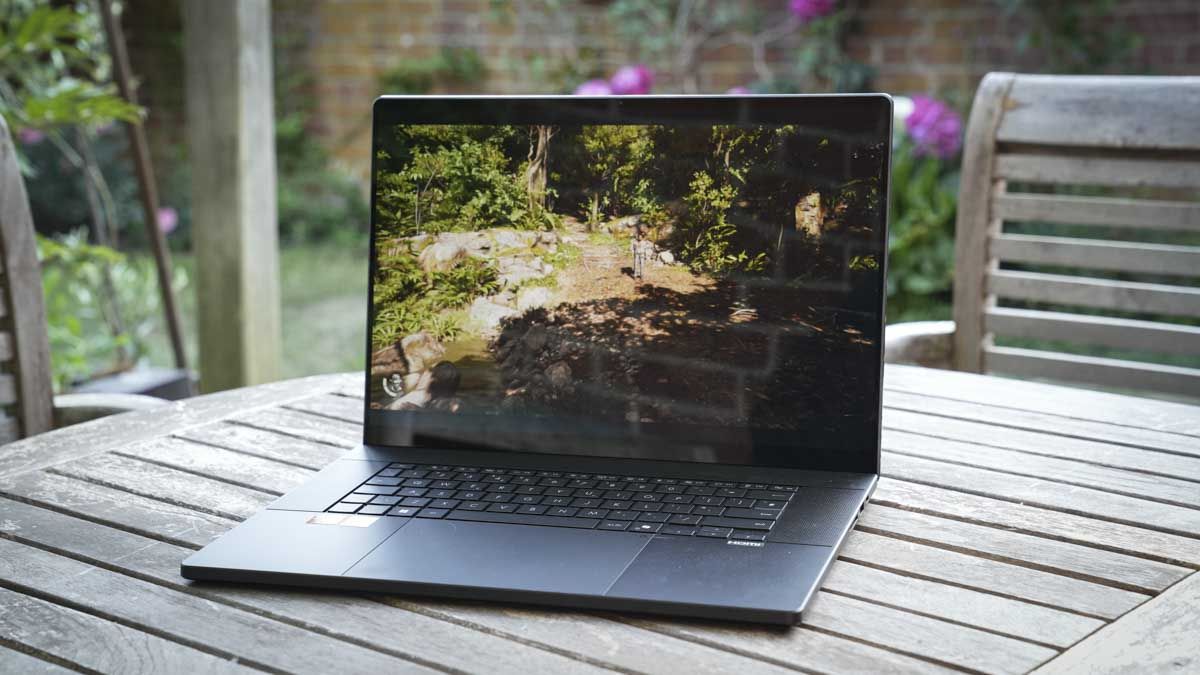
Sascha Krohn, Asus global director of technical marketing,, says that creatives want devices that are more minimalistic and low-profile. “We want the design to be simple and calm so you don’t get distracted by it,” he says. He cites the company’s ProArt P16, which features hardware such as SD Express card slots and touch dials. It evolved from a creator-focused edition of the company's gaming-focused Zephyrus G7 notebook.
One of the hallmarks of the ProArt line, which spans PCs and monitors, has been its displays, where gamer and creative pro priorities differ. Gamers place a higher value on brightness and, of course, refresh rates. For creatives, color accuracy and matte finishes matter more. However, the company sees an opportunity to satisfy crossover users as OLED displays get brighter. The ProArt P16 features a 120Hz tandem OLED display with 1600 nits peak HDR.
Big Things from Small Packages
There are a lot of correlations and similarities [between] a gaming PC and one designed for a creator
Wallace Santos, CEO Maingear
The rival PC makers agree also that there is rising interest in small form factor desktops for these customers. ASUS has long championed tiny desktops. After being a close partner in Intel’s New Unit of Computing initiative small form factor PCs, Asus adopted the product line when Intel abandoned it in 2023, releasing new models in both standard and gaming variants. Acer’s Ackerson notes an upswing in interest in its small desktop platform.
Its NUC platforms include Revo, a brand the company had targeted toward entertainment and multimedia, and the GN100 AI Mini Workstation that uses Nvidia’s DGX Spark platform. At Computex, it announced a forthcoming Veriton small-form-factor desktop that will use the new RTX Spark architecture from MediaTek and Nvidia.
Wallace Santos, who founded Maingear more than two decades ago when he was 18 and serves as CEO, has also seen crossover into the creator market. “There are a lot of correlations and similarities [between] a gaming PC and one designed for a creator,” he says. Both need a high-performance GPU, lots of memory, and fast storage.” But creators “tend to want sleeker [PCs with] less flash.” Santos’ team took lack of flash to an extreme when it released two limited-edition high-performance gaming PCs in beige, ‘90s-style cases.
The designs sold out. But the company has shown restraint even in its more traditional gamer products. “When we do RGB, it’s cleanly done. Not rainbow vomit,” he says. Santos is skeptical that small form factor PCs will expand their audience among gamers, noting that huge GPUs, expensive SFF power supplies, and intense cooling demands quickly make mid-towers a more practical choice.
Less Elite, More Discrete
Professional media editing mainstays Photoshop, Premiere, and Pro Tools all launched between 1989 and 1991 (although they came to Windows a bit later). They create digital workspaces to more flexibly and efficiently support workflows that artists and editors used analog, physical tools for previously.
While 3D horsepower has been useful for some creative applications such as Adobe After Effects, system memory has been a more important variable in determining system performance for many of these tasks. Generative AI has changed that, however.
Generating images has become increasingly trivial and reliable, with improvements in conversational editing that eluded leading models just last year. And music and song creation is now flowing downstream from tools like Suno to being baked into Gemini.
While generating video, particularly longer-form video, may still have some rough edges, though, the short-lived Sora democratized shorter clips with Hollywood-quality cinematics and special effects. And Google recently released Omni Flash, a successor to its leading Veo video generation model that includes features for ensuring better consistency in characters and other elements over longer clips.
Now, instead of just importing video into an editing tool such as daVinci Resolve, video creators can use tools such as Google Flow, which allows them to use prompts to have AI create video, modify it, and keep it on track as elements tend to lose consistency from clip to clip. “The interface becomes less a toolbox and more a layer that translates intent into actions. You don’t need to know the steps. You just say where you want to go,” says Acer’s Ackerson.
Local video generation models like LTX and Wan can create high-quality videos, but require a GPU, preferably with at least 12 GB of VRAM. The full Wan model, which includes 14 billion parameters, optimally needs 32 GB or more of RAM and more than 50 GB of SSD space.
Even with today’s leading GPUs, best practices dictate using a workflow UI such as Comfy for keeping things on track and generating lower-resolution video locally before upscaling it using post-processing tools.
However, these compromises can seem like small sacrifices given the savings versus cloud-based options. And successive PC generations will only close the gap. “AI has removed the barriers,” says Maingear’s Santos. “The toolset is no longer the restriction in today’s creative workflow. It’s still expensive, but it’s achievable now.”
Our team has tested the best video editing laptops and the best video editing computers.