Get all your news in one place.
100's of premium titles.
One app.
Start reading
Guitar World
Guitar World
Entertainment
Joe Matera

“Paul McCartney likes to control things under the guise of saying, ‘Play as free as you like.’ Then he’ll start to pick it all apart”: Chris Spedding’s favorite sessions

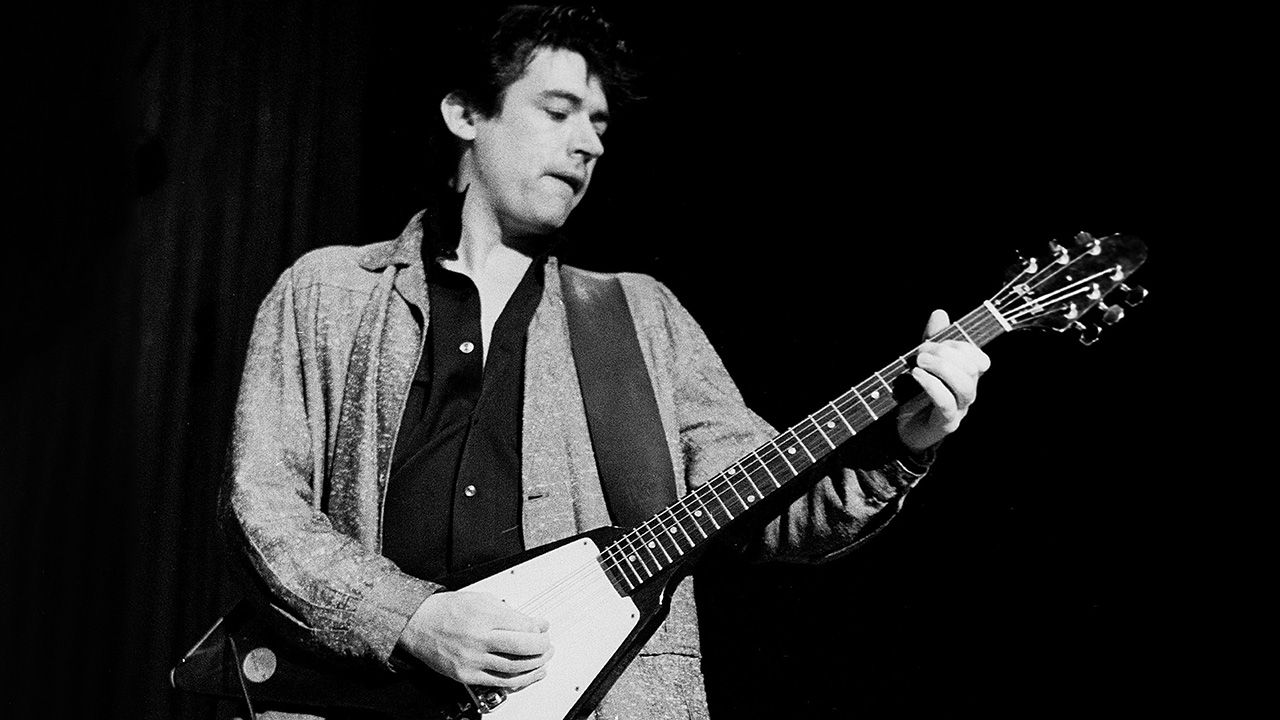
British Rock musician Chris Spedding performs onstage at Park West, Chicago, Illinois, April 6, 1979. (Photo by Paul Natkin/Getty Images).

Over a career that spans more than 50 years, English guitarist Chris Spedding etched a reputation as a go-to session guitarist in the 1970s, and forged a career as a touring guitarist while also pursuing a solo career.

His guitar work has appeared on albums by Jack Bruce, Harry Nilsson, Paul McCartney, Bryan Ferry, David Essex and John Cale, to name but a few. He sat down with Guitar World to share some of his most memorable sessions.

Jack Bruce

He was one of those guys who was very charming; very witty, very funny – but he could turn on a dime. We all have our moments. I suppose that’s what gave rise to the reputation he had of being difficult to work with. When I was working with him, and when he was in a good mood and everything, he was fine and a lot of fun.

In England in 1969, when I did Jack’s Songs for a Tailor solo album, everybody who played guitar wanted to be Eric Clapton – except me. I had come out of the jazz thing and I was listening to Americana stuff like The Band and Bob Dylan and all that.

So I imagine Jack went for me because he knew I wouldn’t try to sound like Eric Clapton. He already had Eric; he didn’t want another guy to sound like him because he probably had enough of that style of playing.

Harry Nilsson

I knew Harry Nilsson was a big-time American artist. Along with American producer, Richard Perry, it was kind of a big-time session for me – especially when I showed up and there was Klaus Voormann on bass, Ringo Starr on drums and Peter Frampton on the other guitar!

Harry was very focused and concentrated in the studio. You hear about the lost weekend with John Lennon and lots of partying, but there was none of that going on. It was all very serious. Maybe when we had left they started having the parties!

When we were doing Jump into the Fire we did take after take after take. That was common in those days, but you don’t do it these days due to everything being digital. You’d come back the next day and there would be all these reels of 24-track tape lined up, and a huge ashtray full of dead cigarettes next to them.

You knew then they’d been there all night listening to all these takes, because you had to listen to them all. After we’d done the track, Richard said, “So it’s take number one that we’re keeping!’”

Phil Spector

I worked with Phil in the middle of the recording sessions for George Harrison’s All Things Must Pass. It was at Trident Studios in London, the same studio that I worked with Harry and Richard.

I remember a whole bunch of acoustic guitar players being there with 12- string guitars, all booked for the session along with me. Phil wanted that saturated acoustic sound that you get on My Sweet Lord, but that song wasn’t out then.

I remember Phil got us in there on Easter Sunday. And since that was a holiday, it was double-scale. It was just one piece that we had to play on. I don’t even know whether it ended up on the album! I don’t think there were any drums on it – he counted us in at the tempo and we played the part.

Brian Eno

I knew Brian. I’d been Sharks when the band opened for Roxy Music on their second UK tour. Some of the Sharks got a call to do some stuff on Brian’s album. At the time he was an unknown quantity. We didn’t know he could make his own albums; this was his first one, Here Come the Warm Jets.

I really liked the studio because it was one of those – I wouldn’t say cheap, but one of those budget demo studios with 16 tracks instead of 24, which everybody was using at that time.

John Cale

I liked John because he was one of the few people who’d take a chance. He’d change tempos, keys and the order of songs because he was interested in improvising. Some of the other members of the band were kind of freaked out by that because it’s not the rock ’n’ roll thing.

The rock ’n’ roll thing would be to keep rigidly to the song and not to experiment with it too much. But coming from a little bit of a jazz background myself, and John coming from an improvisational classical background, we both liked to mess around with things and hit people with a real curveball.

Since he stopped doing the illicit substances as we all did back then, he’s gotten to be a lot more controlled – although he’s still a bit of a rebel in some ways. It was a very valuable experience. I wish he was still like that, a bit more of a rebel, because we’d get on a lot better.

The Pretenders

That only happened once. I’d been invited on stage because The Necessaries, a New York outfit I was playing with, had opened the show. We were friends with guitarist James Honeyman-Scott, bass player Pete Farndon, and drummer Martin Chambers, and I knew Chrissie from way back in 1974 so we would hang out a lot together.

So they invited me on stage to do their encore, and I played my own part to Stop Your Sobbing, which wasn’t anything that James had played on the recording. Something different – but I only did it that once.

Paul McCartney

That was like working with no other musician ever! His status is even greater now because he has this great band and he’s still going out live and doing old Beatles songs.

When I worked with him he was still going through the phase of not wanting to do a Beatles song. It’s like Jack Bruce – when I worked with him he’d never do a Cream song. I just wanted to play Sunshine of Your Love with him, but he just didn’t want to.

So back back then we just did original stuff with Paul. He likes to control things, being who he is – but under the guise of saying, “Play as free as you like; it’ll be fine.” Then he’ll start to pick it all apart. If you’re doing well, he’ll leave it. But if you're not doing well, he’ll sort of say, “Yeah, that’s great, Chris – but what about this bit here? What about doing this?”

Sign up to read this article
Read news from 100's of titles, curated specifically for you.
Already a member? Sign in here
Related Stories
Top stories on inkl right now
One subscription that gives you access to news from hundreds of sites
Already a member? Sign in here
Our Picks
Fourteen days free
Download the app
One app. One membership.
100+ trusted global sources.