
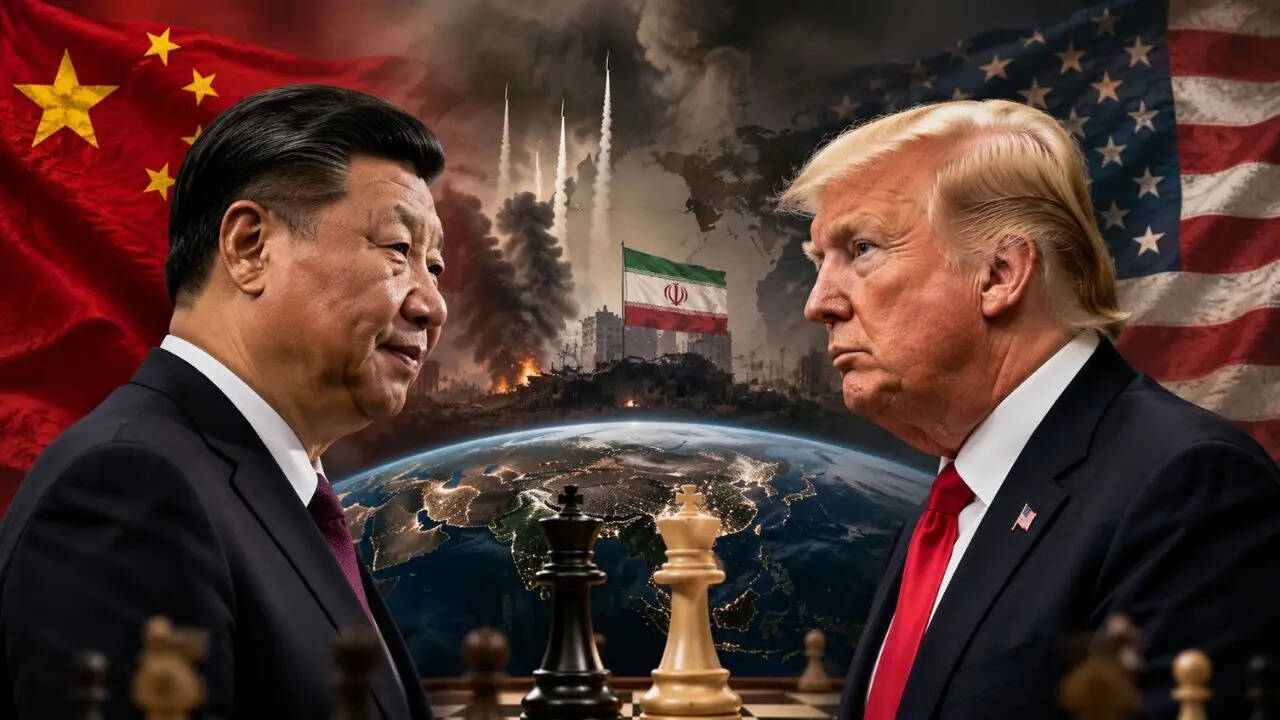
When Donald Trump lands in Beijing on May 14, the choreography will look familiar. Red carpets. Military bands. Carefully staged handshakes beneath the chandeliers of the Great Hall of the People. Washington will present the summit as another test of great-power diplomacy, a high-stakes negotiation between two rivals trying to manage a dangerous world. But by the time Trump's aircraft touches the runway, Xi Jinping may already have secured the most important outcomes without signing a single agreement.
Because the real story of the Iran war is not who fired the missiles or who claimed victory on television. It is who quietly benefited while everyone else was distracted. The United States entered the conflict promising to reassert deterrence through overwhelming force. Israel sought to cripple Iran's military and nuclear infrastructure. Tehran fought for regime survival. Yet the country that emerged with expanding influence across Asia, fresh leverage in the Gulf, and a weakened American strategic position in the Indo-Pacific was China.












