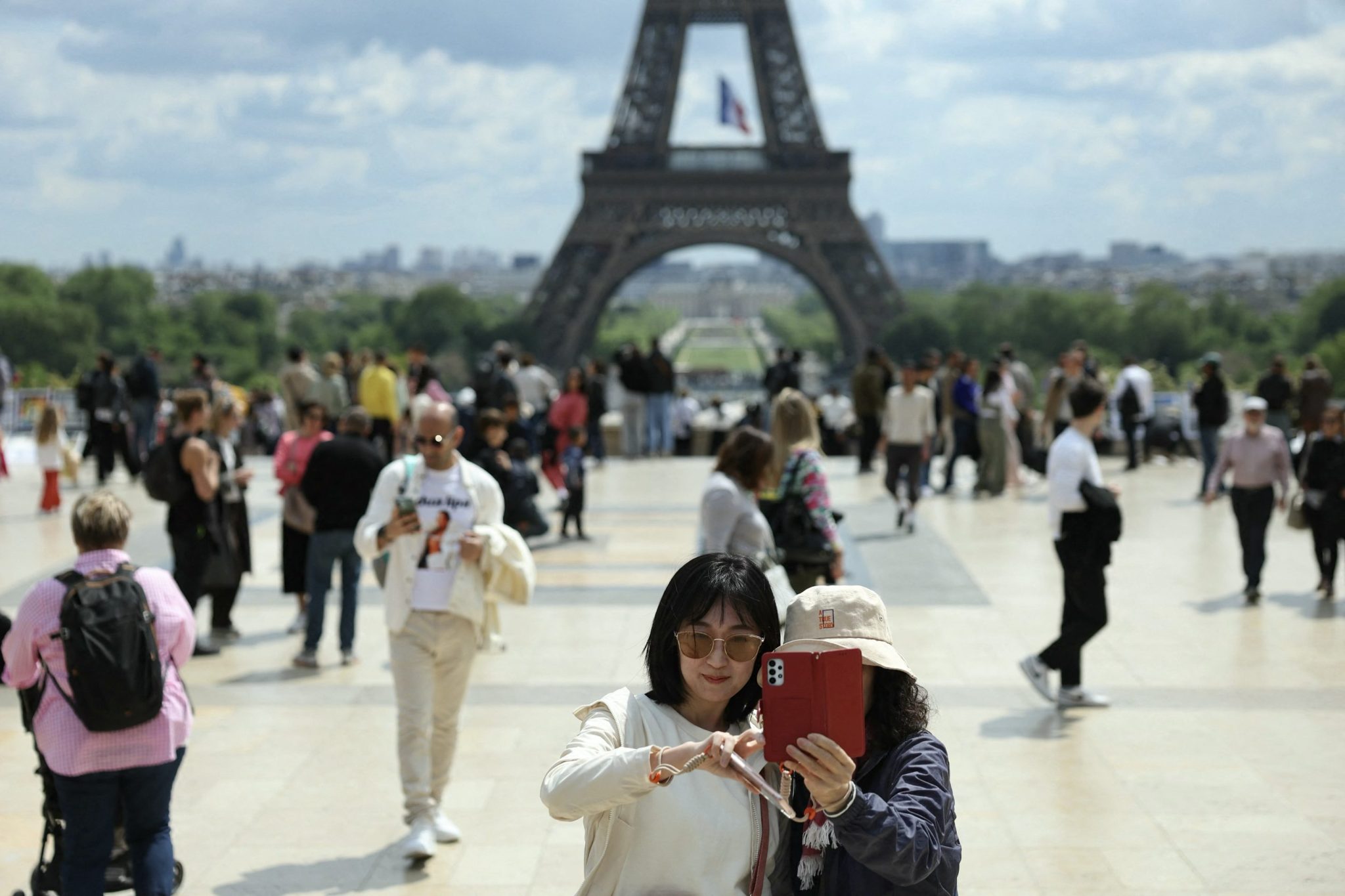
Early one drizzly morning in Paris, a handful of city officials make their way up a steep, narrow street in the historic neighborhood of Montmartre, with a reporter in tow and the domed Sacré-Coeur basilica looming above. The group stops at an apartment building that looks like any other on the block. It is only when they step inside the entrance hall that anything seems unusual. Signs pasted to the walls declare that loud noise and nighttime gatherings are forbidden. And many of the front doors have metal lockboxes bolted to them, with apartment keys inside. Both are telltale signs that the city workers have found what they’re looking for: illegal Airbnbs.
During the next half-hour, as we climb stairs and knock on doors, a few sleepy residents emerge to complain—not about us, but to us. They describe how their building has begun to feel like a travelers’ crash pad, with rolling suitcases clattering on the pavestones at all hours, and the outdoor courtyard becoming a rowdy tavern on warm evenings. “A living hell,” one calls it.