Get all your news in one place.
100's of premium titles.
One app.
Start reading
The Conversation
The Conversation
Lei Si, Associate Professor in Health Services Management, Western Sydney University

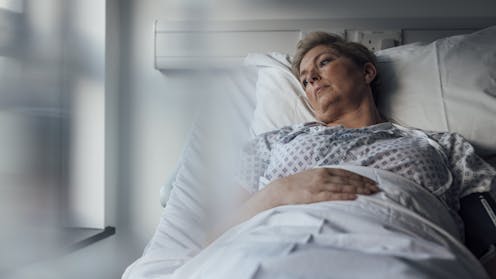
Paramedics are less likely to identify a stroke in women than men. Closing this gap could save lives – and money

SolStock/Getty Images

A stroke happens when the blood supply to part of the brain is cut off, either because of a blockage (called an ischaemic stroke) or bleeding (a haemorrhagic stroke). Around 83% of strokes are ischaemic.

The main emergency treatment for ischaemic strokes is a “clot-busting” process called intravenous thrombolysis. But this only works if administered quickly – ideally within an hour of arriving to hospital, and no later than 4.5 hours after symptoms begin. The faster treatment is given, the better the person’s chance of survival and recovery.
Sign up to read this article
Read news from 100's of titles, curated specifically for you.
Already a member? Sign in here
Related Stories
Top stories on inkl right now
One subscription that gives you access to news from hundreds of sites
Already a member? Sign in here
Our Picks
Fourteen days free
Download the app
One app. One membership.
100+ trusted global sources.