
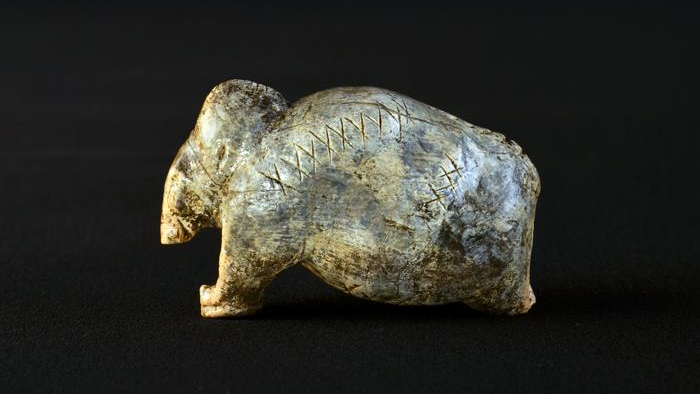
Humans first developed complex and information-dense writing around 3000 B.C., when the Sumerians of southern Mesopotamia (modern-day Iraq) invented cuneiform scripts. But new research suggests the precursors to writing can be found on sculptures and tools made by Paleolithic hunter-gatherers in Central Europe tens of thousands of years earlier.
When modern humans (Homo sapiens) first arrived in Europe around 55,000 years ago, they brought with them a sophisticated tool culture that included projectile points and drilling implements. Humans began decorating cave walls with geometric shapes, hand stencils and representations of animals, and they adorned their tools and sculptures with geometric signs whose meaning has baffled archaeologists for decades.