
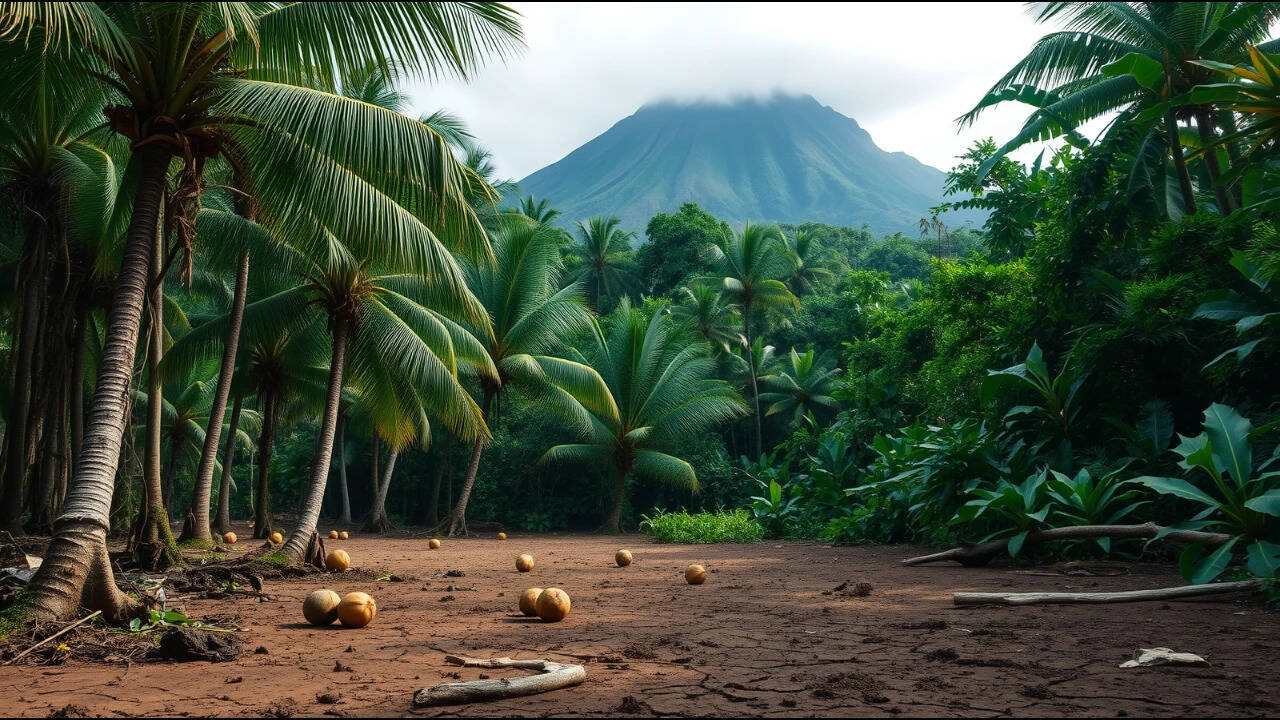
Across tropical islands in the Pacific and Indian Ocean, the arrival of people brought more than permanent settlements. Forests were cleared, invasive predators were introduced, and large areas were converted into coconut plantations for commercial production. On some islands, the coconut industry eventually declined, but the plantations remained, leaving behind dense stands of a single introduced crop where native forests and grasslands once grew. For seabirds, that legacy can be particularly damaging. On islands where abandoned coconut plantations coexist with invasive rats, the landscape can become what researchers describe as an "avian desert", an area offering little suitable habitat for breeding birds even when food may still be available offshore. A new study titled Potential benefits to breeding seabirds of converting abandoned coconut plantations to native habitats after invasive predator eradication , led by scientists from the Zoological Society of London's Institute of Zoology, together with researchers from the Royal Botanic Gardens, Kew, the University of Exeter and Heriot-Watt University, examined whether removing rats is enough to reverse that damage. Their results suggest that it is not. If conservationists want heavily degraded tropical islands to support large seabird colonies again, removing invasive predators may need to be accompanied by a much more ambitious step: replacing abandoned coconut plantations with native vegetation.
Get breaking news anytime, anywhere. Download the TOI app now!













