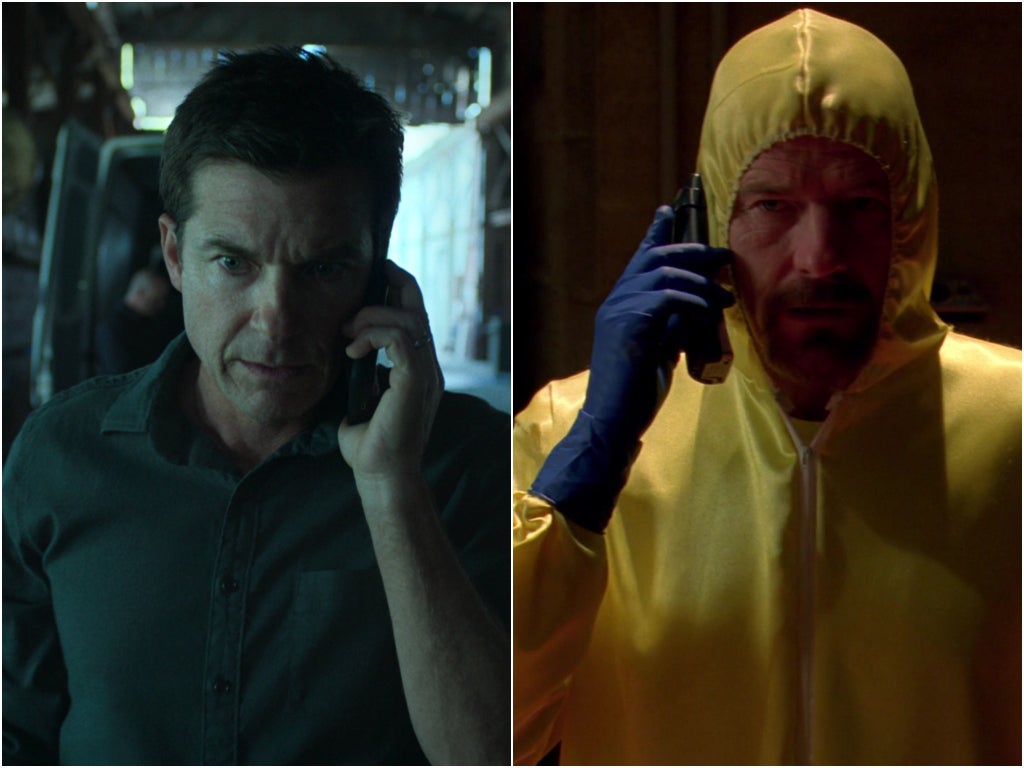
Netflix’s crime drama Ozark was not the most promising proposition on TV when it began, back in the innocent prelapsarian days of 2017. It seemed to draw too obviously on other dramas. The characters looked suspiciously like people we had seen before. Here was a white upper-middle-class family on the run, uprooted from the affluent Chicago suburbs and dumped in a poor little town in Missouri. There, financial adviser Marty Byrde (Jason Bateman) and his wife Wendy (Laura Linney) had to somehow find a way to launder $500m for a criminal cartel.
The word “Ozark” had a certain obscure mystery, at least to non-American viewers. Ozark sounds like dark: spiky z’s and k’s. But while the specifics differed from other series, the recipe felt familiar, if not outright derivative. There was a dash of True Detective, a spot of Bloodline, and a hefty dollop of Breaking Bad in the “Dad does crime” concept. “Jason Bateman breaks mediocre,” said Rolling Stone, sniffily writing off Ozark as “Peak TV’s greatest hits played by a proficient covers band”. Others agreed. Ozark was a lazy attempt to ride a horse that had bolted. Try harder, Netflix! Earn our prized attention span! Our eyeballs are cosseted little Fauntleroys these days, picky and capricious. Many series are cancelled after a season or two. There was little reason to think Ozark wouldn’t join them on the “nice try” scrapheap.