
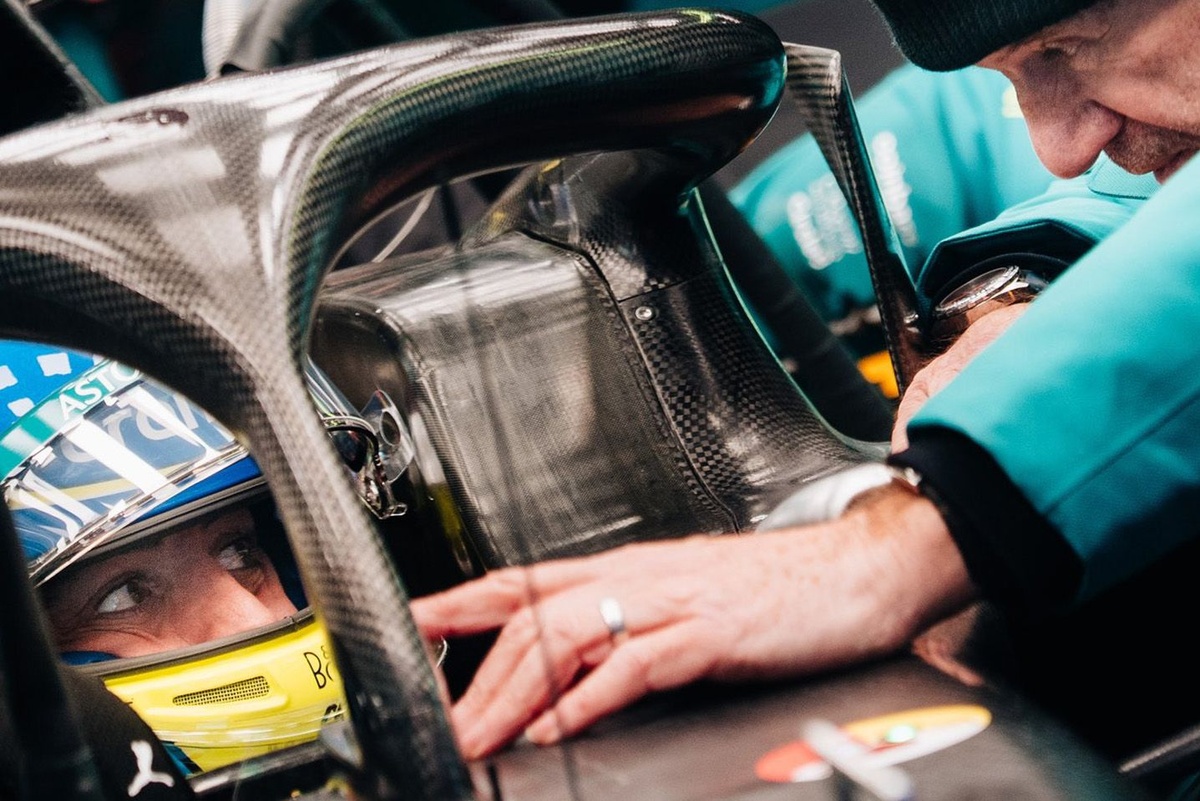
2026 will be an important year for all the drivers on the Formula 1 grid, and that certainly applies to Fernando Alonso as the two-time world champion hopes to have one more shot with competitive machinery. The complete overhaul of the technical regulations could, in theory, help – although it raises question marks as well, especially among those who prefer old-school racing.
Is Formula 1 set to become more of a management race than ever before? And are things such as downshifting on straights or lifting in qualifying unnatural for drivers?
“I think all the regulations have their own special things, and different driving techniques are needed for different cars and different sets of regulations. I think this one is a little bit more dramatic in that regard,” Alonso replied when asked by Motorsport.com.
“Some of the energy management and some of the driving that you have to do in order to optimise the energy around the lap, and sometimes even in qualifying, is a little bit annoying from a driver point of view. You want to drive at 100% and I think now you need to think a little bit more than that.”
That said, Alonso has already gained useful experience from other championships in case F1 really does turn into a management race - more so than in previous years.
“I've been driving in IndyCar and the main game there is to save fuel for 75% of the race. I drove in WEC and the main purpose there was the energy control as well with the hybrid system and the traffic. At the end of the day, it's just racing.
“The initial feeling is that you would like to drive flat out and have a different car, but F1 went into this direction and these hybrid power units. That requires this kind of energy management, and I think we will get used to it.”

No way back to ‘the peak of Formula 1 DNA’?
Since making his F1 debut at the 2001 Australian Grand Prix, Alonso has experienced plenty of different eras, but he does not think those will ever return in their purest form.
“I think we will never go back to the late 90s or early 2000s, where the cars were light, fast, the noise of the engine, everything was probably at the peak of the Formula 1 DNA," he said. "Now, we are moving more into a different Formula 1. I don't know if it’s better or worse, but different for sure.”
The V10 era that Alonso is referring to did, from a driver’s perspective, give him more satisfaction than the direction the sport has taken in recent years.
“I think it was more interesting before, but we need to sell that for the new generation," he said. "We cannot say that the cars are worse now, but no one will agree that driving before was worse than driving now. There is for sure more adrenaline with the older cars, there is more sense of driving at the limit with the old cars.
“Even when we jump in a go-kart, that’s probably the purest motorsport racing that you can have. It's nice to drive cars at the limit of the physics and things like that, and not by a kind of efficiency or robot style of driving that you need to maximise efficiency.
“There are a couple of things that are interesting and that we will play with a little bit, but as I said, I prefer to drive with not too many systems interacting with your driving style or with your approach to the corners. It seems that you need to overthink a little bit while driving and that's always a risk of having less joy behind the wheel.”

A broader trend in football and basketball
According to Alonso, F1 is not alone in this. The Spaniard sees changes to some core principles reflected in other sports as well.
“It's the way the world seems to go in the last few decades, not only motorsport. Everything is more or less like that, and I'm sure it happens in many other sports, football, basketball, NBA, whatever. Before, 20 years ago, maybe it was a guy who had a magic night, and he won the game.”
“Now, it's more about structure and you need to have some mechanisms to really perform in a basketball game. So, the inspiration from someone is a little bit forgotten in this generation.”