
Aging is inevitable, but staying fit is the best way to stay independent for longer. Strength training can help bulletproof your body, combating the muscle loss that occurs as you age, and helping you avoid falls and injuries as you go about your daily life.
Yet how can you tell how fit you really are? Sure, you might walk the dog every morning, but is your leg strength stronger than that of your peers? If you’re returning to fitness following an extended break, or you’re in the gym three times a week and are intrigued by how you stack up, read on to find out more.

What is the test?
The Senior Fitness Test Kit sets out to help seniors work out how fit they are and where they might need to improve to boost their longevity. The test assesses your overall fitness and involves common activities such as standing up from a chair, walking, lifting, bending, and stretching.
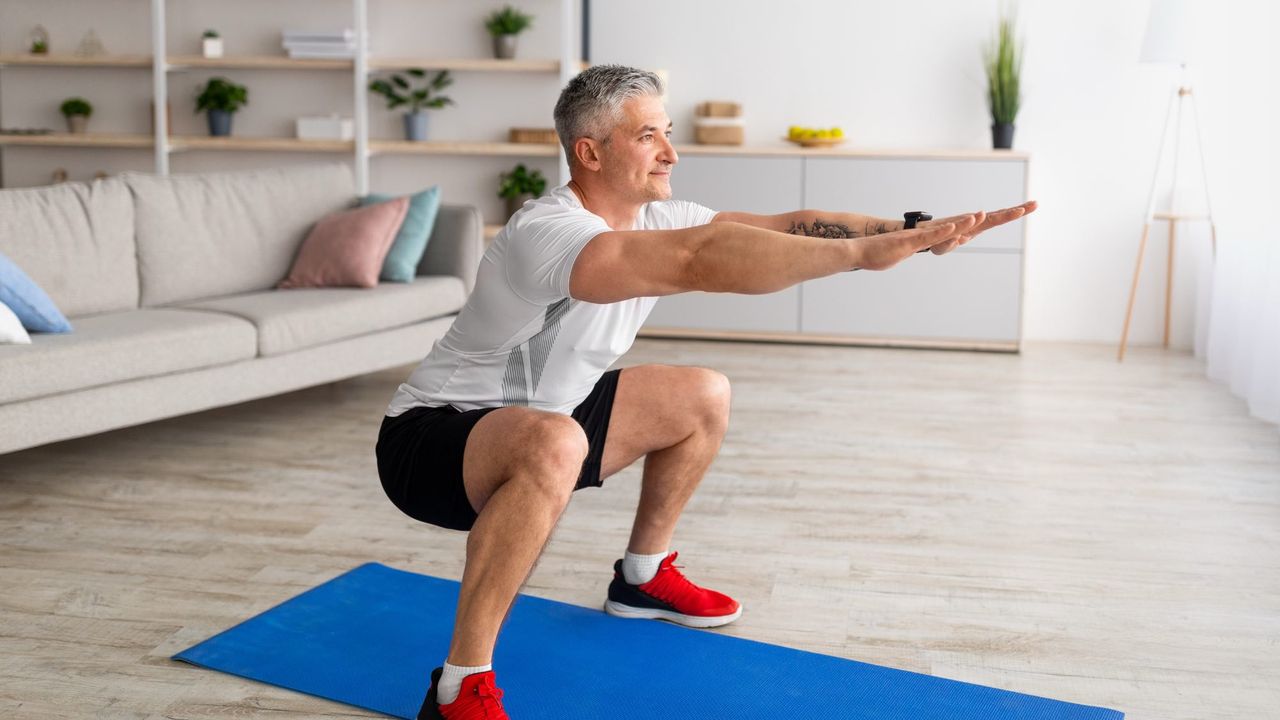
One of the tests is the sit-to-stand test, which is essentially a supported bodyweight squat. The squat targets your quads, glutes, hamstrings, and core, so it’s a great test of your lower body strength.
How to do the supported squat
This test involves sitting and standing from a chair, so you’ll need a sturdy chair that you can comfortably fit on with both feet flat on the floor. Ideally, the chair shouldn’t have armrests, as it can be tempting to use them for extra support. It definitely shouldn’t have wheels for obvious reasons.

- Start by sitting on your chair. Shuffle to the front so that you can sit with a 90-degree bend in your knees and your feet flat on the floor. Make sure your feet are hip-width apart.
- Place your hands on your thighs, or let them hang by your sides. Alternatively, for an extra challenge, cross them in front of your torso.
- Lean forward slightly, shifting your weight into your feet, and push through your feet to stand up. As you do so, squeeze your core. Think about sucking your belly button into your spine.
- Slowly bend your knees and send your hips back so that your glutes gently touch the chair, before pushing through your feet and standing up again. Don’t fully sit down in the chair between reps.
If you can do this many squats after 60, your leg strength is ‘above average’
For this test, you’ll need something to time yourself on, like the timer app on your smartphone, or a stopwatch. You’ll need to keep count of how many squats you perform, and then use this table to figure out where you are.
As a reminder, if you’re recovering from an injury, it’s always best to seek personalized advice from a professional before trying something new.
Men's results
Age |
Below average |
Average |
Above average |
60-64 |
Less than 14 |
14-19 |
More than 19 |
65-69 |
Less than 12 |
12-18 |
More than 18 |
70-74 |
Less than 12 |
12-17 |
More than 17 |
75-79 |
Less than 11 |
11-17 |
More than 17 |
80-84 |
Less than 10 |
10-15 |
More than 15 |
85-89 |
Less than 8 |
8-14 |
More than 14 |
90-94 |
Less than 7 |
7-12 |
More than 12 |
Women's results
Age |
Below average |
Average |
Above average |
60-64 |
Less than 12 |
12-17 |
More than 17 |
65-69 |
Less than 11 |
11-16 |
More than 16 |
70-74 |
Less than 10 |
10-15 |
More than 15 |
75-79 |
Less than 10 |
10-15 |
More than 15 |
80-84 |
Less than 9 |
9-14 |
More than 14 |
85-89 |
Less than 8 |
8-13 |
More than 13 |
90-94 |
Less than 4 |
4-11 |
More than 11 |
If you’re not quite where you want to be, keep practicing and work on your lower body strength. If you need to, use a chair with armrests to make the squats easier, and then over a few days, reduce the support by only placing your fingertips on the armrests.
If you are in the elite category, make the squats harder by removing the chair entirely. Alternatively, you can add weight to the movement by holding one of the best adjustable dumbbells against your torso, or in each hand, as you squat.
More from Tom's Guide
- Not sit-ups, planks, or crunches: I do this simple Pilates exercise every single day to build a strong and stable core and work on my hip flexor mobility
- Not sit-ups or lunges — I use this simple Pilates exercise to sculpt strong obliques, inner thighs and hip stabilizers
- 'I’m a Pilates instructor, and I recommend these 5 core exercises to help older clients build strength and improve posture'







