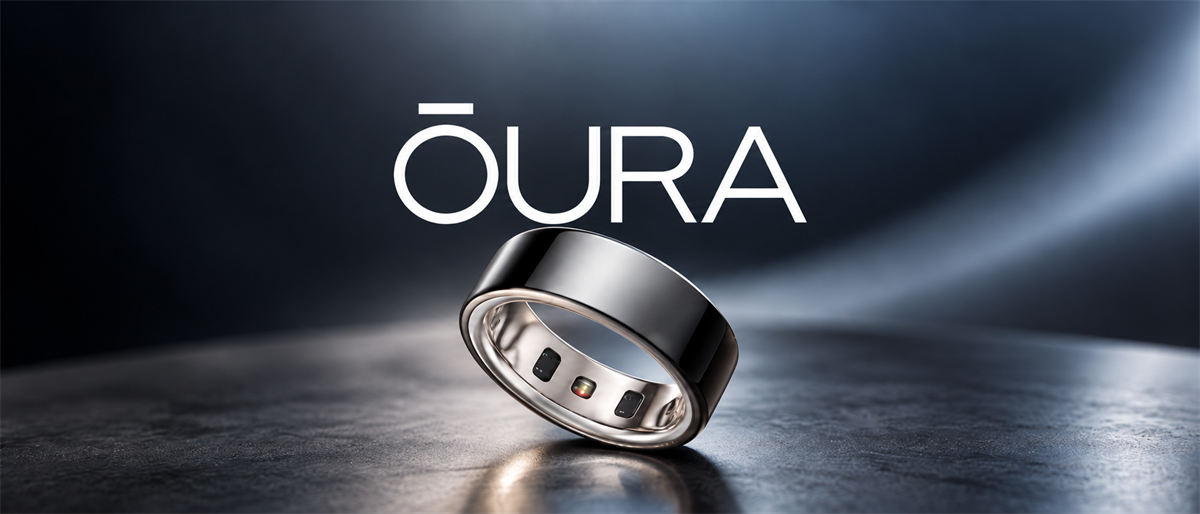
The recent postponement of Oura's $2.1 billion initial public offering sent ripples through the consumer tech space. When the venture-backed market leader halted its public debut, the immediate market reaction reflected faltering consumer demand or internal financial strain. However, the reality in the wearable technology space tells a different story.
Releasing a premium asset into today's turbulent market would have risked severe mispricing. The market is stalled by interest rate uncertainty and shifting geopolitical headwinds, forcing multiple capital raises to hit the brakes. Oura's tactical decision to pause its listing reflects a dysfunctional broader market rather than any exhaustion within the wearable tech industry.

Underlying demand across health and fitness hardware remains steady. Higher-margin recurring revenue streams around the hardware are continuing to generate steady cash flow. Rather than signaling a crumbling growth narrative, this delay is a strategic move toward capital preservation. To understand where the sector is actually heading, investors need to look past the IPO freeze and examine the performance of the major players already operating in the public markets.
A Healthy Business Trapped in a Sick Market
The IPO window in September 2026 has effectively frozen. Rising interest-rate anxieties and geopolitical tensions have sidelined institutional capital, leaving new issuances without the liquidity needed to command fair valuations. High-profile offerings across sectors, including Holtec and Bamboo Insurance, recently halted their listings for similar reasons. Oura's delayed debut is a direct casualty of this environment.
Meanwhile, the company's internal metrics reveal a thriving business model. Oura reported around $1.43 billion in trailing 12-month revenue, generating approximately $59 million in net income. Growth is accelerating, with Oura surpassing 5 million paid subscribers and projecting near 90% year-over-year revenue expansion for fiscal year 2026. These figures represent a proven, profitable business.
Attempting a public listing now would subject Oura to steep discounts demanded by cautious institutional underwriters. Holding back preserves equity value. The consumer appetite for premium health-tracking devices is clearly present, but institutional appetite for newly listed equities has temporarily dried up. By waiting on the sidelines, Oura shields its valuation from unpredictable macro swings and retains the leverage to command a higher premium once rate visibility improves.
Apple's Hardware Ecosystem Passes the Stress Test
To gauge true consumer interest in luxury wearables, investors can look at other companies navigating the same economic landscape. Apple Inc. (NASDAQ: AAPL) provides the clearest lens into current hardware upgrade cycles. During the third quarter of 2026, Apple's Wearables, Home, and Accessories segment generated about $7.9 billion in sales. This division contributed heavily to the broader 16% year-over-year total revenue expansion to approximately $109.4 billion.
Consumers continue to buy premium hardware, yet Apple is managing near-term margin compression. Third-quarter gross margins were over 50%, but management guidance projects a slight squeeze into the 47% to 48% range for the fourth quarter. This compression stems largely from rising memory component costs and ongoing supply chain bottlenecks that are temporarily restricting fulfillment capacity across the hardware lineup.
Pressuring the stock further, a late-September federal court ruling imposed a $5.7 billion penalty on Apple over haptic feedback intellectual property used in the Apple Watch and iPhone. While this litigation loss introduces an unexpected capital headwind, it targets the underlying technology rather than pointing to a breakdown in unit sales. Apple's wearables segment is still projected to generate upwards of $36.2 billion in fiscal year 2026. This data suggests the core demand thesis remains intact, even as production costs climb.
The Long-Term Prognosis for Health Hardware
The broader takeaway from the stalled market is one of deferred opportunity rather than destroyed value. Oura's decision to wait out the volatility is a calculated play. When macroeconomic headwinds eventually dissipate and institutional capital returns to the IPO market, companies with verified profitability and recurring subscriber revenue will be in a prime position to command premium multiples.
The current market environment forces a separation between micro execution and macro sentiment. For investors analyzing the space, the focus shifts to identifying companies that can sustain margin health and grow their user bases as external conditions stabilize.
When a sector experiences a disconnect between underlying consumer demand and market mechanics, it often sets the stage for a subsequent repricing event. The wearable tech industry is actively demonstrating this divergence. Consumer spending on health hardware and connected ecosystems continues to grow, even as the mechanisms to bring those companies public temporarily malfunction.
As interest rate visibility improves, the backlog of delayed public offerings will eventually clear. Until that liquidity returns, focusing on fundamental performance, recurring revenue metrics, and overall market share will provide the most reliable roadmap through the current period of macroeconomic uncertainty.
The article "Oura’s IPO Freeze Isn’t the Warning Sign It Looks Like" first appeared on MarketBeat.