Michael B. Jordan beat Timothée Chalamet to this year's best actor Oscar in Los Angeles on Sunday night after a months-long awards race that had pitted Jordan's turn in Sinners against Chalamet's lead role in Marty Supreme, and the outcome had far more to do with performances and precursor prizes than a late-breaking row over ballet and opera.
Chalamet spent the winter fronting a full-tilt campaign for Marty Supreme, which opened in December and quickly became one of the most talked-about films of the season. He embraced the role of tireless promoter, from collaborations with underground artist EsDeeKid to wearing his Marty Supreme jacket like a uniform and appearing at branded events around the world. To many observers, he resembled a classic front-runner: young but seasoned, overdue in the eyes of fans, with a studio clearly prepared to invest.

Timothée Chalamet, Michael B. Jordan and the Ballet Row
The backlash that has since been woven into this story began at a CNN and Variety town hall, where Chalamet sat down with Matthew McConaughey to talk about cinema, audiences and the health of big-screen storytelling. In the midst of that conversation, he contrasted films that people actively seek out with art forms that, in his view, are struggling to hold attention. He said he did not want to be 'working in ballet or opera' or in spaces where people are being asked to 'keep this thing alive' when it feels as though 'no one cares about this any more.'
He attempted a course correction almost immediately, noting that his mother and sister trained as ballet dancers and insisting he respected traditional arts, before joking that he had probably just lost '14 cents in viewership' by taking 'shots for no reason.' It did not land. Clips were carved from the longer exchange and posted on X and TikTok, stripped of nuance and fed into an algorithm that thrives on outrage. Within days, ballet companies, opera houses and talk-show panellists were lining up to respond, some with gentle invitations, others with a sharper edge.
What followed was an oddly moralistic strand of Oscars commentary in which strangers on social media promised that 'karma' would keep a gold statuette from Chalamet. By the time Conan O'Brien addressed the controversy from the Dolby Theatre stage, turning the line 'no one cares' back on the actor for laughs, the idea that his comments might cost him the prize had taken on a life of its own. It is a neat story, but when viewed against the calendar, it is almost certainly wrong.
Why Michael B. Jordan Really Edged It
The interview that ignited the ballet storm aired on Feb. 21, but the most viral edits and intense online argument did not really crest until the second week of March. The bulk of the posts that racked up millions of views and furious quote-tweets appeared after March 6, according to timelines compiled by outlets covering the backlash. Oscar voting, though, had closed a day earlier on March 5, locking in ballots from roughly 10,000 Academy members before the row truly caught fire online.
People inside the awards world openly acknowledge that many voters push their decision to the final days, weighing late screenings, industry buzz and the sway of precursor ceremonies such as the Producers Guild Awards and the Actor Award for performers. Film critic Richard Roeper put it bluntly in his pre-Oscar analysis, noting that momentum gained or lost at those events tends to matter far more than a stray quote on a talk show. In other words, if Chalamet lost ground, it was likely weeks earlier, in screening rooms and voting portals, not in the days when X decided to police his taste in classical dance.
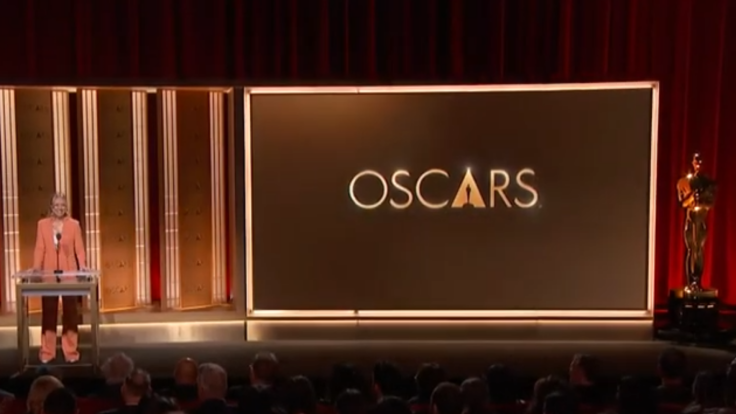
Stacked against him was the quietly relentless climb of Jordan. His work in Ryan Coogler's Southern Gothic horror film Sinners had already been recognised with the Actor Award for lead male actor and a Critics Choice award for best horror actor, both regarded within the industry as solid indicators of Oscar strength. Crucially, those wins landed squarely in the period when Academy members were mulling their choices, nudging undecided voters towards the sense that Jordan's was the performance of the year.
On screen, Jordan was given a showcase that almost seems built to seduce awards bodies. As twin brothers Smoke and Stack, ex-mob enforcers turned juke joint owners, he had to construct two fully realised men who share a history but diverge sharply in temperament, physicality and emotional damage. Interviewing him before the ceremony, the Los Angeles Times detailed the level of craft involved, from dialect coaching with Beth McGuire to costume and even footwear choices designed to make Smoke heavier and more deliberate, Stack tighter and more restless.
The performance landed with both critics and audiences, and Sinners itself sat at the heart of the season with a record 16 nominations, including best picture. Jordan's eventual win made him the first actor in more than 50 years to take best actor for playing twins, a piece of Oscars history that highlights how technically ambitious this work was perceived to be. Faced with that, it is not hard to imagine why a significant number of voters simply ticked his name and moved on, regardless of what Chalamet had or had not said about opera.

There is also a subtler injustice in the way the ballet row has been glued to this outcome. Framing Jordan's victory as a backlash against Chalamet risks reducing a breakthrough win to a morality tale about another man's misstep, rather than recognising it as the culmination of a carefully judged performance and a savvy campaign. For an industry that insists, every March, that the Oscars are about craft, that feels like a disservice to the very person who just proved his.
Nothing about awards season is ever entirely clean. Studio money, media narratives and sudden outbreaks of public outrage all bleed into the choices of voters who are themselves part of that same ecosystem. But if there is a lesson in this particular race, it may be that social media's favourite explanations are often the least accurate and that sometimes the simplest reading holds. Michael B. Jordan won because enough people in the Academy thought he gave the better performance. Everything else is noise.