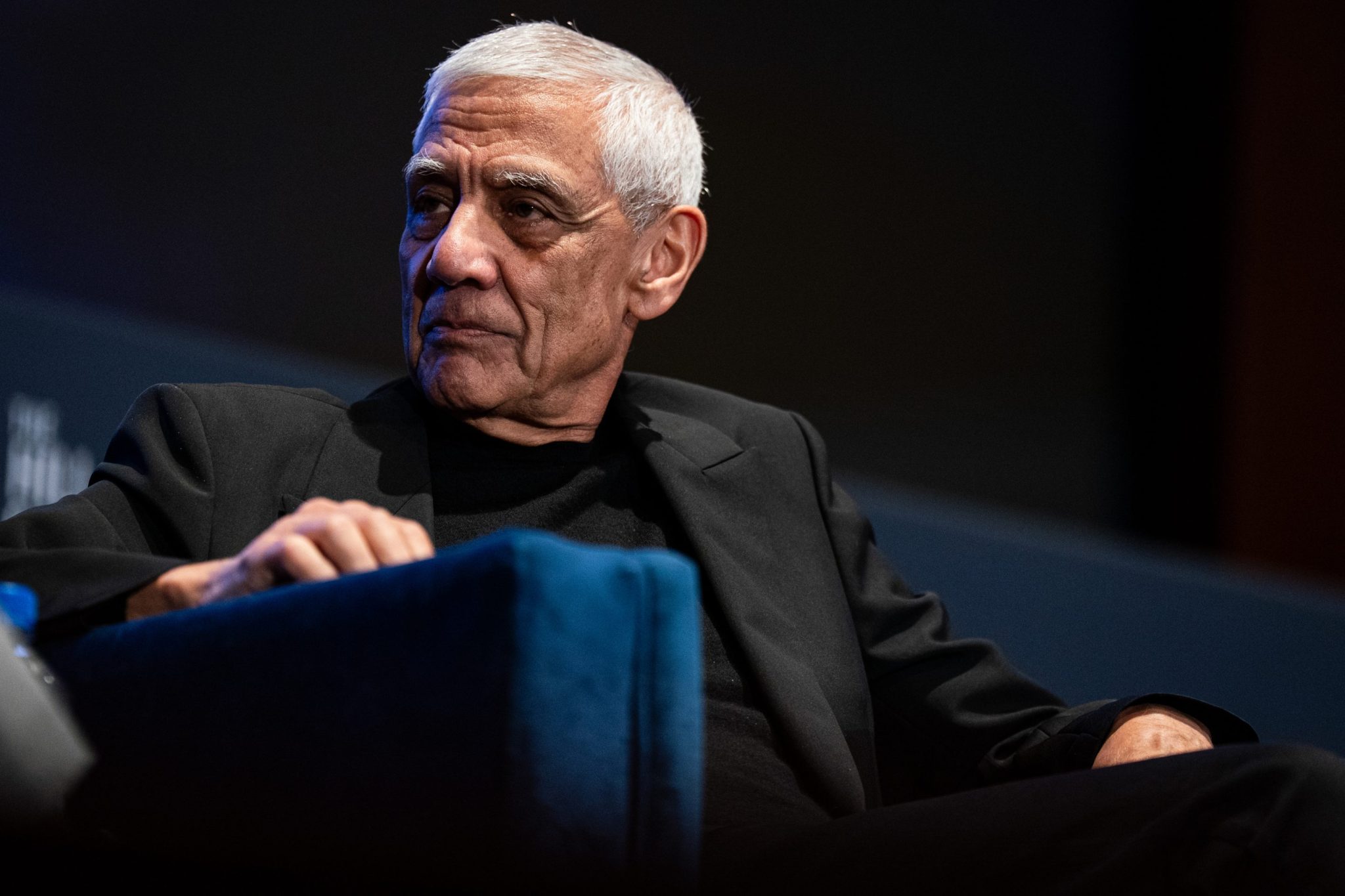
The origin story of one of the most lucrative—and contrarian—AI bets in venture capital began with billionaire investor Vinod Khosla entering the fold after Elon Musk left Sam Altman hanging.
Here’s how it played out, as Khosla told Fortune. First Musk balked at following through on a pledged $1 billion for OpenAI, insisting on control and effectively holding Altman and his team “hostage.” So Altman went looking for a white knight. Khosla calls Musk a “great entrepreneur” but recalls that, “it seems like he wanted it like a private fiefdom with him in charge.”
The terms of Khosla’s investment were not for the faint of heart: $50 million at a $1 billion valuation into what was, at the time, a nonprofit with no clear commercial model. Khosla said it was the largest initial check he’d written in 40 years by a factor of two and the only time in Khosla Ventures history he sent an apology letter to LPs explaining that he knew how “foolhardy” the deal looked but was “doing it anyway.”
How’s that working out? OpenAI has restructured into a public‑benefit corporation and granted Microsoft a 27% stake worth about $135 billion, as part of more than $13 billion in total investment and a long‑term IP‑sharing pact that runs through 2032. As of late February, OpenAI’s valuation was estimated between $730 and $840 million—up from about $300 billion earlier that year. That means Khosla’s $50 million check for 5% of the company is now suspected to be worth billions.
Khosla, for his part, insists this wasn’t just a momentum trade. He saw a strategic hole: Google and Baidu were racing ahead in AI, and he didn’t want Chinese AI efforts to dominate the West. Backing OpenAI was, in his telling, both an ideological bet on democratizing AI and a geopolitical hedge. It also required a strong stomach.
Even now, with OpenAI widely viewed as the front‑runner—900 million active weekly users as of early 2026, a brand synonymous with consumer AI, and a deep-pocketed partner—Khosla is not calling the race. He names Demis Hassabis at Google, Anthropic, and Meta as credible challengers, and predicts that whoever has the best model will likely change every six months. The real competition, he argues, will be over compute and long‑horizon research, not this quarter’s benchmark.
You can listen to the full episode of Fortune 500: Titans & Disruptors of Industry on Spotify, YouTube, and Apple.
See you next week,
Lily Mae Lazarus
X: @LilyMaeLazarus
Email: lily.lazarus@fortune.com
Submit a deal for the Term Sheet newsletter here.
Joey Abrams curated the deals section of today’s newsletter. Subscribe here.